
North Korea's Ruler Won't Repeat Gorbachev's Mistake
TEHRAN (Defapress) - U.S. President Donald Trump has announced that joint U.S.-South Korea military exercises are considered a hostile signal to North Korea and should therefore be reduced in scope. He also added that he has good relations with North Korean ruler Kim Jong-Un. This kind of rhetoric reflects the perpetual "fluctuation" in American diplomacy. In his first presidential term, Trump traversed a volatile path from threatening to destroy North Korea and calling its leader "Little Rocket Man" to historic meetings. But why is the U.S. President returning to the Korea issue once again, and what is his tactic regarding Pyongyang and Seoul?
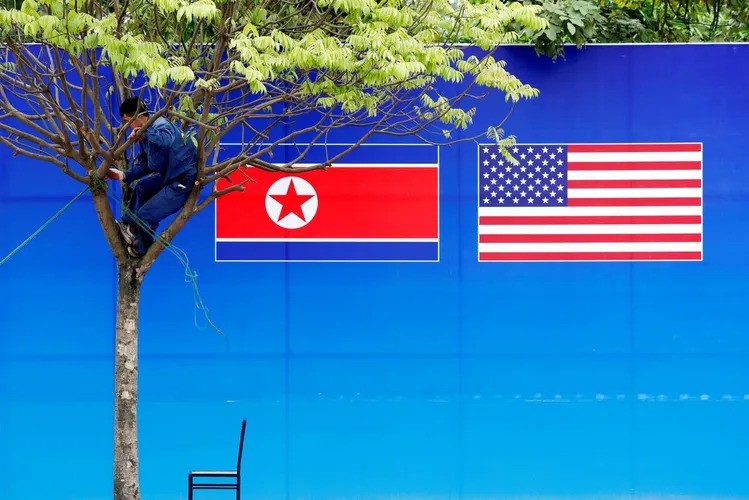
First, the Korean Peninsula is no longer a strategic priority for Washington. The Trump administration's second National Security Strategy (2025) largely ignores North Korea and mentions South Korea only in the context of geoeconomic confrontation with China and the burden-sharing issue of defense costs. The Pentagon's National Defense Strategy devotes only a single paragraph to Pyongyang. Therefore, Trump's current statements primarily signal a desire to shift resources from lower-priority foreign policy fronts to higher-priority ones. Furthermore, this approach aligns with Trump's habitual logic that U.S. allies should assume a larger share of military costs and pay for their own security. Moreover, Trump has openly complained about Seoul for refusing to intervene in the regional war in Iran.
The result of this stance by the U.S. administration is an escalation of debates within South Korean political institutions regarding the necessity of developing nuclear weapons. According to expert estimates, Seoul, possessing vast scientific and economic resources, is capable of producing a deployable warhead compatible with existing delivery systems in just a year and a half.
Another major motivation for the White House to draw closer to Pyongyang is the upcoming Congressional elections, which have highlighted the necessity for the Trump administration and the Republican Party to present significant achievements to voters. Defeat in the regional war in Iran forces Washington to actively search for positive news material. Earlier, South Korean President Lee Jae-Myung proposed signing a peace treaty and officially ending the war that has symbolically continued since the 1950s. Legally, the end of the conflict in 1953 was recorded only as an armistice. This initiative was quietly coordinated with the United States, and Trump likely sees an opportunity in this initiative to once again present himself as the world's greatest peacemaker and, as always, speak of ending a "decades-long war." In practice, however, signing a real peace agreement between the two Koreas is currently impossible, because North Korea will not accept the condition of nuclear disarmament.
It must also be taken into account that Trump is known for "transactional" leadership. He prioritizes personal relationships and believes that a pragmatic exchange of favors, accompanied by mutual understanding, can resolve decades of accumulated historical, ideological, and institutional contradictions. Trump has effectively transferred his approaches from personal business to the global arena and expects those approaches to work in global politics as well.
Of course, there is no doubt that behind Trump's actions one can also see more complex geopolitical motivations; Washington's strategic motive in drawing closer to North Korea is to weaken Pyongyang's existing ties with Moscow and Beijing. In 2024, Russia and North Korea signed a comprehensive strategic partnership treaty, indicating the acceptance of the principle of "collective defense" between the two countries. This treaty served as the basis for joint actions to repel attacks by Ukrainian forces on Kursk Oblast. There are also speculations regarding a qualitative leap in North Korea's missile technology, and experts link the progress of Pyongyang's military industry to covert support from Russia and China. This arms rapprochement has caused concern in Washington.
With a high probability, Trump's initiatives toward North and South Korea will be limited to a nice media image of the two rulers shaking hands. Pyongyang has never been interested in expanding its relations with Western countries; North Korean leaders know full well that initiating Western-oriented political and economic reforms is equivalent to suicide and the destruction of national identity. North Korea's regime is an authoritarian and closed system that feels no need for change.
Furthermore, the experience of the Soviet Union's collapse showed that a broad transformation of social and political institutions based on the Western model could lead to the collapse of the entire system. Of course, Pyongyang does not want a repetition of this geopolitical disaster; therefore, preserving the existing ideology and system is an absolute priority for North Korea.
Similarly, all the talk in the media space that the West can force North Korea to denuclearize is idealistic and hypocritical. Pyongyang considers its nuclear arsenal to be the sole guarantee of its survival and will never give it up. Following the outbreak of the regional war in Iran, Kim Jong-un specifically emphasized that this war proves the correctness of North Korea's decision to secure the country with nuclear weapons. In addition, Pyongyang passed a law for an automatic nuclear strike in the event of an assassination. In other words, nuclear weapons hold an existential meaning for North Korea.
On the other hand, the current U.S. administration has also removed the issue of peninsula denuclearization from certain strategic documents, which can be interpreted as an implicit recognition of North Korea's nuclear status and Washington's surrender to this reality on the ground.
For this reason, Trump's announced meeting with Kim Jong-un by the end of the year will most likely turn into a media event devoid of deep political content. The rulers of the two countries essentially have no mutually agreeable topic. The only real meaning of such an event seems to be creating tension for South Korea; Trump is openly annoyed with Seoul, which refused to enter the regional war in Iran. For Kim Jong-un as well, this is an opportunity to remind the neighboring country (which is viewed in Pyongyang merely as a U.S. proxy) who is in charge on the peninsula.
