

Somaliland: New Arena for Confrontation Between Tel Aviv and the Arab World
TEHRAN (Defapress) - Somalia, a country in the Horn of Africa that has been struggling with internal and external challenges for years, has recently taken important steps to strengthen military cooperation with Arab countries. The moves, which include the signing of military agreements with Saudi Arabia and Qatar, come in response to recent regional developments, particularly Israel’s recognition of Somaliland. With this active diplomacy, the Somali capital, Mogadishu, is seeking regional support to preserve its territorial integrity and confront potential threats.
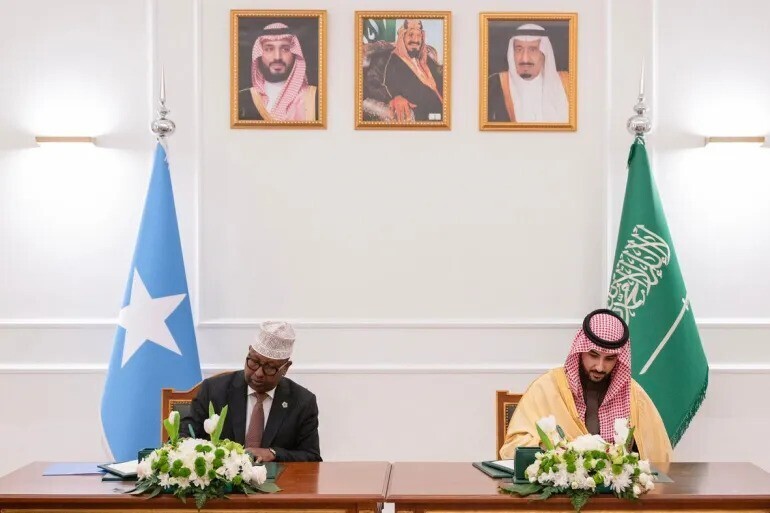
On Monday, Somali Defense Minister Ahmed Moalim Fiqi and his Saudi counterpart, Prince Khalid bin Salman bin Abdulaziz, signed a military cooperation memorandum of understanding in Riyadh. The Somali Defense Ministry said the agreement aims to strengthen the defense and military frameworks between the two countries and covers several areas of common interest that serve the strategic interests of both sides.
Prince Khalid also confirmed the news in a post on Platform X, but neither side provided further details. The agreement is part of Somalia’s efforts to expand its support network against external challenges.
Just a few weeks ago, Somalia signed a similar agreement with Qatar. According to the Somali state news agency, the agreement focuses on strengthening military ties and security cooperation. Its details include military training, exchange of expertise, development of defense capabilities, and advanced security cooperation that will contribute to efforts to promote regional security and stability.
Doha also stressed that the agreement is designed to strengthen areas of joint cooperation and improve defense partnerships to serve the interests of both parties. The pacts reflect Mogadishu’s diplomatic approach to garnering support from Persian Gulf powers.
Somalia’s diplomatic initiatives come as tensions in the Horn of Africa have escalated following Israel’s recognition of Somaliland last December. Somaliland, a breakaway region that has declared independence since 1991, has become the first in the world to be recognized by Israel. Mogadishu has warned that Israel is planning to build a military base in the region that could be used to attack neighboring countries.
Somali President Hassan Sheikh Mohamud stressed in an interview with Al Jazeera that Somalia would never allow such an action and would confront it with all its might. “We will fight with our capacity. Of course, we will defend ourselves, and that means confronting any Israeli force that comes in, because we are against it and we will never allow it,” he said. A Somaliland official also told Israel’s Channel 12 in January that the establishment of an Israeli military base was on the table, although the terms had not yet been finalized.
In addition, Somalia last month canceled all agreements with the UAE, including port, security and defense operations, in the wake of the country’s dangerous actions against Somalia’s national unity and political independence. The decision comes after reports that the UAE was facilitating the recognition of Somaliland.
The UAE, which normalized relations with Israel under the Abraham Accords in 2020, has deep economic and security ties with Somaliland, including a 30-year concession for the strategic port of Berbera by the UAE-based DP World. The UAE refused to sign a joint Arab-Islamic statement condemning Israel’s move, but in January, it issued a joint statement with the African Union pledging support for Somalia’s sovereignty, territorial integrity, security, and stability.
The events have coincided with a deterioration in Saudi-Emirati relations. Tensions escalated last December when it bombed an Emirati arms shipment bound for the separatist Southern Transitional Council in Yemen.
Saudi Arabia has also supported a call by the separatist government of South Yemen for the withdrawal of Emirati forces. The UAE, however, has denied the allegations. Separately, Abu Dhabi has been accused of supporting the terrorist RSF in Sudan, which has been at war with the Sudanese army for nearly three years.
Saudi Arabia, an ally of Khartoum, on Saturday condemned attacks by the RSF in Sudan’s Kordofan region that killed dozens of people, including women and children. Riyadh also condemned unspecified “foreign interference” in Sudan, saying the influx of illegal weapons, mercenaries, and foreign fighters was prolonging the war.
Sudan also filed a case against the UAE at the International Court of Justice last year, accusing it of complicity in the Rapid Reaction Forces’ alleged genocide of the Masalit community in West Darfur. The UAE called the move a “cynical propaganda stunt” and called for its immediate rejection.
As a result, Somalia’s military deals with Saudi Arabia and Qatar are not just a response to direct threats, such as Israel’s move, but also part of a larger puzzle of Middle East tensions that includes Saudi-UAE rivalries in Yemen and Sudan. This diplomacy can enhance regional stability, but it also carries the risk of escalating conflict.
With this approach, Somalia seeks to maintain its sovereignty amid geopolitical complexities, and the future will tell whether these agreements lead to lasting security or fuel further tensions.
