
Get Familiar with the Architect of Tehran’s Security
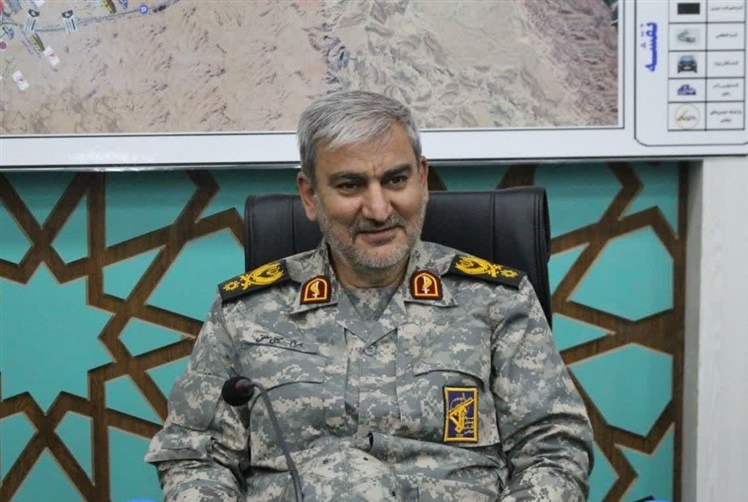
TEHRAN (Defapress) - Martyr Commander Bahram Hosseini Motlagh, a commander whose name is inscribed in the history of the Sacred Defense and Iran’s national security with lines of courage, wisdom, and humility, was martyred on February 28, 2026, coinciding with the tenth day of the holy month of Ramadan, during an enemy missile strike on the Secretariat of the Supreme National Security Council. He was martyred alongside some of the country’s most senior commanders. Having spent over 40 years of his life on the right path, he rose from being a 17‑year‑old adolescent on the front lines of Kurdistan to become one of the principal architects of Iran’s national security.
An Adolescent with a .50 Caliber Machine Gun; The Beginning of a Legend
Bahram Hosseini Motlagh was born on January 24, 1963, in a village west of Zanjan province and moved to Bijar as a child. The memories of his comrades paint a picture of a 17‑year‑old youth who, at the height of war, not only fought on the front lines but was also a terrifying target for the enemy with his .50 caliber machine gun.
Courage in the Nowbahar Operation: In one of the most significant joint battles between the army and the IRGC in Bijar, after the commander was martyred, young Bahram chased the leader of the Democratic Party of Iranian Kurdistan, known as "Kak Rahman," for several kilometers and killed him. This event led to him becoming known in the region as "Bahram, the one who killed Rahman."
Hossein Nasrollah Zanjani, recounting one memory, says: "From the very days I saw Bahram, he was dignified, polite, resolute, and kind. His awe and the way he stood behind the machine gun were two of the reasons I decided to join the IRGC."
From the Battlefield to Security Sections
After the end of the Imposed War (Iran–Iraq War), many of his comrades returned to normal life, but Haj Bahram remained in military management and command spheres. His distinguished record includes commanding the Quds Division of Gilan, commanding operations at the Tharallah Headquarters in Tehran, and serving as deputy for operations at the General Staff of the Armed Forces.
Architect of Tehran’s Security: He was known as one of the most important strategic architects of Tehran’s security. His attendance at the Command and Staff University of the Islamic Republic of Iran’s Army Course and the growth of his knowledge gave great weight to his opinions in fundamental decision‑making meetings.
One of his greatest services at the General Staff was securing the rights of the combatants and veterans of Kurdistan, West Azerbaijan, and Kermanshah. Through reasoning and logic, he got a plan approved that transformed the Bijar region from one deprived of combat zones into an area that offered martyrs and veterans.
Haj Qasem of Kurdistan
Mozaffar Alvandi, another narrator, calls him the "Haj Qasem of Kurdistan." With exemplary humility, without any political motives, Haj Bahram used his position to develop his birthplace, Bijar.
Courage in Complex Operations: Hassan Rastegar-Panah recounts an operation in Abbas Abad where, despite a shortage of personnel, Haj Bahram courageously and with complete knowledge of the terrain launched an "Allahu Akbar" attack that resulted in 30 Iraqi soldiers killed and 30 to 40 others taken hostage.
Martyrdom at the Peak
Martyr Commander Haj Bahram Hosseini Motlagh had a close bond and friendship with Martyr Commander Mehdi Rabbani. With the martyrdom of Commander Rabbani at dawn on June 13, 2025, at the start of the 12‑day war, he became increasingly detached from worldly affairs and always wished to be buried alongside Martyr Rabbani.
Ultimately, on February 28, 2026, while attending a session of the Supreme National Security Council, he was martyred by an enemy Zionist missile, along with commanders such as Martyr General Abdolrahim Mousavi, Martyr Commander Mohammad Pakpour, and Martyr General Aziz Nasirzadeh.
His comrades describe him as an upright man with great patience and good character, who remained the same sincere and humble throughout all stages of his life, from adolescence to supreme command.
