
Iran's Balance of Power Changes After Exchange of Fire with the Zionist Regime
TEHRAN (Defapress) - In recent months, one of the most important calculations of the United States and Israel was to present Iran with a false dichotomy: either accepting political and economic pressure and moving towards negotiations from a position of weakness, or entering into a large-scale military confrontation with high costs. However, recent events have shown that Tehran does not see a need to choose between these two options and is trying to use both tools simultaneously and in a complementary manner.
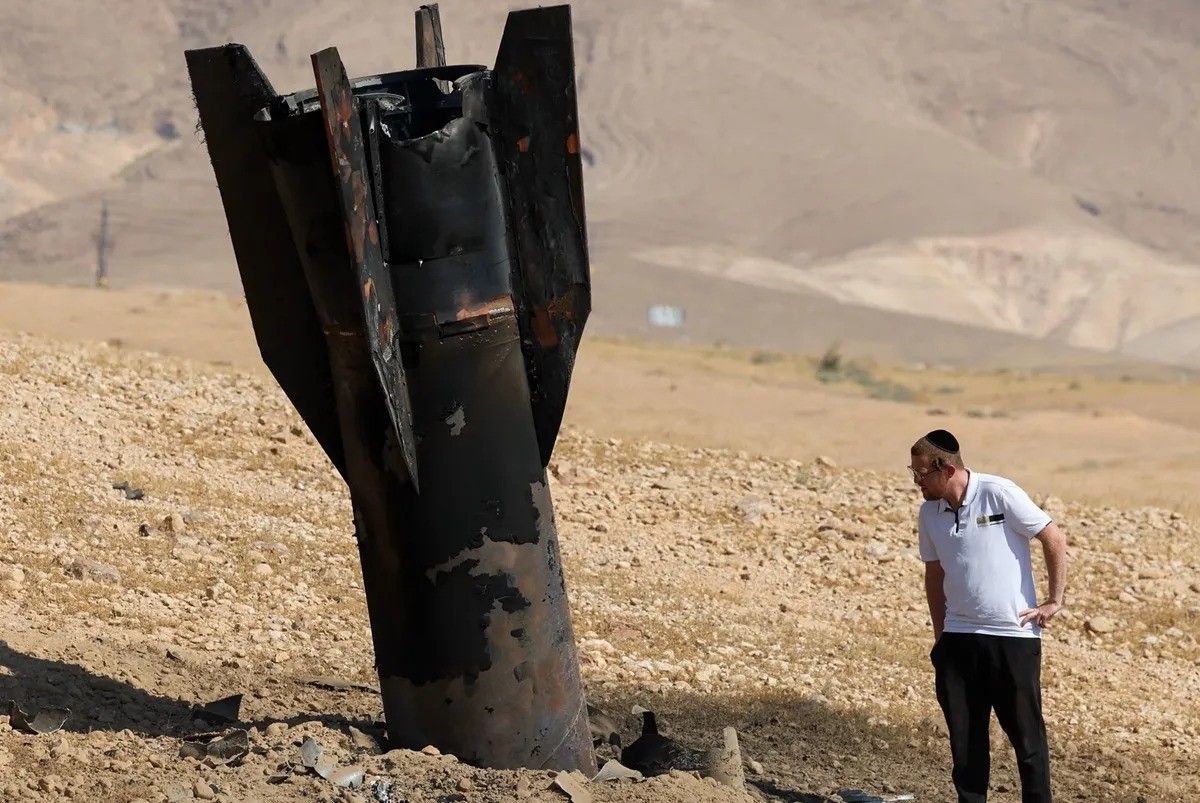
Iran’s military response to Israel’s actions was not simply a tactical operation, but was part of a larger strategic message. This message made it clear to the other side that military pressure cannot keep Iran away from the negotiating table, and at the same time, negotiations do not mean waiving the means of deterrence. In other words, Tehran has tried to show that it is not willing to choose between diplomacy and military power, but rather uses both to secure its national interests.
On the other hand, the reaction of the United States and Donald Trump himself is also worth considering. The current signs indicate that Washington is not willing to reopen a broad front in the region under the current circumstances. The experience of the past months has shown that the military option has not only failed to achieve the stated goals of the United States and Israel but has also brought significant security, political, and economic costs to them.
The reality is that as the scope of the conflict widens, the likelihood of damage to critical infrastructure, military bases, and economic interests of the United States and its allies increases. For this reason, the White House has moved more than ever toward the use of civilian tools, especially economic pressure, sanctions, and restrictions on Iran’s trade networks. This behavior change can be seen as a sign that Washington, at this point, prefers to pursue its goals through economic erosion rather than direct and costly confrontation.
The rapid easing of tensions after the recent exchange of fire can also be analyzed in this context. Contrary to some perceptions, the rapid end of this round of conflict does not necessarily mean a reduction in differences or reaching an agreement; rather, it indicates new calculations on the other side. Israel and the United States are well aware that any escalation of the war could lead to an uncontrollable cycle of countermeasures; a cycle that is not guaranteed to end and whose costs may exceed initial estimates.
The more important point is that Iran has managed to change part of the balance of power in its favor at this point. If in the past some Western circles thought that military pressure could force Tehran to retreat politically, now the situation has become more complicated. Iran has shown that it has the ability to respond and impose costs, and this has caused the other side's calculations to face greater limitations.
This development is not just a military achievement, but also a political one. Because in the field of international relations, real power is formed when an actor can insert its will into the enemy's calculations. Tehran seems to have succeeded in exerting such an influence on Washington and Tel Aviv’s decision-making to some extent in recent months.
From this perspective, Iran’s strategy can be called “combined pressure”; a strategy in which diplomacy, military power, regional deterrence, and economic resistance are placed side by side. In this model, negotiation is not a substitute for power, and power is not a substitute for negotiation. Both tools are used simultaneously to increase bargaining power and reduce external pressures.
Finally, what can be concluded from recent developments is that the region has entered a new stage of strategic competition. At this stage, the United States and Israel are more aware than ever of the costs of war, and Iran, on the other hand, is trying to keep political and diplomatic paths open by maintaining field readiness.
The result of this situation is the formation of a model that is defined not based on “war or negotiation,” but based on “war and negotiation” simultaneously; A model that seems to be the main axis of Iran's policy for managing crises and securing national interests in the current circumstances.
