
Is the Loss of Early Warning Radars a Challenge for the US Military?
TEHRAN (Defapress) - Mohammad Zarchini - The Third Imposed War and the military invasion of the United States and the Zionist regime against Iran, which was accompanied by the complete failure of the enemies of Iran, show various dimensions of the military defeats of the United States and its regional and extra-regional allies.
The United States attacked Iran, assuming that Iran could be taken over like Venezuela, but ultimately realized, in the continuation of the battle, that Iran’s fate was much, much more difficult than the short war in Venezuela.
In the Iran War, dozens of US military bases and centers in the region were damaged, and fatal blows were dealt to the US military. In this context, field sources report that some of the US military’s missile warning radars in the region were destroyed or seriously damaged by Iranian precision attacks, and this is clearly visible in most US military bases.
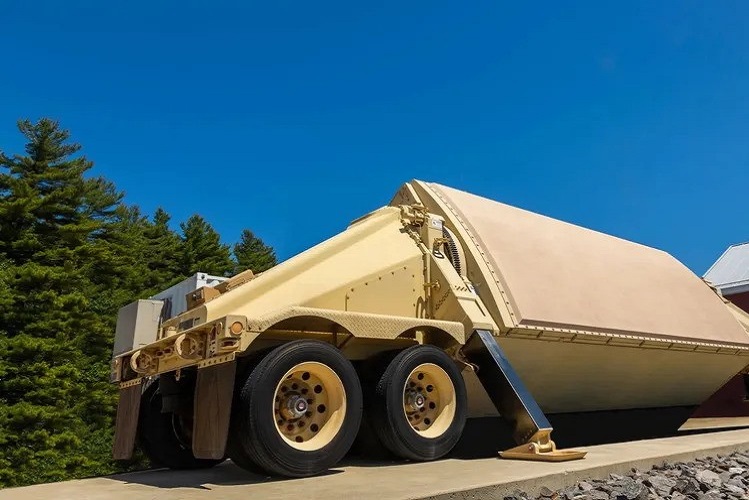
Some of Iran’s attacks, using suicide drones and missiles, targeted missile defense systems. Iran attacked an AN/FPS-132 early warning radar in Qatar, and at least one AN/TPY-2 radar was also targeted in Jordan. Satellite imagery suggests that additional similar radars in Saudi Arabia and the United Arab Emirates have also been hit.
Before the system was deployed in the West Asian region, Western media outlets talked about the system as if it could intercept all missiles and quickly direct American missile defense systems, including Patriot and THAAD, to destroy them. At the time of the system’s deployment, which took place a few months ago, the West Asian news editor of Stripes claimed that the system would be able to intercept hypersonic ballistic missiles fired by the Ansar Allah movement and the IRGC Aerospace Force.
However, after the war, it became clear that the claim of destroying Iran’s advanced missiles was exaggerated, because in the past, the advanced American Patriot and THAAD systems had shown their weakness against Iranian and Yemeni ballistic missiles (Operations True Promise 1, 2, and 3).
According to officials from the defense products manufacturer Raytheon, the new radars donated to the US Department of War can ultimately intercept targets that are five times the speed of sound, which if we consider each sound to be one Mach, the maximum interception speed of these radars is about 6,125 kilometers per hour; therefore, it is impossible for this radar system to be successful in hunting missiles such as the Fatah with a speed of Mach 13 to 15 and the Khorramshahr missile with a base speed of Mach 8; an issue that we also witnessed during the war.
Some Western military analysts are trying to downplay the loss of several US military radars in the region; the loss of one or more radars alone may not be critical, because missile defense systems are usually designed in layers and networks. However, in previous missile attacks in 2024 and 2025, Iran launched large-scale attacks with dozens of missiles in the sky simultaneously, and in such conditions, losing even one or two radars can be challenging; an issue that was also observed in the third imposed war.
The medium-range missiles that Iran uses against the Zionist regime have reentry vehicles (RV) warheads that separate from their booster stage. Interceptor missiles are usually stored to deal with these reentry vehicles, because these warheads carry explosive payloads. Ideally, interceptor missiles are not used against warheads that are supposed to land in areas where they will not cause damage. Therefore, the defense system must determine how many missiles are approaching to know how many return warheads there are; it must also predict which direction these warheads will go; of course, this is assuming that the missile defense systems of the United States and the Zionist regime can repel all missiles well, and that the American claims are not news with the flavor of censorship.
Interceptors such as the AR-3 and SM-3 use infrared imaging sensors to identify which objects are return warheads, but their success rate increases if radars (and associated command and control systems) have already narrowed down the options. This process is time-consuming, and it takes longer as the number of objects in flight increases. If a radar is not available, it becomes even more difficult. The result can be that more interceptor missiles are fired, increasing the likelihood that the missiles will penetrate defense systems.
The Fattah and Qassem Basir-class missiles have shown that they can bypass any radar and hit targets with high power. The Qassem Basir ballistic missile was developed by the Ministry of Defense and Support of the Armed Forces of the Islamic Republic of Iran and can destroy any advanced radar system with a range of about 1,200 to 1,300 kilometers at a high speed; of course, there is no word on the speed of the Qasem Basir missile, but if this missile is an upgraded version of the Fatah hypersonic missile, it will certainly have a speed of more than Mach 12, which is almost impossible for the US military to counter.
Missile defense systems, weakened by the loss of an early warning radar, will have difficulty countering attacks similar to those in 2024 and 2025; in fact, this will be Iran's trump card in future wars with the United States, the Zionist regime, and its allies.
