
Epstein’s Shadow Over Dimon’s Empire
TEHRAN (Defapress) - Jamie Dimon, the longtime CEO of J.P.Morgan Chase, America’s largest bank, has faced serious challenges in recent years. These challenges are not only related to managing a huge financial empire, but also to ethical and political issues.
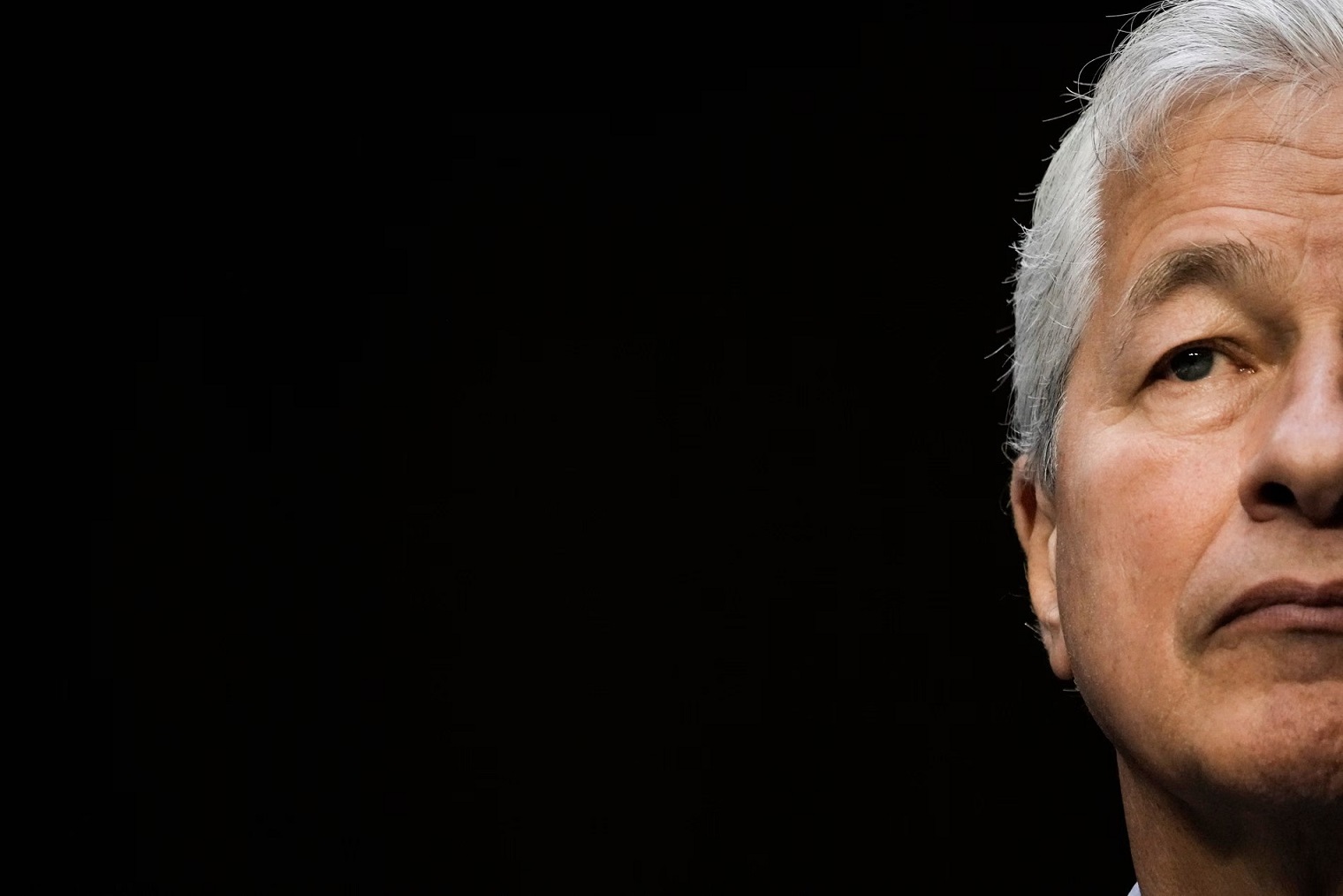
In May 2023, Dimon appeared in a hearing related to several judicial charges related to his connection to Jeffrey Epstein, the pimp of the American elite class. The question was simple: “When did you first realize that Jeffrey Epstein was a client of JPMorgan?” Dimon’s answer was also seemingly clear: “I don’t recall knowing anything about Jeffrey Epstein until the news broke in 2019.”
But is that answer credible? The Justice Department’s filings, known as the “Epstein Library,” list 204 results related to Dimon and 9,404 results related to his bank. Epstein was a client of his bank for 15 years, from 1998 to 2013, and Dimon was CEO for the last eight of those years; he remains CEO.
Epstein was not just a regular client, but one of JPMorgan’s most valuable clients, a private bank for the ultra-wealthy. A report the bank belatedly submitted to the Treasury highlighted some 4,700 suspicious transactions linked to Epstein, including payments to women in Eastern Europe worth $1.1 billion. Through Dimon’s bank, Epstein transferred hundreds of millions of dollars to Russian banks.
In addition, former JPMorgan Chase CEO Jess Staley has questioned Dimon’s testimony, claiming that he had been in contact with Dimon about Epstein for years before his 2019 arrest. Mary E. Erdoes, the bank’s current chief executive and a potential successor to Dimon, was also actively involved in Epstein’s account, and documents show that she was aware of Epstein’s status as a dangerous sex offender.
In 2010, two years after Epstein was convicted in Florida of sexually abusing 14-year-old girls, Epstein’s aide asked him in an email if he would pack snacks or meals for his evening meetings with Staley, Dimon, and Lord Peter Mandelson, the British Labor trade secretary. Apparently, Mandelson was trying to persuade Dimon to make a mild threat to Alistair Darling, the UK Chancellor of the Exchequer, to back down on a super tax on bankers’ bonuses.
Jamie Dimon, the famous Wall Street representative
Dimon is a legend; the voice of Wall Street and its chief politician; a name that is well-known in financial, political, and media circles in America and even the world. His first name, “Jamie,” is enough to be recognized quickly. He gained fame during the 2008-2009 financial crisis, when he worked closely with Washington to prevent a complete collapse of the banking system.
However, even legends are fallible, like ordinary people. Now, a month shy of turning 70, Dimon is in the final years of his career and says he is only a few years away from stepping down as CEO, now in his 21st year.
But this final phase looks very turbulent, as Dimon must navigate acute challenges that are largely related to the volatile political environment in the United States. However, his once-glorious legacy is in danger of being tarnished by Donald Trump’s demand for prosecutors to investigate Epstein’s ties to Dimon’s bank.
“There needs to be more accountability from the top to the bottom,” Democratic Senator Ron Wyden, the ranking member of the Senate Finance Committee, told me. “Epstein wasn’t an anonymous client with a few thousand dollars in his checking account; he was a high-profile, high-value client at a private bank and a known criminal. It’s not enough for the leaders of those banks to say they had no idea anything was wrong.”
Dimon has warm personal relationships with some of the most prominent figures in Congress. Representative Ro Khanna, a Democrat from California, recalls meeting with him in Dimon’s New York office to drum up support for taxi drivers in the bitter dispute with Uber. Ro Khanna called Dimon sympathetic and helpful, but when asked if she was willing to believe Dimon’s claim that he didn’t know about Epstein until 2019, she declined to answer, saying, “I’m following the evidence.”
“What happened to these women is horrific, and I am appalled by the extent of human trafficking that is taking place,” Dimon said in his 2023 testimony. “I personally have no problem apologizing to them, not because we committed a crime, not because we believe we are responsible, but because if we played any small role that we might have played, but we failed, I am willing to apologize.”
Just being in Epstein’s files is not evidence of guilt. People can be implicated because of a passing reference, an email exchange, or a colleague’s absurd allegation. But Dimon’s claim of ignorance of Epstein’s activities as a client of JPMorgan Chase is remarkable, given his reputation for collecting every bit of information about the organization he leads.
“He digs deep,” said Hans Morris, a longtime friend who worked with Dimon decades ago at Smith Barney. “He likes to know the facts and the person who did the work speaks.”
Dimon’s political and personal challenges
Meanwhile, Trump, who has always fanned the flames of populism and sought revenge, has made matters personal. On January 22, Trump sued Dimon and JPMorgan Chase in Florida state court, seeking $5 billion in civil damages for closing his account as a client after the January 6, 2021, riot at the Capitol.
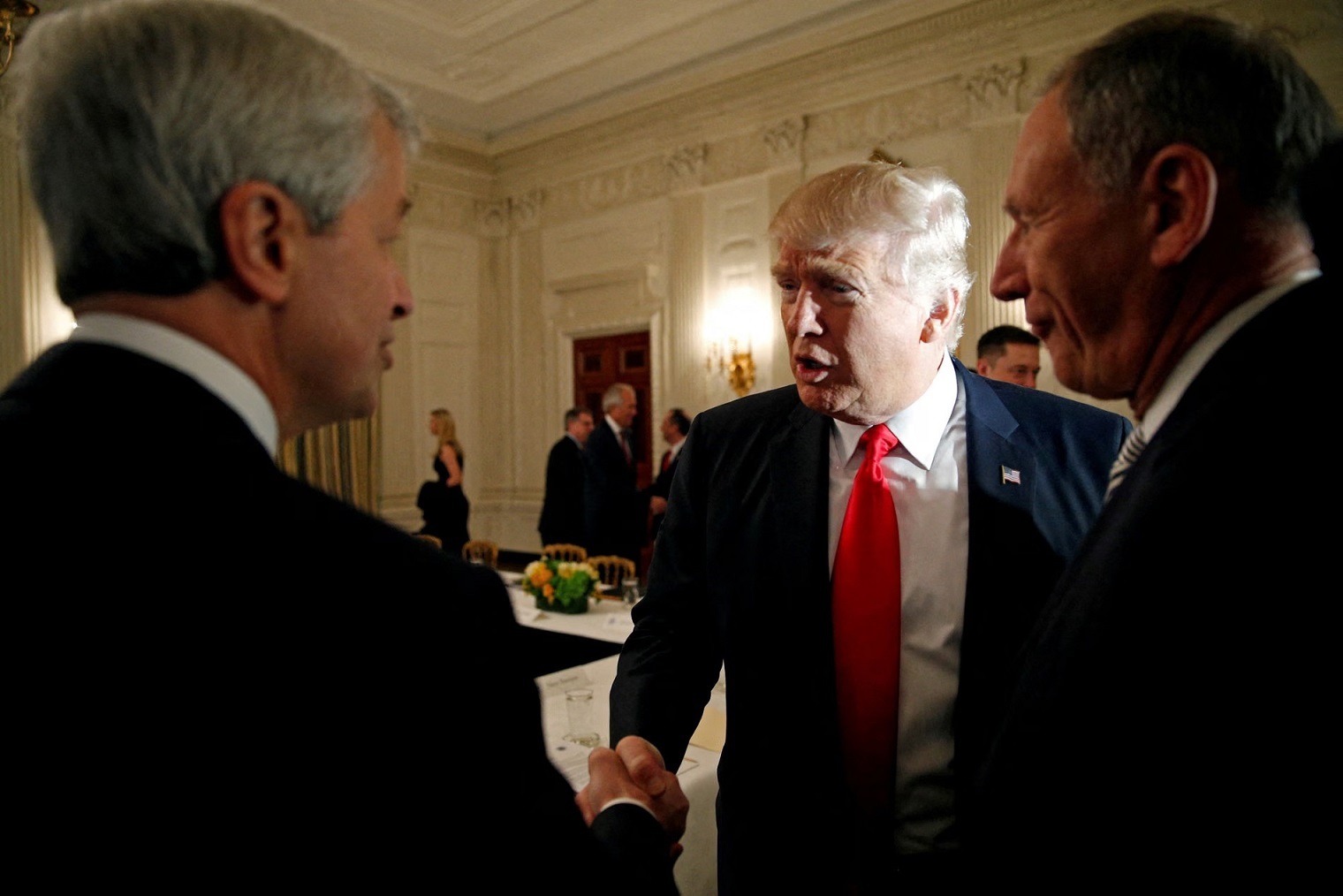
Trump claims that he and his family members were “blacklisted” for “political discrimination.” That’s a lawsuit. Trump, however, may not have forgotten Dimon’s rhetoric against him and Dimon’s wife’s role in supporting Kamala Harris.
Trying to reach a working understanding with a difficult character like Trump is classic Dimon style. He is a compromiser at heart, and his record is a testament to the principle that the race is not to the fastest, but to the most adaptable.
“I wish we had never worked with him and helped him commit his heinous crimes,” Joe Evangelisti, the bank’s head of media relations, said in response to some questions about the Epstein case. “Our CEO never met or met Epstein, and the files confirm that.”
Regarding the email from Epstein’s assistant suggesting that Dimon had an evening date with Epstein, Evangelisti added: “That was incorrect information. Our CEO was never invited to that meeting or dinner.”
Asked whether Dimon still trusted Mary E. Erdoes, whose name appears 272 times in the Epstein library at the Justice Department, he said: "Mary is one of the most respected financial executives today and is respected by the CEO, her colleagues, and her clients."
Jimmy’s role in the financial crisis and the bank’s growth
Dimon is now serving as CEO of J.P.Morgan Chase during the fourth term of the US president, and he may stay in the role long enough to welcome a fifth president after the 2028 presidential election.
He was once known as “Barack Obama’s favorite banker,” but he is unlikely to receive that title from Donald Trump, even if the ever-pragmatic banker has aligned his bank with Trump’s political climate.
This alignment has been evident not only in the bank’s widespread adoption of cryptocurrencies but also in the bank’s reduced commitment to diversity, equity, and inclusion programs.
After the murder of George Floyd in 2020, Dimon stated, “The black community has been held back for a long time, and a lot of that is structural: jobs, education, and things like that.”
He even knelt at a local bank branch in support of the protests that erupted after Floyd’s death. But now that Trump and his allies have forced many U.S. companies to scrap the diversity, equity, and inclusion programs that were expanded in the wake of Floyd’s death, Dimon is sending a different message to his employees. “I’ve never been a big believer in unconscious bias training,” he told a staff meeting last year.
The one issue on which Dimon has consistently stood firm with Trump is the need to preserve the independence of the Federal Reserve. In this, he joins a broad constituency; nearly everyone on Wall Street, along with professional economists and even many prominent Republicans (not just Democrats), have opposed Trump’s often harsh and unsavory efforts to undermine Jerome Powell and force him to cut interest rates.
On the more controversial issue of tariffs, Dimon has noted that they could increase inflation, but that people should “get through it,” as he put it last year, when Trump returned to office.
The fact is that as CEO, he set the overall tone, the organizational culture, and the ethical and regulatory standards of the bank. It was the senior executives under his leadership who maintained and expanded this highly profitable business relationship for years. So he cannot be dismissed as simply an uninformed or indifferent observer.
Jamie, who was long touted as Wall Street’s “moral compass” and a symbol of responsible banking, failed to fulfill that role in this case. His and his bank’s approach to this affair did not make banking more than just a business; it showed that even for him, in the end, commercial interests and pragmatism took precedence over ethical considerations and “public service.”
Jamie Dimon, with a stellar record of managing financial crises and driving his bank to unprecedented growth, now faces a shadow of ethical ambiguity. His claim of not knowing about Epstein until 2019, despite evidence to the contrary, threatens his legacy.
