
Iran's Largest Media Event at Milad Tower: 313 Journalists from Iran and 25 Teams from 12 Countries Compete in the Media Hope Cup Festival
TEHRAN (Defapress) - This morning (Sunday), 313 journalists from Iran and 25 teams from 12 countries began competing in the third edition of the Hope Media Cup, the country's largest media event, held at the Milad Tower Conference Center.
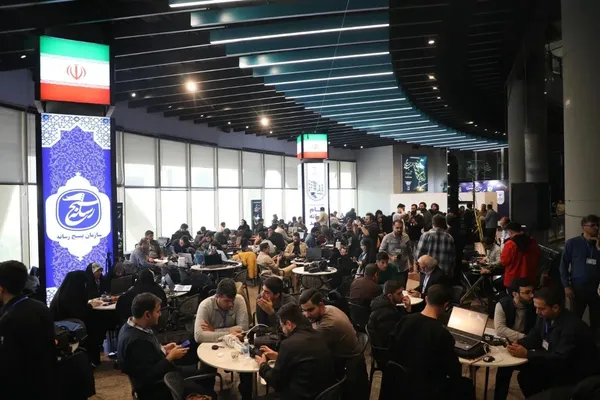
Focused on creating and sharing content that inspires hope, chronicles Iran’s progress, and highlights the nation’s achievements, this 36-hour event began Sunday morning and will conclude Monday evening.
Participants, organized into media teams, will produce and publish content across various fields; their performance will be monitored and evaluated using artificial intelligence technology.
313 Domestic Journalists and 25 Teams from 12 Countries Compete in the Hope Media Cup
Rouhollah Rahmani, the scientific and content secretary for this round of the competition, stated: "In this round, we are hosting teams from 31 provinces across Iran, as well as 25 teams from 12 countries; in total, 313 journalists from all over the country are participating in this event."
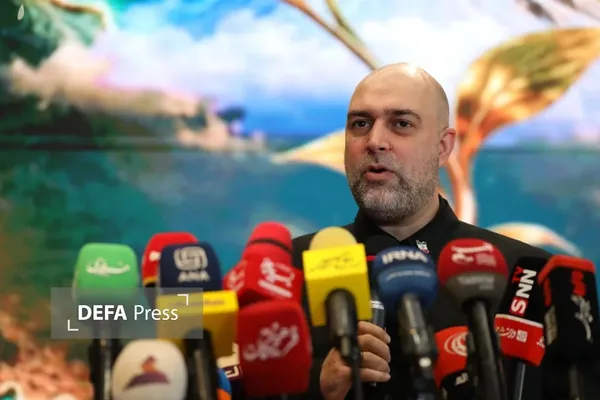
He added: "For the first time, alongside qualitative evaluation by judges, we are utilizing artificial intelligence for quantitative assessment and the precise tracking of the reach and impact of media activities. In the previous edition, the total number of views generated by the event’s media coverage exceeded one billion."
Rahmani explained: "The Hope Media Cup is modeled after scientific olympiads and aims to identify and showcase the capabilities of media professionals, given that the media serves as a primary and pivotal arena in soft war."
Judging News Products Across Two Categories: Publication and Content
Elaheh Khansari, Head of the Jury for the Hope Media Cup Festival, stated during the ceremony that this significant media event has enlisted the participation of professional media figures.
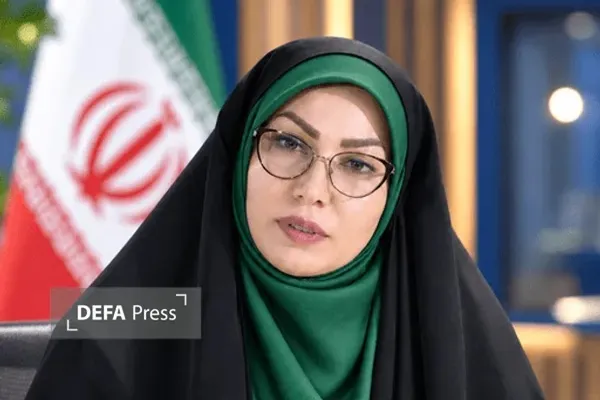
She added: "We have also introduced a platform to facilitate the uploading of news entries. Submissions will be evaluated across two categories, publication and content, with the jury monitoring the latest status of the entries."
Khansari noted: "In the content category, the best entries across nine different formats will be reviewed and selected, with the final results to be unveiled at the closing ceremony."
Journalists Are the Commanders and Combatants of the Media Front
Brigadier General Seyyed Ghasem Ghoreishi, Deputy Commander of the Basij Organization, speaking at the event, congratulated everyone on "Basij Week" and welcomed the domestic and foreign media representatives. He expressed his appreciation for the efforts of the Basij Media Organization, as well as the event’s secretary and judges, voicing his hope that this event would prove both enduring and impactful.
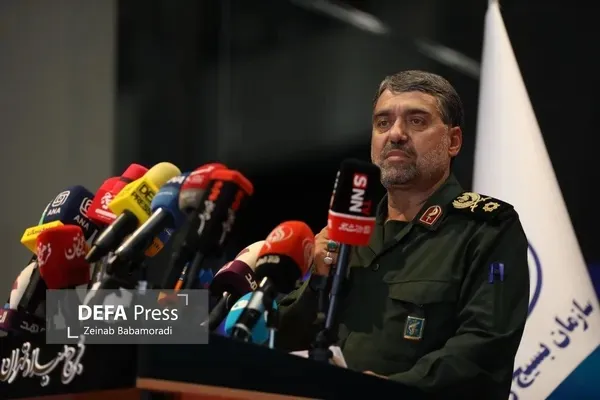
Elaborating on a significant development for the Iranian nation, Brigadier General Ghoreishi stated: "The Supreme Commander-in-Chief has issued a directive to the commanders of the Armed Forces, announcing that restrictions on the range of weaponry have been lifted, and there are no longer any geographical limitations for the Armed Forces. This means that, in proportion to the threat, anyone, wherever they may be and whatever means they might use to threaten the Iranian nation, will be met with a response."
Referring to the words of the martyred Leader, he added: "Just as our martyred Leader once declared, 'If you strike once, you will receive ten blows in return,' or 'The era of hit-and-run tactics is over', our current leader has now noted that, given the Americans have retreated hundreds of kilometers from our borders out of fear and are now operating from distant bases, the previous directive has been updated."
The Deputy Commander of the Basij Organization clarified: "The previous directive from our martyred Leader was calibrated to the threat as it was then assessed, at a range of approximately 2,000 kilometers. At that time, he stated that there was no need for our missiles or other armaments, such as drones, to have a range exceeding 2,000 kilometers. However, he also wisely issued another requirement: that the precision of these missiles must be extremely high, down to the millimeter or centimeter. In other words, if a missile with a 2,000-kilometer range is locked onto a target, it must strike the very center of that target."
He continued: This implies that should there be a decision to extend the range of these missiles, one viable approach is to multiply their range through minor modifications. The good news, based on what I have heard and know, is that the directive issued by the Supreme Leader of the Islamic Revolution regarding the Armed Forces, concerning equipment, weaponry, intelligence, and firepower, has been successfully fulfilled.
Brigadier General Ghoreishi emphasized: The Americans should not assume they will be safe by positioning themselves 1,000 or 2,000 kilometers away. Just as they once dismissed Iranian missiles as fabricated, they will find no sense of security even at such distances; should the need arise, the decision and resolve of the Supreme Leader will, God willing, be executed by the Armed Forces.
Drawing an analogy between the Hope Media Cup Festival and military exercises or war games, the Deputy Commander of the Basij Organization stated: In military exercises, forces prepare for actual confrontation with an enemy based on operational assessments and plans; similarly, the Hope Media Cup Festival serves as an opportunity for media professionals to train and prepare for engagement in media warfare.
Noting that the Hope Media Cup recorded over one billion views last year, Brigadier General Ghoreishi expressed hope that this year’s event would see significant growth and set new records. Emphasizing that the media front serves as the primary instrument for cognitive and soft warfare, complementing hard warfare, he noted that media practitioners act as the officers, commanders, and combatants of this front. The Hope Media Cup Festival can serve to prepare them and bolster their capabilities for confronting media warfare.
The Deputy Head of the Basij Organization added that, unlike military exercises, which involve operational drills and battlefield simulations, media practitioners in this event face a real-world arena; they must prepare to play an effective role on the battlefield of narratives.
Brigadier General Ghoreishi, underscoring the necessity for media professionals to narrate and articulate the nation's progress, stated that they must not only recount the advancements of the Islamic Republic of Iran but also depict the continuous, ever-growing trajectory of the country’s development and strengthening, thereby contributing to the realization of the "Strong Iran" strategy.
He asserted that narrating and explaining the country's progress, beyond motivating those striving for development, serves to strengthen hope within society.
Pointing to the need to raise awareness regarding post-Islamic Revolution achievements, Brigadier General Ghoreishi stated that Iran’s accomplishments across various sectors, including sports, medicine, and other scientific and specialized fields, must be accurately articulated to the public.
He noted that, in its media warfare, the enemy seeks to overlook Iran’s greatness and the dignity achieved through the people’s self-belief and active participation. The Deputy Commander of the Basij Organization proposed that two additional topics be included in the agenda for the event organizers: first, addressing the ignominious defeat of the United States and the Zionist regime, alongside the strength and authority of the Iranian nation; and second, ensuring preparations are in place to commemorate the martyrdom anniversary of our martyred Leader.
Referring to the geopolitical shifts following World War II and the onset of the Cold War between the United States and the Soviet Union, Brigadier General Ghoreishi stated that the collapse of the Soviet Union was not brought about by the West’s military or economic might. Rather, as Brzezinski argued, the West’s victory was achieved through a media war, specifically via American radio broadcasts and the BBC. Today, with the emergence of new tools, this form of warfare has become far more distinct and potent.
Pointing to the Pahlavi regime’s subservience to foreign powers, citing the memoirs of Farah Pahlavi and the book Two Ambassadors, he emphasized that during the Pahlavi era, Iran’s national interests were disregarded in favor of the interests of the United States and Great Britain; major national decisions were, in fact, dictated by foreign powers.
Emphasizing that the Islamic Revolution was fundamentally intellectual and cultural, Brigadier General Ghoreishi noted that it restored the Iranian nation’s most vital rights, including the right to self-determination, independence, the revival of national and religious identity, and freedom. He added that the media today bears the responsibility of chronicling and narrating these achievements.
Our Goal Is to Produce Hope-Inspiring Content
Morteza Karamouzian, Head of the Basij Media Organization, stated at the Hope Media Cup Festival, held at the Milad Tower Conference Hall, "I have visited several media outlets, and their performance has been good. Each participant is expected to present a piece of good news from their respective field; we are quite firm on this requirement."
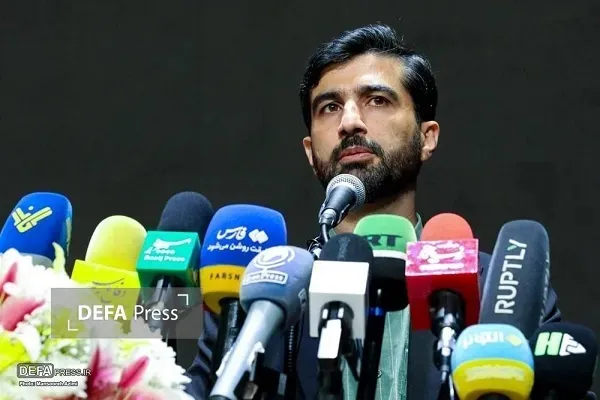
He added, "Each speaker will be present at the Hope Media Cup for over an hour, a rule that also applies to those giving presentations. An artificial intelligence monitoring system is tracking the performance of these media outlets, and the evaluation of their content production will certainly be conducted with this focus in mind."
He continued, "Today, we are hosting representatives from 31 provinces with strong media presence, all of whom are showcasing their work. Furthermore, 150 national-level journalists and 12 media organizations are participating in the conference to display their achievements."
Noting that last year’s event garnered one billion views with participation from all provinces, he emphasized, "This is a 36-hour event, structured around specific themes defined for the Hope Media Cup Festival."
Elsewhere in his remarks, Karamouzian referred to the Zionist regime and its atrocities in recent conflicts, stressing, "The crimes of the Zionist regime must be reported so that public opinion becomes accurately informed about these atrocities. That said, it must be remembered that our primary objective at the Hope Media Cup Festival is the creation of hope-inspiring content."
The Head of the Basij Media Organization concluded, "The closing ceremony of the Hope Media Cup will take place tomorrow at 8:00 PM (Tehran time). It is hoped that this event serves as a positive step toward transformative change within the media sector. Moreover, media outlets can advance their objectives through teamwork and collaborative projects."
