
Positions of the Three Mediators on the Requirements of the Second Phase of the Ceasefire at the Doha Conference
TEHRAN (Defapress) - The three mediators of the Hamas-Israeli Gaza ceasefire announced at the Doha conference on Saturday that the withdrawal of the occupying regime and the deployment of an international peacekeeping force are necessary steps for implementing the second phase of the agreement.
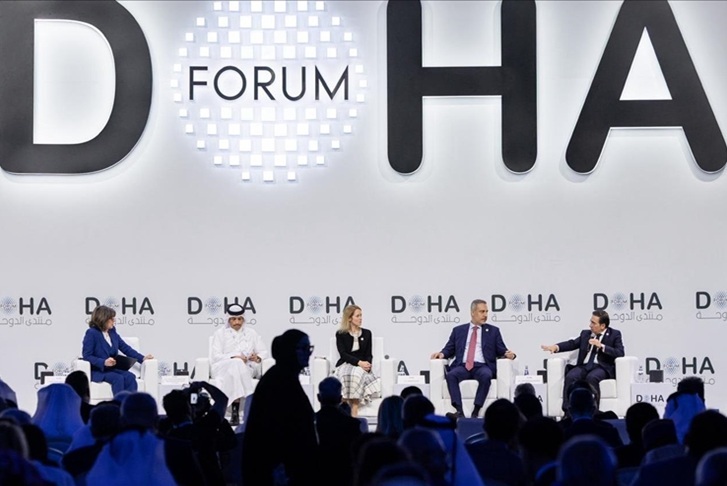
Qatari Prime Minister Sheikh Mohammed bin Abdulrahman Al-Thani said at the conference: "We are now at a critical moment. The ceasefire will only be definitive when the Israeli army completely withdraws from Gaza. Qatar and other guarantors of the ceasefire have come together to advance the next phase of the agreement. But this next phase is also temporary in our opinion, and we want a lasting solution that ensures justice."
In the first step of the agreement, the Israeli army was ordered to withdraw to the “yellow line” inside the Gaza borders, and in return, Hamas handed over all but one of its dead prisoners and the bodies of its dead to Israel. However, there are important differences for the start of the second phase of the agreement, including the issue of Hamas’s disarmament, which is the main demand of the United States and Israel.
According to the US President’s 20-point plan, Hamas must be disarmed, and its members can leave Gaza after handing over their weapons. Hamas has repeatedly opposed this issue. In recent days, the Palestinian Islamic Resistance Movement announced that if Israel ends the occupation, it will hand over its weapons to the Palestinian Authority.
Head of Hamas’ political office and chief negotiator, Khalil al-Hayyah, said: “Our weapons philosophy is tied to occupation and aggression. If the occupation of Palestine ends, these weapons will be under the control of the government.”
The Turkish Foreign Minister, Hakan Fidan, said at the conference: “Hamas’ disarmament should not be the main priority. We must prioritise and be realistic.”
According to the initial draft of the agreement, which was also approved by the United Nations, Israel must withdraw from its positions, Gaza must be administered by an international body called the “Peace Commission,” and peacekeeping forces must take up positions there.
Qatar and Egypt played a prominent role in reaching a ceasefire agreement between Hamas and Israel; an agreement that largely stopped the Zionist regime’s brutality, but the warring parties have not yet reached an understanding on how to move forward with the provisions of the first phase of the agreement.
“We must deploy a peacekeeping force in Gaza as soon as possible, because Israel violates the ceasefire every day,” Egyptian Foreign Minister Badr Abdel Latif said at the Doha conference.
However, Arab and Muslim countries are very cautious about participating in the peacekeeping force, fearing that they themselves will be drawn into the war.
Regarding the Gaza peacekeeping force, the Turkish Foreign Minister stated: “Negotiations on the peacekeeping force are ongoing and important questions remain about the command structure and the participating countries. The first goal of this force should be to separate the Palestinians from the Israelis.” The Egyptian Foreign Minister also confirmed this view and called for the deployment of a force along the “Yellow Line” to monitor and verify the ceasefire.
Since the implementation of the ceasefire, there have been several cases of the occupying army shooting at Palestinians near the Yellow Line. Turkey, which is one of the guarantors of the ceasefire, is interested in participating in the peacekeeping force; an issue that has been strongly opposed by the Zionist regime.
Hakan Fidan further called on the United States to intervene to accompany the Israeli Prime Minister in continuing the ceasefire plan. Fidan warned: “If Trump does not intervene, there is a fear that the plan will fail. The number of daily ceasefire violations by Israel is beyond imagination, and all signs point to the risk of the agreement failing.”
The ceasefire plan initially calls for the opening of the Rafah crossing on the Gaza-Egypt border to allow aid in. Israel has promised to open the crossing soon, but only for exiting the Gaza Strip and entering Egypt. Egypt immediately rejected the claim, insisting that the crossing should be open in both directions.
“Rafah is not going to be a gateway for displacement, but it will be the only entry point for aid,” Abdel Latif said.
The “Board of Peace,” which is responsible for rebuilding Gaza during the transition period, is said to be headed by Donald Trump, but the identities of the other members are still unknown.
