
Consequences of the Suspension of the Italian Security Agreement with the Zionist Regime
TEHRAN (Defapress) - The decision of the Italian government to suspend the security agreement with Israel has been widely reflected in the European and Middle Eastern media.
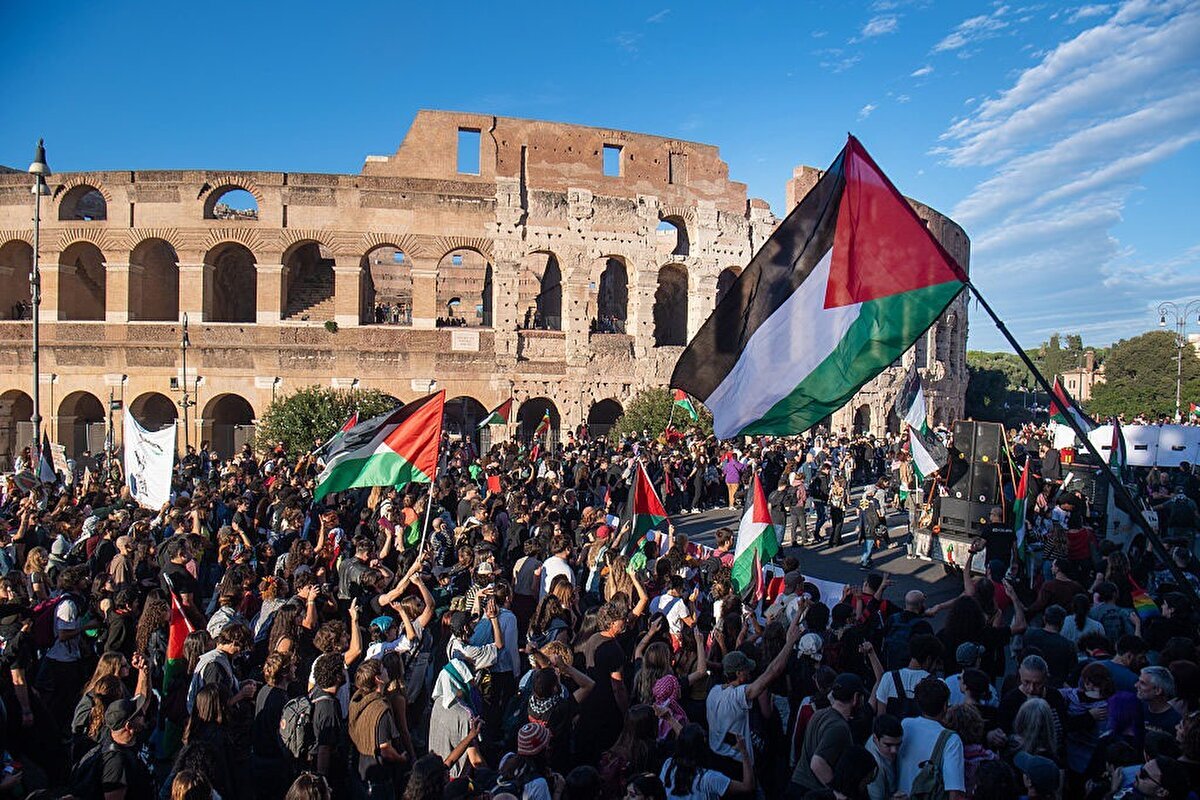
The suspension of the Italian security agreement with Israel comes at a time when the aggression of the Zionist regime, including the military action against Iran, the Gaza war, and the recent attacks on Lebanon, has led to an unprecedented increase in international pressure on the Israeli government.
Accordingly, we must say that many analysts have assessed this decision as a sign of the growing isolation of the Benjamin Netanyahu government, especially the Zionist regime.
The security agreement between Italy and Israel included military cooperation, information exchange, training, and joint defense projects. This agreement had symbolic and practical importance for Israel, as it indicated the continued support of a member state of the European Union and NATO for security cooperation with Tel Aviv.
From the perspective of analysts, the reasons for the suspension of Italy's security agreement with the Zionist regime can be divided into three parts: pressure from European public opinion, a change in the approach of the Italian government, and a political message to Tel Aviv.
In the first part, which is the pressure from European public opinion, we should mention that in recent months, widespread protests in European cities against the war in Gaza, the military aggression against Iran, and now Netanyahu's attack on Lebanon have increased. Accordingly, in Italy, civil society groups, academics, and left-wing parties have also called for an end to military cooperation with Israel.
In the second part, we see a change in the approach of the Italian government. Although the Italian government usually has close relations with Israel, the continuation of the war and reports by international organizations about the humanitarian situation in Gaza have caused Rome to reconsider maintaining its international credibility.
In the third part, we also see a political message to Tel Aviv. The suspension of a security agreement by a European NATO member has been seen by many observers as a direct message to Netanyahu’s government that continuing the war without a political path will have high diplomatic costs.
But the question that arises here is why this action is described as a “defeat for Netanyahu”? This question has three answers.
The first answer is the deepening of international isolation. In recent months, some European governments have expressed their criticism of Israeli policies more openly. Italy’s action has reinforced this trend and shows that even traditional allies are distancing themselves.
The second answer is a blow to the Israeli government’s narrative. Netanyahu has always emphasized Western support. The suspension of a security agreement, especially by a country that has had good relations with Israel, undermines this narrative.
The third answer is the practical consequences for defense cooperation. Although the suspension of the agreement does not necessarily mean a complete cessation of cooperation, it could affect joint projects, equipment exports, and security coordination.
It is worth examining the reactions to this suspension of the security agreement. Accordingly, we will examine these reactions in two parts: Israel and Italy.
Regarding this reaction in Israel, we should say that some Israeli media have described this action as “worrying” and “a sign of a change in the European atmosphere.” Domestic analysts have also warned that the continuation of the war without a political solution will further weaken Israel’s relations with Europe.
However, regarding the reactions to the suspension of the security agreement in Italy, we should say that Italian officials have announced that this decision was taken “in line with a review of defense policies and taking into account humanitarian conditions.” Of course, opposition parties have also welcomed this action.
Finally, the suspension of the security agreement by Italy is not simply a technical or administrative decision; Rather, it is a sign of profound changes in Europe's approach to the Gaza war and the policies of the Israeli government. The move is seen by many analysts as a political defeat for the Netanyahu government, as it shows that traditional Western support is eroding and diplomatic pressure on Tel Aviv is increasing.
