
Iraqi Clerics Continue to Support Weapons of Resistance
TEHRAN (Defapress) - In an exclusive interview with the Defapress correspondent, Ayatollah Sayyed Yassin Mousavi, the Friday Prayer Imam of Baghdad, detailed the jurisprudential and political dimensions of weapon management in Iraq. He emphasized that under Ahl al-Bayt jurisprudence, possessing or using military force outside the authority of a fully qualified jurist is strictly unlawful (Haram).
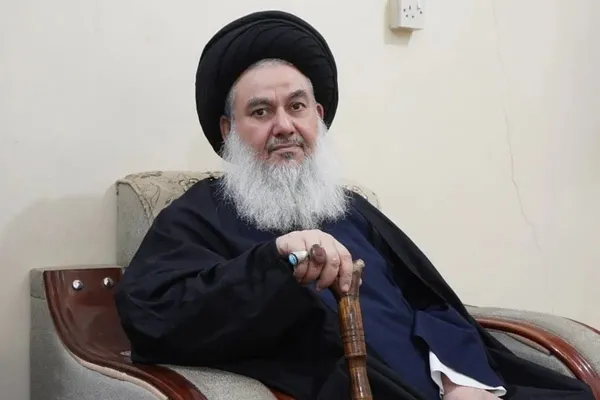
Distinguishing between legitimate Resistance weapons and uncontrolled arms, he stressed that the weapons of the Popular Mobilization Forces, formed based on the religious authority's decree of Sufficiency Jihad, constitute an integral component of the state's defensive power. The Baghdad Friday Prayer Imam also warned against the confusion among certain government officials seeking to appease U.S. forces, while presenting a comprehensive and logical roadmap for a fair resolution to the weapons dossier.
Elaborating on the historical and legal background of this dossier, he stated that following the fall of the tyrannical regime, weapons spread among the populace due to the initial weakness of the government in securing the country, serving to defend lives, mosques, scholars, and the faithful. However, as stability was restored, certain groups' persistence in retaining arms outside established regulations resulted in various forms of corruption.
From a jurisprudential perspective, the exercise of military power is strictly prohibited unless overseen by the Infallible Imam (a.s.), an authority delegated during the Major Occultation to a fully qualified, just jurist. Consequently, the only legitimate weapons are those authorized by such a jurist to protect religion, defend the faithful, and safeguard national independence; any arms outside this defined scope are religiously prohibited (Haram) and carry destructive consequences for social security and tribal relations.
Referring to the historic role of the religious authority's (Marja'iyya) Sufficiency Jihad fatwa against ISIS, the Friday Prayer Imam of Baghdad affirmed that despite changing security conditions, the religious and national mandate of that fatwa and the role of Popular Mobilization Forces remain fully active.
He reiterated that the religious authority's stance in supporting PMF remains completely unchanged, with its forces forming an indispensable part of the state's defensive apparatus. Therefore, statements issued by the religious authority about the need to consolidate or limit weapons pertain specifically to unregulated, illegal arms and do not apply to resistance weapons.
Analyzing the causes of confusion among certain government officials regarding weapon restrictions, Ayatollah Mousavi attributed the root of this uncertainty to attempts to appease U.S. occupation forces and political rivalries. He noted that U.S. forces prevent the Iraqi armed forces from acquiring strategic defensive weapons necessary to protect the nation's airspace and borders. At the same time, political factions exploit the issue to weaken rivals without regard for national interests.
Emphasizing that the era of dictatorship has ended, he stated that no official has the right to impose their personal view or claim to speak unilaterally for the state, as the state is a collective entity shared by the three branches of government, the public, the Resistance, and above all, the supreme religious authority.
He further described the religious authority as the guardian of the nation, expressing full confidence that it will prevent enemies from exploiting political divisions to incite internal strife and will take decisive action at the appropriate time. As a fair and acceptable solution, the Baghdad Friday Prayer Imam proposed creating a joint committee comprising representatives from the government, parliament, and resistance groups to reach consensus.
Should consensus fail, he asserted that the decision must be deferred until the complete withdrawal of all foreign occupation forces, the purge of corrupt or infiltrated elements from security agencies, and the structural strengthening of the armed forces, drawing upon the successful model of the Islamic Republic of Iran.
