
Iran's Strategy Against the US Economic War
TEHRAN (Defapress) - For years, a significant part of Iran’s security behavior in response to external pressures was based on “response,” meaning that the other party would take action and Iran would respond appropriately after assessing the situation. This pattern was visible in many past crises. However, Major General Mohsen Rezaei’s recent message, when viewed alongside the developments of recent months, carries a different meaning: Iran wants to move the rules of the game away from “opponent’s action – Iran’s response” and move toward “imposing a cost before stabilizing the pressure.”
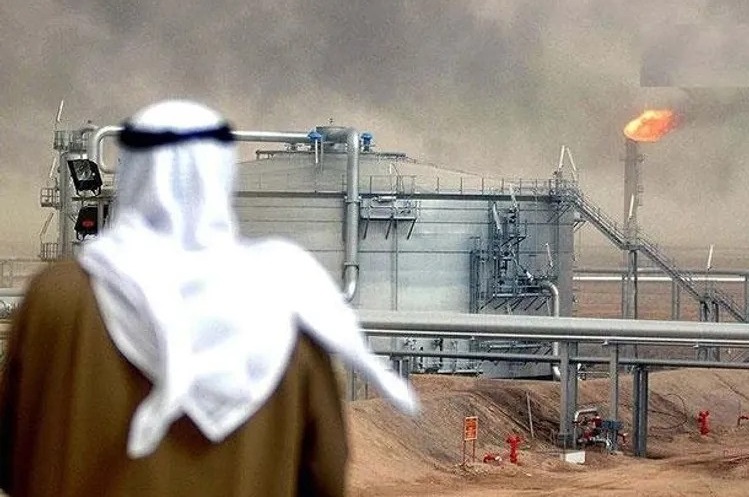
Major General Rezaei has stated that if the economic war continues, not a single drop of oil will be exported from the Strait of Hormuz or any other point in the Persian Gulf, and any participation or support by countries in the US economic war against Iran will be considered an act of war. This second proposition is more important because it expands the scope of the threat concept from the United States to countries that participate in economic pressure against Iran.
In fact, the new message is that economic pressure will no longer necessarily be responded to in the economic sphere. If sanctions, economic blockades, or restrictions on oil exports are part of a pressure strategy against Iran, Tehran can also impose its costs in areas that are more important for the global economy and especially the energy market. This is what can be called “active deterrence”; that is, deterrence is not created simply by declaring the ability to respond, but the other party must be sure that continuing the pressure will create costs beyond its initial calculations.
In this context, changing Iran’s strategy does not necessarily mean an immediate move towards war or the implementation of a military action. Incidentally, the main function of such positions can be to increase the cost of the decision for the other party. When an actor declares that it will treat certain economic measures as equivalent to an act of war, it is in fact trying to clarify the limits of its tolerance and red lines and force the other party to calculate the consequences before making any decision.
However, there is a more important stage. If the threat to the country’s vital interests rises from the level of economic pressure to the point where a hostile act is imminent, the logic of “reaction after the blow” is no longer necessarily the best option for securing national interests. In such circumstances, the defense strategy can move towards “preemptive action”.Of course, preemptive action does not mean preventive war and attack without an imminent threat, but rather means preventing the realization of an actual and imminent threat.
This distinction is of great importance for understanding Iran’s future strategy. A country that always waits to be targeted first and then responds has effectively ceded the initiative to its adversary. But a country that, within the framework of national interests, organizes its deterrence capabilities in such a way that the other side is not even sure of the initiation of a hostile act, seizes part of the strategic initiative.
Of course, such a change in approach requires careful calculation of costs and benefits. Preemptive action, if taken without an imminent threat, could escalate the crisis, create a coalition against Iran, and increase political and economic costs. Therefore, the strength of the new strategy is not in “action at all costs,” but in creating a credible perception that Iran has more options than just a military response after an attack if its vital interests are threatened.
From this perspective, Major General Mohsen Rezaei’s message should be seen as more than a warning about oil. This message could be part of Iran’s effort to move beyond a strategy of “reactive defense” and toward “active deterrence and strategic initiative,” a strategy in which securing national interests is not limited to simply withstanding pressure and responding to enemy actions, but rather aims to change the other side’s calculations and increase the cost of any action against Iran. In such a situation, Iran is no longer simply an actor waiting for others to move; it wants to show that it can also play an active role in determining the scope, timing, and cost of the crisis.
