
Continued Presence of the Military Unit in the Imdad-4 Underground Base
TEHRAN (Defapress) - Southern Lebanon has witnessed a strategic shift in recent weeks that, beyond a localized conflict, has revealed new dimensions of the region's complex military and political equations. Ali al-Tahir hill, one of the key strategic points, has become a focal point for military observers over the years. Located near the city of Nabatieh, this hill, standing at approximately 600 meters in elevation, commands a vast view over the southern regions of Lebanon and, for this reason, has always been of great importance as a command fortress and observation post. Recent events and the Israeli army's claim of capturing this position have raised fundamental questions regarding the hill's place in the history of the Resistance, the performance of both sides of the conflict, and its political and military consequences. In the following, various dimensions of this event and its ramifications are examined.
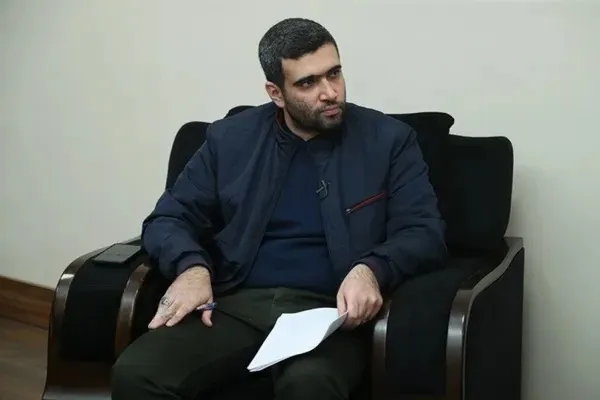
In this regard, the Defapress correspondent conducted an interview with Mohammad Ali Hasannia, a West Asia expert, the full text of which follows in this report.
At the beginning of his remarks, he said: "Ali al-Tahir Hill is located near the city of Nabatieh and takes its name from a local region or family. Throughout the period of the occupation of southern Lebanon (1982 to 2000) and the 33-Day War (2006), this hill was consistently used as a strategic point for observation and field control. During the occupation era, the Israeli army built military fortifications and facilities in this area and used them to monitor movements. In subsequent years, Hezbollah, realizing the importance of this position, established extensive military installations there."
Hasannia continued: "The geostrategic importance of Ali al-Tahir is mainly due to its complete command over key thoroughfares, including the roads leading to Nabatieh, Khiam, and the areas surrounding the Litani River. This hill overlooks a wide expanse of southern Lebanon, and controlling it enables artillery bombardment and the monitoring of enemy movements. Hezbollah had defined this point as a deterrent command fortress, as beneath it lie major military installations, including the 'Imdad-4' underground complex, which served as the southern front's command center and a strategic weapons depot. These installations were built with the cooperation of Iran and were known as one of the most important operational bases in southern Lebanon."
According to him, although the Israeli army in recent days has claimed to have completely captured and cleared Ali al-Tahir Hill, the manner in which this news was released, and the lack of an extensive media attachment have raised serious questions. The Zionist regime, which has always been known for extensive media coverage of its major operations, this time presented this claim solely by releasing a one-minute video of the army spokesperson in a location resembling a tunnel. Notably, no technical details, operational maps, or precise field imagery of the clearing process were published.
This West Asia expert stated: "Based on the rules of irregular warfare, actors sometimes resort to disseminating unverifiable narratives to compensate for field setbacks or under the influence of domestic political pressures. In this specific case, the news blackout and reliance on a short clip could be a sign of a deep rift between the reality on the ground and the propaganda narrative.
Under such circumstances, the claim of completely clearing this strategic point cannot be accepted without independent evidence."
Hasannia continued: "In military science, the distinction between 'the total fall of a base' and 'a change of mission and coming under the operational control of the enemy' is crucial. The 'fall of a base' implies the complete loss of physical and operational control over an area and the full withdrawal of friendly forces from it. However, 'a change of mission and coming under the operational control of the enemy' is a situation in which the enemy gains control of the ground surface, but friendly forces remain present in underground facilities (such as tunnels and bunkers) and retain the ability to conduct operations from within. In the case of Ali al-Tahir, despite Israel gaining control of the surface, several hundred elite Hezbollah fighters remain trapped in the underground complex, effectively turning the area into a besieged base rather than a fully fallen one."
According to him, the creation of a security zone with a depth of 10 kilometers by Israel, known as the 'Yellow Line', although providing operational depth for the regime, has itself turned into an arena for a war of attrition. The remaining elements, infiltration cells, and booby-trapped infrastructure pose a constant threat to the occupying forces. Analysts believe that by employing guerrilla tactics in this area, Hezbollah has increased the cost of occupation for Israel and entangled it in an attritional quagmire.
This West Asia expert stated: "By retaining commando units at Ali al-Tahir for more than 10 weeks, Hezbollah has successfully executed an attrition and distraction operation. By keeping the Israeli army engaged at this point, these forces were able to inflict heavy military and human costs on Israel, concentrate a significant portion of Israel's military capability in one place, and buy time to rebuild other arrays and relocate strategic equipment. The firing of 147 rockets, 20 drones, and 9 anti-tank missiles within 24 hours by Hezbollah demonstrates the organization's ability to maintain continuous bombardment even under conditions of siege."
Hasannia continued: "Understanding the developments in southern Lebanon would be incomplete without considering the Israeli electoral atmosphere. Israel must hold elections by October 27, 2026, and the country's political climate is heavily influenced by this event. Netanyahu faces a serious challenge with declining popularity, particularly in the northern regions, which have suffered the most damage due to Hezbollah attacks. According to polls, only 23 percent of northern voters support him, and about 70 percent are dissatisfied with the government's approach toward Lebanon."
According to him, under such circumstances, Netanyahu needs to display tangible military achievements and present the image of a strong leader who provides security. The insistence on continuing the occupation of the security zone and intensifying operations against Hezbollah is, in reality, an attempt to respond to domestic demands and compensate for past failures. Some analysts believe that Netanyahu is prepared to clash even with the United States to bolster his electoral standing and tailor operational narratives according to his political needs.
This West Asia expert stated: "The difference in symbolism attached to Ali al-Tahir compared to similar bases like Yohmor or Arnoun stems from the fact that Ali al-Tahir, due to the presence of the Imdad-4 complex and the presence of elite forces, became a high-value target for psychological warfare. Other bases lacked such extensive underground infrastructure and symbolic importance; therefore, the focus was placed on Ali al-Tahir to showcase a major victory and influence Israeli domestic public opinion."
Hasannia continued: "Rumors regarding military factories, strategic weapons, or the presence of Iranian officers on the hill were primarily raised for psychological hype, to justify the intensity of the attacks, and to exert political pressure on Lebanon to convey that Israel's military presence in the south is necessary to counter threats. Field reality indicates that the Ali al-Tahir underground complex was built by Iran, but the main command rooms were evacuated prior to the clash, and no new equation was defined by Iran, as the current focus is on preserving remaining capabilities and preventing an all-out confrontation."
According to him, some critics question the performance of the Lebanese government or official structure regarding the Zionists' exploitation of the ceasefire. Using the term 'treason' to describe Beirut's performance is overly extreme. The Lebanese government operates under conditions dominated by complex internal balances. The US-mediated agreement of June 26, 2026, which gradually transfers control of the south to the Lebanese Army, has met with fierce opposition from Hezbollah.
This West Asia expert stated: "Lebanese sources have declared that 'we tried to keep Ali al-Tahir Hill out of the battle, but we were not successful.' This shows that the government is seeking crisis management and preventing internal bloodshed, not collaborating with Israel. Furthermore, Israel opposes the deployment of international forces in the south and has demanded direct contact with the Lebanese Army. Therefore, the Lebanese government's performance should be evaluated within the framework of calculated passivity and political realism, not treason."
Hasannia continued: "Given the strategy of avoiding an all-out confrontation and considering the high costs of direct conflict, Hezbollah almost certainly has no plan to directly recapture Ali al-Tahir. Instead, the mission has shifted to blocking advances along the Nabatieh and Al-Jarmaq lines. The forces trapped underground also act as an attritional trap, forcing Israel to maintain troops in the area and incur ongoing costs."
According to him, Israel's relative control over Ali al-Tahir, contrary to appearances, has not eased the Zionists' path toward the depths of Nabatieh and Al-Jarmaq. The forces trapped underground, despite being surrounded, remain a permanent threat to the occupying forces and complicate a full Israeli withdrawal. Furthermore, Hezbollah's retreat to new defensive lines in Nabatieh and Al-Jarmaq, with prior fortifications and readiness, means Israel is entering an area far better prepared for guerrilla warfare.
This West Asia expert stated: "According to analysts, controlling the security zone (the Yellow Line), although creating operational depth for Israel, has itself become an arena for a war of attrition that will impose heavy costs on the enemy."
Hasannia concluded by saying: "The current situation in southern Lebanon should be viewed as the result of the intersection of two different logics: on one hand, the field reality presents serious challenges for Hezbollah, which has sought survival and aimed to raise the costs of occupation by shifting strategy to scattered guerrilla warfare. On the other hand, electoral calculations in Israel, particularly Netanyahu's need to project achievement, have caused military narratives to be produced and published at a significant remove from field realities."
He emphasized: "The claim of fully capturing and clearing Ali al-Tahir, within this framework, is less a definitive field victory and more a tool for managing domestic public opinion and delivering an electoral achievement. Nevertheless, by maintaining flexibility and relying on irregular tactics, Hezbollah will continue to remain a persistent and attritional threat. The future of this conflict will be determined not by the capture of strategic points, but by the ability of both sides to manage a long-term war of attrition and handle domestic public opinion. What is certain is that Ali al-Tahir has become a silent and symbolic actor in the complex military and political equations of southern Lebanon, the consequences of which will cast a shadow over the region for months and perhaps years to come."
