

Story of the Formation of UNMOG in the Sacred Defense
TEHRAN (Defapress) - Eleven years after the start of the eight-year Iraq-imposed war against Iran, the United Nations finally declared in an official report on December 9, 1991, that Iraq initiated the war on September 22, 1980. This report, submitted to the Security Council by then UN Secretary-General Javier Pérez de Cuéllar, put an end to years of silence and ambiguity by the international community regarding the responsibility for starting the war. This decision not only confirmed Iran's legitimacy in self-defense but was also recorded as a political and diplomatic victory in the country's contemporary history.
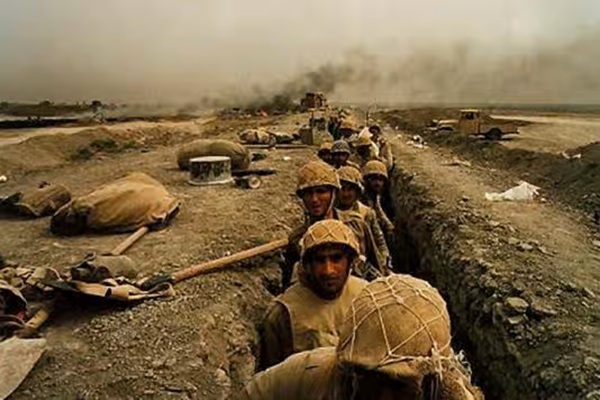
The War's Start and the UN's Initial Reaction
In the final hours of September 22, 1980, Iraq launched an extensive military invasion of Iranian territory, initiating the longest war of the 20th century. The then UN Secretary-General immediately entered negotiations with representatives of the two countries and offered mediation, but these efforts were unsuccessful. The next day, the Security Council convened at the Secretary-General's request and issued its first statement.
On September 25, 1980 of the same year, the Secretary-General officially announced that the war continued and called for immediate Security Council action. Consequently, the Council's first resolution, Resolution 479, was adopted on September 28, 1980. Iraq accepted this resolution, but Iran refused it due to the presence of invading forces on its soil.
The Process of Issuing Resolutions
Following Resolution 479, a series of other resolutions were adopted, including 514, 522, 540, 582, 588, and finally 598. Resolution 598, issued in July 1987, was a turning point in international efforts to end the war. This resolution emphasized the necessity of a ceasefire, the withdrawal of forces to international borders, the exchange of prisoners of war, and the determination of responsibility for starting the war.
The then UN Secretary-General described Resolution 598 at the time as "the culmination of the international community's efforts to find a comprehensive and just solution." After lengthy considerations, Iran accepted this resolution in July 1988, paving the way for a ceasefire on August 20, 1988.
Establishment of the Military Observer Group
Following the acceptance of Resolution 598, the Security Council adopted Resolution 619 in August 1988, which formed the basis for the establishment and dispatch of the United Nations Military Observer Group (UNMOG) to Iran and Iraq. This group was tasked with supervising the implementation of the ceasefire and the withdrawal of forces.
Iran's Diplomatic Efforts
Throughout the post-war negotiations, Iran, with a pragmatic and balanced approach, sought to utilize the UN's capacities to prove its legitimacy. While Iraq, using its occupation of parts of Iranian territory, tried to deadlock the negotiation process, the Islamic Republic of Iran continued the diplomatic path by emphasizing the provisions of Resolution 598 and the central role of the Secretary-General.
These efforts ultimately came to fruition following Iraq's invasion of Kuwait in 1990 and the change in the global powers' perception of the Ba'ath regime's behavior. Iraq, which had previously enjoyed the support of major powers, gradually came to be recognized as a serious threat to regional security.
The UN Secretary-General's Historic Report
On December 9, 1991, Pérez de Cuéllar submitted a comprehensive report to the Security Council, which explicitly declared:
· Iraq's attack on September 22, 1980, was a clear violation of international law and the UN Charter.
· The unlawful use of force and aggression against Iran's territorial integrity makes Iraq responsible for starting the war.
· Even if there were any incidents by Iran before the war, these could not justify Iraq's extensive aggression.
· There is substantial evidence of human rights violations and the use of chemical weapons against Iranian civilians, documented by the UN and the Red Cross.
This report was the result of years of Iran's diplomatic efforts to implement Paragraph 6 of Resolution 598 and finally compelled the international community to accept the truth.
The Political and Legal Significance of This Recognition
The official declaration of Iraq as the aggressor had significant domestic and international consequences:
· Consolidation of Iran's Legitimacy: Iran's eight-year defense gained legitimacy and was recorded in history.
· Diplomatic Victory: Iran was able to prove the truth to the international community using legal and political tools.
· Shift in Regional Balance: Global powers that had previously supported Iraq changed their policies after the invasion of Kuwait and the Secretary-General's report.
· Strengthening Iran's Position in International Organizations: This recognition increased Iran's trust in international institutions and paved the way for further cooperation.
The Iraq-imposed war against Iran was one of the most complex and longest conflicts of the 20th century. The initial silence of the UN and major powers regarding Iraq's aggression imposed high costs on Iran. However, the steadfastness of the Iranian nation and the diplomatic efforts of the country's officials ultimately led to the issuance of a report that revealed the truth.
The official declaration of Iraq as the initiator of the war was not only a political victory for Iran but also demonstrated that patient and persistent diplomacy could yield results even in the face of pressure from major powers. This event is today recognized as one of the shining moments in the diplomatic history of the Islamic Republic of Iran.
