
Does South Korea Produce Nuclear Weapons?
TEHRAN (Defapress) - Washington suddenly changed the rules of the game in East Asia. U.S. President Donald Trump, issuing an unexpected order, has reduced the scale and number of joint military exercises with South Korea; a move that is considered precisely the long-standing demand of North Korean leader Kim Jong Un to reduce tension on the peninsula.
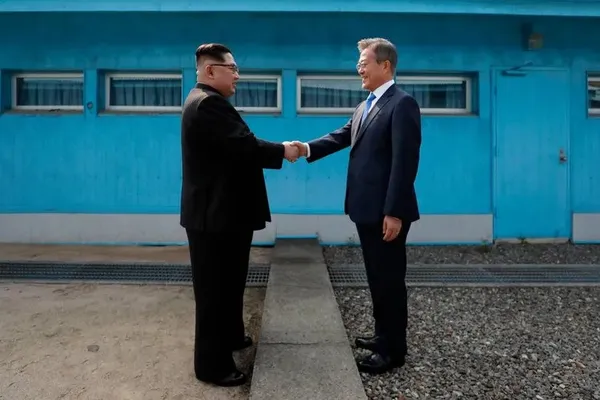
Trump justified this decision on his personal platform, Truth Social, citing the high cost of maneuvers and Pyongyang's respectful behavior during his presidency, but analysts believe the main reason for Trump's behavior lies elsewhere: South Korean President Lee Jae-Myung's refusal to accompany Washington in the regional war with Iran has prompted Trump to seek revenge against him. Seoul, which imports over 70 percent of its oil and about 35 percent of its liquefied natural gas from Persian Gulf countries through the Strait of Hormuz, simply cannot jeopardize its vital interests in the region, and this very issue has brought the long-standing relationship of the two allies to the brink of collapse.
This retreat by Trump, above all, demonstrates his instrumental view of traditional allies as well as a tacit acknowledgment of North Korea's new standing in international equations. Pyongyang is no longer living under the previous isolation of sanctions; Russia and China have effectively ignored UN sanctions, and military and technical cooperation between North Korea and Moscow has given Kim Jong Un's forces a distinct edge over South Korean soldiers. Recent tests of cruise missiles guided by AI also show that Pyongyang has taken giant strides not only in the nuclear realm, but also in modern military technologies.
Under such circumstances, Lee Jae-Myung, who has keenly felt Washington's change of tone, has suddenly put forward an unexpected proposal to Pyongyang: negotiations to sign a peace treaty and bring a formal end to the war that has officially continued for over 70 years. However, Kim Jong Un, who now holds a new trump card, will simply ignore this offer and, instead of a ceasefire, pursue the complete withdrawal of U.S. troops from the peninsula, the exact same goal pursued by Iran and Russia in their respective regions, calling for a new security architecture without a U.S. presence.
Currently, about 28,000 U.S. troops are officially deployed in South Korea, and Trump cannot reduce their numbers all at once; however, it appears that the presence of some units will become rotational, marking the first step toward scaling back Washington's military footprint in the region. These developments have prompted Western experts to issue warnings; they believe Seoul might respond to these uncertainties by declaring its intention to produce nuclear weapons for itself.
South Korea possesses enough nuclear reactors and technical expertise to produce military-grade plutonium, and estimates indicate that the country could produce the necessary fissile material for dozens of nuclear warheads within just six months. The Hyunmoo-4 and Hyunmoo-5 ballistic missiles are also capable of carrying warheads weighing up to 8 to 9 tons, making this option a serious threat to the regional balance. Nevertheless, Seoul will not follow the path of its northern neighbor's isolation; on the other hand, the country knows that any move toward nuclear weaponry could face a preemptive military strike from North Korea, dragging the peninsula to the brink of the abyss.
In the meantime, some analysts paint another perspective: instead of the costly and high-risk path of militarization and bomb production, South Korea might fully join the emerging coalition of anti-Western nations and, by leveraging the resources, markets, and logistics of this coalition, choose a new path to secure its safety. In such a scenario, Seoul could achieve lasting peace with North Korea through Moscow's mediation, forging a new security architecture in Northeast Asia where the United States plays a diminished role than ever before.
It appears that in the critical region of the Korean Peninsula, another defeat for Washington is in the making; a defeat that will be decided not on the battlefield, but at the negotiation table, shifting the balance of power in favor of new coalitions opposed to Western hegemony. Future events will show whether Seoul chooses the path of the bomb or the path of Moscow-mediated peace, but what is certain is that a new chapter in the history of this region is unfolding.
