
US Diplomatic Plot Against Iran and Hezbollah in Latin America
TEHRAN (Defapress) - The United States is exerting diplomatic pressure on Bolivia to manage the presence of Iranian-linked individuals in the country and designate Iran’s Islamic Revolutionary Guard Corps as a terrorist group. The push is part of a broader effort by Washington to bolster its geopolitical influence in Latin America and counter Tehran’s growing power in the region.
Sources familiar with the discussions are reporting sensitive discussions in which the United States is asking the Bolivian government to designate Lebanon’s Hezbollah and Hamas, both considered close allies of Tehran, as terrorist groups. The diplomatic scare tactic reflects the depth of the United States’ concern about Iran’s growing presence and influence in Latin America, where Bolivia serves as a key base for Iranian diplomatic operations across the continent, enabling Tehran to strengthen its ties in the region.
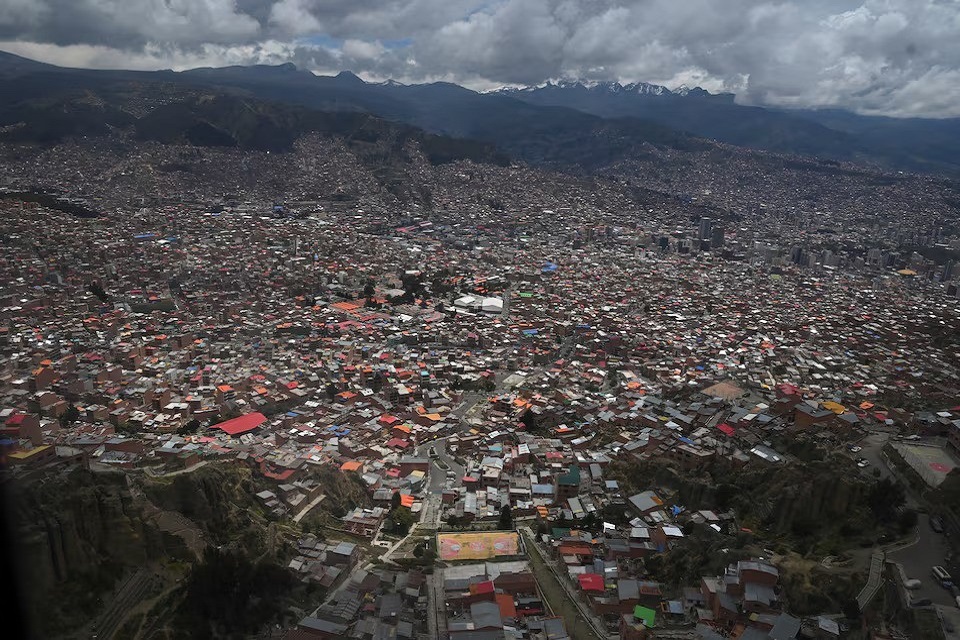
Bolivia, a landlocked country of 12 million people in the heart of South America, might at first seem an unlikely place for a major global power to compete. However, current and former US officials insist that the country has become an important base for Iranian diplomatic activities in South America.
The reason for this is Bolivia’s open political space, combined with its central geographical location, which borders several other countries. Rick de la Torre, a former senior CIA officer and former Caracas station chief, explains that the main base of Iranian diplomatic operations in Latin America has been Venezuela. However, Bolivia and Nicaragua have served as Tehran’s arteries in the region in recent years.
Bolivia’s value to Tehran is its open political climate, balanced oversight, and central geography. The report, based on information leaked by US media, found that a pattern seen across Latin America is that Iran and Hezbollah use open jurisdictions as hubs and then quietly infiltrate more capable or higher-value neighboring countries. This pattern highlights the strategic depth of Iran’s influence in the region and shows how Tehran is exploiting its geographical and political positions to expand its ties and activities, which has raised growing concerns in the United States.
Bolivia’s political situation is changing, and this change has created opportunities for the United States to voice its concerns. Bolivia’s leftist president, Evo Morales, deepened the country's ties with Iran on defense and security issues from 2006 to 2019. He argued that both countries were united in the fight against US imperialism.
Morales and the subsequent leftist president, Luis Arce, who was president from 2020 until late last year, were seen by US officials as uninterested in potential efforts to distance La Paz from Tehran. Now, with the election of moderate President Rodrigo Paz in October, ending two decades of near-constant rule by the leftist MAS party, U.S. officials believe they have a unique opportunity to voice their concerns.
Paz’s administration, which faces significant economic challenges and a troubled parliament, has sought to mend ties with Washington and encourage private investment. U.S. officials have publicly welcomed Paz’s election, and in December the United States declared Bolivia eligible for grant funding from the Millennium Challenge Corporation, an independent U.S. agency. The moves reflect U.S. efforts to exploit political changes to voice concerns about Iran’s growing influence.
The effort to manage relations with Iran in Bolivia is part of a broader US campaign in the region, following US ally Ecuador in September designating the IRGC, Hamas, and Hezbollah as terrorist groups, while Argentina recently designated the IRGC’s Quds Force as a terrorist group.
While the current effort to drive a geopolitical wedge between Iran and Latin America is not new, there are signs that it is gaining momentum. In this regard, a delegation including US State Department and intelligence officials recently traveled to La Paz, the Bolivian capital.
US officials have also discussed putting pressure on Chile, Peru, and Panama, but it is not clear whether they have raised the issue with their counterparts in those countries. US officials have claimed that Hezbollah forces are present in all of these countries.
US officials generally believe that Hezbollah has a stable and persistent presence in Latin America. However, there is considerable debate in the US intelligence community about the extent of this presence. Some analysts and intelligence experts describe Hezbollah’s financing process in the region as highly organized, hierarchical, and structured.
On the other hand, there is another view that emphasizes that much of the financial activity attributed to Hezbollah actually stems from voluntary donations, remittances, and in-kind support from the large Lebanese diaspora living in Latin America, which incidentally or indirectly reaches individuals and movements associated with Hezbollah.
This US diplomatic pressure on Bolivia and other Latin American countries highlights the depth of Iran’s influence in the region. Venezuela and Iran have been key strategic allies for years, and after the illegal kidnapping of Venezuelan President Nicolas Maduro, US officials quickly pressured the government of interim President Delcy Rodriguez to suspend economic and security cooperation between Caracas and Tehran. Now it is Bolivia’s turn to be pressured by US-imposed foreign policy. However, the Bolivian Foreign Ministry has not yet taken a clear position on the US pressure.
