
Enemy Is Surprised by the Change in Iran’s Military Doctrine
TEHRAN (Defapress) - The change in Iran’s military doctrine from defensive to offensive, by adopting a policy of heterogeneous warfare and emphasizing providing a crushing response to any hostile action, demonstrates the country’s firm determination to protect Iran’s territorial integrity and national interests.
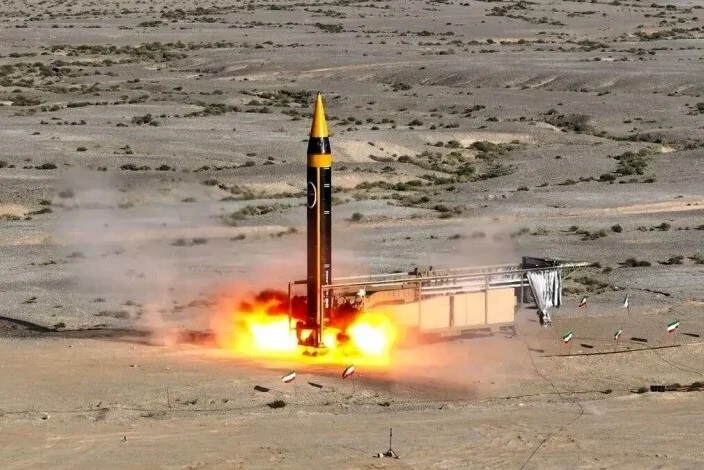
Technological advances have strengthened the core of the country’s deterrence power and sent a clear message to regional and extra-regional enemies, including the United States, that Iran is determined to defend its territorial integrity and national interests. This shows that the doctrine of the Iranian armed forces has shifted from a purely defensive to an offensive posture following recent strategic experiences. This change is centered on the policy of heterogeneous warfare and a crushing response designed to meet any hostile action by the enemy, even on a limited scale, with a rapid, widespread, and unpredictable response.
Admiral Ali Shamkhani, Secretary of the Supreme Defense Council, says in this regard: The absolute priority of the Islamic Republic of Iran in the current circumstances is to achieve full readiness to deter any threat.
He adds: Our message is very clear, and any movement that indicates hostile intent on the part of the enemy will be met with a proportionate, effective, and deterrent response.
Iran seeks to increase the costs of an attack for the enemy
The Armed Forces of the Islamic Republic of Iran, relying on a smart defense strategy, active deterrence, and domestic capabilities, have the capacity to respond appropriately to any threat. The capability of the Iranian Armed Forces is quality-oriented, based on heterogeneous warfare, and focused on deterrence in the strategic depth of regional and trans-regional enemies. Although Iran lags behind major world powers in terms of advanced technologies (such as fifth-generation aircraft or aircraft carriers), its special capabilities in the fields of missiles, drones, and unconventional warfare have made our country a tough and unpredictable competitor in the region. Scott Ritter, a former US Army intelligence and security officer, says in this regard: Iran is the king of the Middle East (West Asia), and if the US military strikes, it will certainly face an Iranian response.
These measures, from improving the quality of weapons to changing doctrine and deploying the most advanced systems, indicate the formation of a sustainable and intelligent deterrent in Iran. This deterrent makes any aggressive action costly and fruitless for enemies and guarantees the country's national security against the most complex threats.
Strengthening deterrence by upgrading ballistic missiles
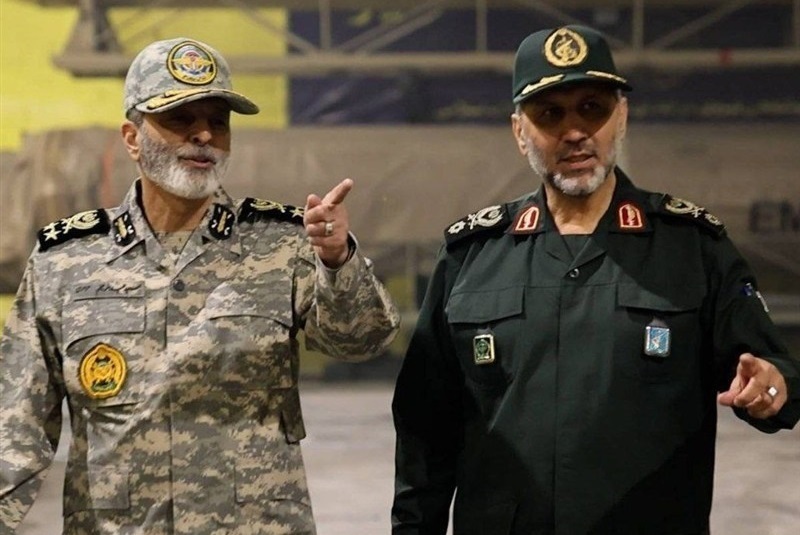
In this regard, during a visit to one of the missile cities of the Islamic Revolutionary Guard Corps, Major General Seyed Abdolrahim Mousavi, Chief of Staff of the Armed Forces, announced the upgrading of the country's deterrence capabilities and, referring to recent advances in the field of ballistic missiles, said: Iran has been able to strengthen its deterrence by upgrading ballistic missiles in all technical aspects.
Emphasizing the armed forces' full readiness against threats, the Chief of Staff of the Armed Forces added: "We are ready to confront any action by the enemies."
Referring to the change in the country's military doctrine after the 12-day Sacred Defense, he said: We changed our military doctrine from defensive to offensive by adopting a policy of heterogeneous warfare and a crushing response to the enemies.
Iran is trying to limit the international space for the enemy's hostile actions through cooperation with allied countries (Russia, China, and some countries in the region). The Iranian armed forces maintain their readiness to deal with possible scenarios through extensive exercises (such as drone, missile, and naval maneuvers).
Based on the change in Iran’s military doctrine (from defensive to offensive), any attack, even a limited one, can be met with a broad and extraterritorial response. This approach was a concrete example in Operation “True Promise 3” (after the Zionist regime invaded Iran).
With its arsenal of missiles with different ranges (short, medium, and long range) and precise targeting capabilities, Iran can inflict significant blows on the US military and its allies; missiles such as the “Khoramshahr 4” with a range of 2,000 kilometers cover enemy bases or fleets in the region.
