
The international relations expert said: Al-Zaidi's visit to Tehran should not be considered a mere ceremonial and transitory event, and it should be considered part of Iraq's policy to redefine the country's position in the region.
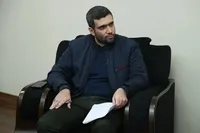
The expert on West Asian affairs said: The election of Khalil al-Hayya to head the Hamas political bureau is, rather than a sign of a change in the movement's path, a reaffirmation of the continuation of the Resistance strategy and maintaining the unity of the leadership in wartime conditions.
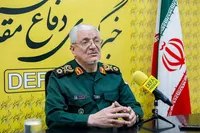
Emphasizing that the foundation of Iran’s defense power is based on divine faith and spiritual power, the Spokesman for the Ministry of Defense and Armed Forces Support said: “The combination of soft power stemming from the spirit of martyrdom and popular support with weapons advancements has turned the country’s Armed Forces into a superior power in the region and a competitor in the global arena.”
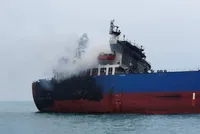
An oil tanker in the Strait of Hormuz, which had turned off its radar system, exploded after hitting a mine.
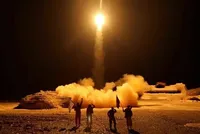
Riyadh's desire for nuclear enrichment in the tense environment of the region could become a new Achilles' heel for Saudi Arabia. Yemeni Armed Forces today have the necessary capabilities to target Saudi Arabia's nuclear facilities and power plants with high precision, in addition to oil infrastructure, if hostilities continue.
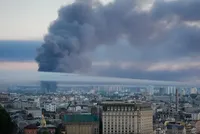
Ukraine’s attack on an Iranian ship in the Caspian Sea was a test of the sensitivity of Iran’s Armed Forces and must be accompanied by a calculated and powerful response. If the Kyiv regime continues, it will become a serious threat to Russia and Iran.
The Spokesperson for the Ministry of Foreign Affairs said in response to a question about the current situation in the Strait of Hormuz: There has been no change in the traffic crossing in the Strait of Hormuz.
The spokesman for the Islamic Republic of Iran's Army said that a large part of the US bases that were targeted during the war have lost their effective operational capacity, adding: "US infrastructure in Erbil, Iraq, has been almost completely destroyed."
A member of Iran’s Parliament National Security and Foreign Policy Committee, referring to Iran's power in the waters of the Persian Gulf, said: "The Strait of Hormuz, as a strategic waterway, will forever remain under the control of the Islamic Republic of Iran."
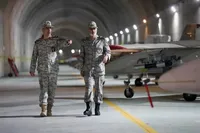
In the first phase of the regional war, Iran resisted the blows of the United States and Israel. In the next step, it defeated the enemy by attacking the Arab countries bordering the Persian Gulf and taking control of the Strait of Hormuz.