
Netanyahu Nears the End of the Line
TEHRAN (Defapress) - On Sunday, November 30, Netanyahu's office submitted a request to the office of the Israeli President, Isaac Herzog, for the pardon of the Israeli Prime Minister and the end of his five-year trial, arguing that it is a measure aimed at protecting the public interest.
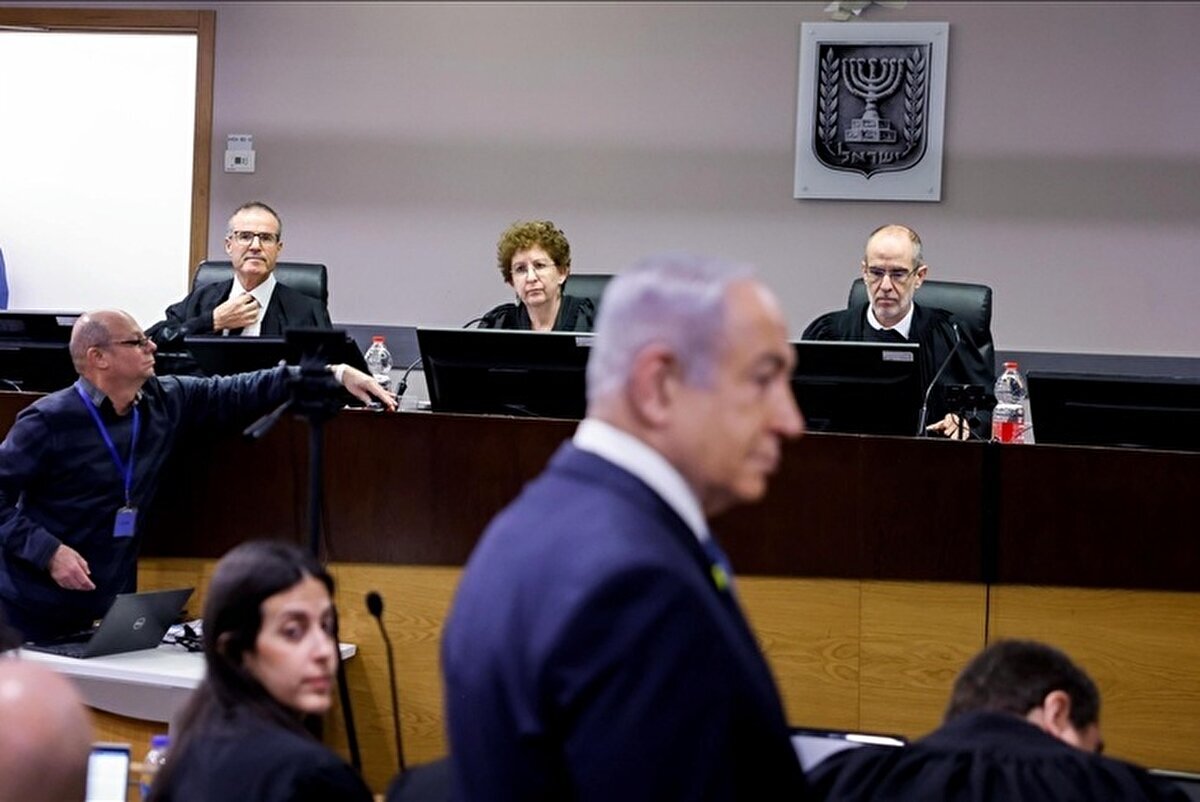
Accordingly, the office of Isaac Herzog, the President of the Zionist regime, confirmed the receipt of the 111-page bill from Netanyahu's lawyer and said that the request has been referred to the pardon department in the Ministry of Justice. The President's legal advisor will also present his opinion so that Herzog can make a decision.
On the other hand, a statement from the office of President Isaac Herzog said: “The Office of the President is aware that this is an extraordinary request with significant consequences. After receiving all relevant comments, the President will consider this request responsibly and honestly.”
The subject of Netanyahu’s cases is corruption. Benjamin Netanyahu is charged in three separate cases (bribery, fraud, and breach of trust). This is while the Israeli Prime Minister stated in his letter that the continuation of the trial “causes division and division in society” and that a pardon could help national unity, reduce tensions, and focus on Israel’s security-political challenges.
It is possible that if the Israeli Prime Minister’s pardon request is also accepted, it may take the form of a “conditional pardon”; for example, with conditions such as withdrawing from politics or accepting part of the charges, or clauses that, if violated, the pardon would be canceled.
But the important point is that presidential pardons in Israel are rarely granted before a conviction; the only notable exception was a 1986 case involving the Shin Bet domestic security service. Accordingly, a preventive pardon for a politician in a corruption case without a guilty plea would be unprecedented and highly controversial.
The request, on the other hand, came on Sunday, weeks after Donald Trump wrote to Herzog asking for a pardon for Netanyahu. Netanyahu has been on trial since 2020 on charges of bribery, fraud, and breach of public trust, a case that involves allegations that he accepted gifts or positive media coverage in exchange for political favors for wealthy supporters.
Netanyahu has denied the charges, calling the case a “witch hunt” orchestrated against him by the media, police, and judiciary. Critics have accused him of prolonging the war in Gaza to preserve his coalition, stay in power, and avoid legal risks.
Netanyahu’s request for a pardon from the Israeli president has sparked a wide-ranging backlash both inside and outside the occupied Palestinian territories. Civil society and opposition leaders have made it clear that they will oppose any attempt to pardon Netanyahu.
“You cannot pardon Netanyahu without admitting guilt, expressing remorse, and immediately withdrawing from politics,” wrote Yair Lapid, leader of the Yesh Atid party, to Herzog on social media.
“Only guilty people seek pardons. The only possible deal is for Netanyahu to accept responsibility, admit his guilt, withdraw from politics, and liberate the people and the country. Only then will unity among the people be achieved.”
Regarding Netanyahu's request for a pardon from the President of the Zionist regime, we must say that this issue is a major setback for Israel in every way. If the pardon is granted, the legal case against the Prime Minister will be stopped, an issue that could change the outcome of the upcoming elections. But rejecting the request could also lead to an exacerbation of the political and social divide in the sick society of Israel.
