
Middle East Eye Editor's Breathtaking Account of Iran's Massive Power
TEHRAN (Defapress) - David Hearst, editor-in-chief of the Middle East Eye news agency, in an article explored various aspects of Trump's potential objectives in a conflict with Iran and asserted that in the world of international politics, Donald Trump, the US President, sees himself as a powerful leader even if domestically he faces challenges such as the Immigration and Customs Enforcement (ICE) shootings in Minnesota and the rising inflation caused by his trade tariffs. Trump believes he has achieved significant accomplishments on the global stage.
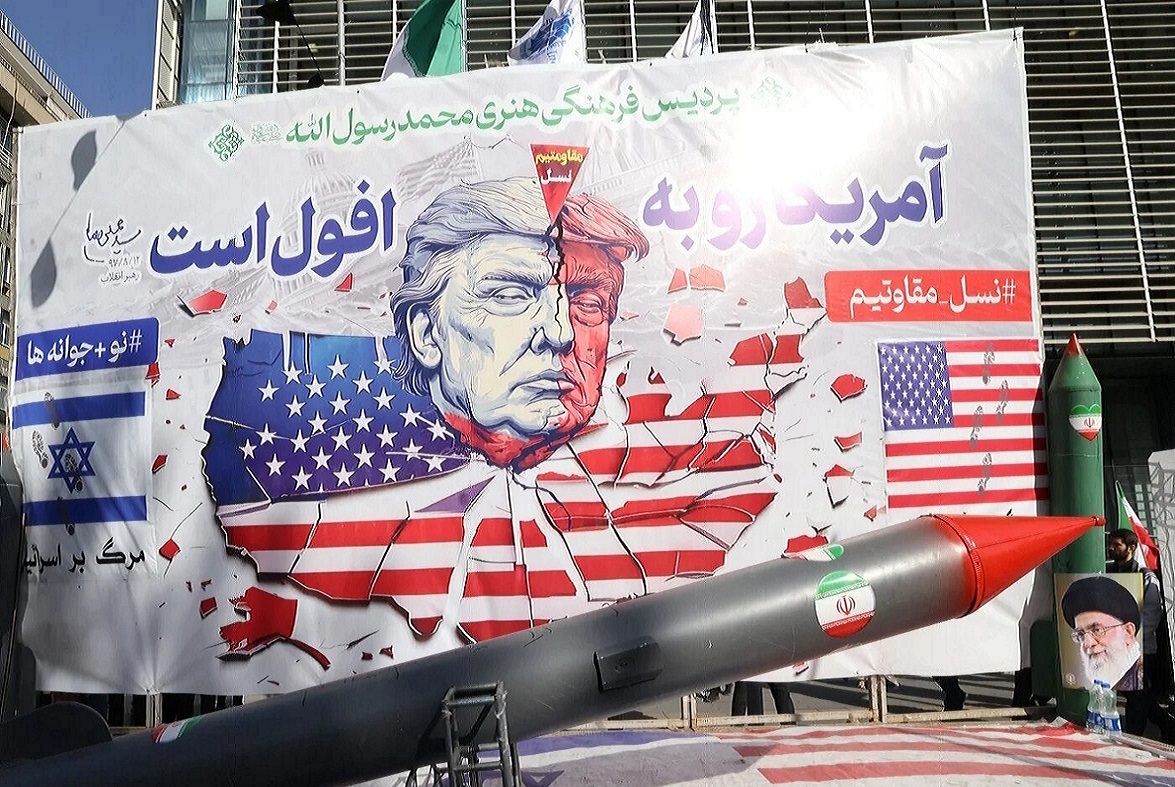
He has forced NATO to agree to a framework for a future deal on Greenland, where, according to later-denied reports, Denmark cedes sovereignty over areas where US bases are to be built. He has also compelled Europe to pay more for its own defense.
Trump has kidnapped Nicolas Maduro, the President of Venezuela, with the result that Secretary of State Marco Rubio announced Venezuela will present its monthly budget. He has also forcibly handed over the Gaza Strip to a fabricated Board of Peace to ostensibly reduce the influence of Benjamin Netanyahu, the Prime Minister of Israel, in Gaza and gain the support of Palestinian factions and the Palestinian Authority.
These are the achievements Trump boasts of. Now, he has prepared a fleet of ships and bombers for a second strike against Iran within a year. Trump imagines he can do to the Islamic Republic what he did to Venezuela. However, this belief of his, despite his strong personal conviction, is fundamentally mistaken. His envoy Steve Witkoff and his son-in-law Jared Kushner have told one of the regional powers that Trump is seeking a rapid but limited airstrike to topple the leadership while preserving the regime.
This attack is supposed to be followed by an agreement in which Iran surrenders its uranium enrichment program and trades its oil solely with the US; in return, Trump would allow Boeing to return to Iran. There are other plans for the attack, but its core elements are speed, extreme violence, and the submission of the remaining leadership members to US orders.
Trump is also convinced that now is the opportune time to strike. He thinks the Islamic Republic of Iran has been weakened by last year's airstrikes, and its main uranium enrichment facilities are still buried under tons of rubble. US intelligence also claims Iran has done nothing to rebuild its uranium stockpiles.
Furthermore, Iran has been hit by the second major wave of internal unrest in three years. In assessing Iran's alleged weakness, Trump relies on two intelligence sources: his own intelligence assessments and Israel, both of which suffer from profound shortcomings. Israeli intelligence is also driven by different objectives. Meanwhile, Netanyahu is only satisfied with regime change and is not seeking a limited round of airstrikes.
Both Trump and Netanyahu are intoxicated by the military actions they have taken so far; each believes they are the masters of the world. If their pilots act based on real-time, nearly minute-by-minute intelligence on target locations and their elimination, they believe there are no limits to what they can achieve.
Last year, the Israeli Air Force demonstrated that the physical distance between its airfields and Iran is no longer a limiting factor. Also, Mossad has publicly claimed that its agents were present on the streets of Iran during the peak of recent economic protests; based on this, they defamed the opponents of the Iranian regime, and a widespread pro-government rally led to the subsiding of these protests.
Fundamental Differences Between Iran and Venezuela
Before the next round of folly begins, it is worth stating a very clear fact: Iran is not Venezuela. It should not be overlooked that Venezuela had no regional cards to play when Maduro was captured. Iran's hands are full of trump cards. Ayatollah Ali Khamenei, the Supreme Leader of the Islamic Revolution, is not only the head of Iran's government, the Commander-in-Chief of the Armed Forces, and its highest political and religious authority. He is the spiritual leader of tens of millions of Shia Muslims worldwide, including the most important Shia populations in the Middle East: in Iraq, Bahrain, Lebanon, Kuwait, and Saudi Arabia.
Ayatollah Khamenei holds direct control over the Islamic Revolutionary Guard Corps (IRGC). This highlights the second fundamental difference between Iran and Venezuela. While a small Delta Force team with simple equipment was sufficient to capture Nicolas Maduro in Venezuela, any attempt to neutralize or confront the IRGC will face a monumental challenge. The IRGC is a force comparable in size and combat capability to the United States Marine Corps.
The IRGC can count on approximately 150,000 ground forces, nearly 20,000 naval personnel, and about 15,000 aerospace forces. Additionally, the Basij, as the extensive popular militia under IRGC command, plays a crucial role in support and enhancing operational capacity. These forces enable the IRGC to effectively blockade the Strait of Hormuz; an operation executable using naval mines, fast attack craft, maritime drones, and other asymmetric tools.
The Strait of Hormuz is one of the world's most critical maritime strategic chokepoints. Approximately 20 million barrels of crude oil, gas condensates, and refined petroleum products pass through this waterway daily, which is only 33 kilometers wide at its narrowest point. Also, about 20% of the global liquefied natural gas trade passes through this route. Even a temporary blockage of this strait could have severe impacts on global energy markets, prices, and the economies of energy-import-dependent countries.
Moreover, if Trump realizes his dream of pressuring a damaged Iran into selling all its oil to him, he must first dismantle the IRGC as an economic power. This is while the IRGC's ability to control Iran's economy was enhanced by US sanctions in 2010 under the Comprehensive Iran Sanctions, Accountability, and Divestment Act (CISADA).
Trump's plan to seize or direct Iran's oil flow also has geostrategic consequences. This move directly impacts China, as it has bought about 90% of Iran's crude oil and condensates in recent years. Iranian crude constitutes about 14% of China's seaborne oil imports, making Iran a more important supplier than Venezuela.
Potential consequences of a third Persian Gulf war
On the other hand, what does Marco Rubio think will happen the day after a US attack? Does he imagine that the IRGC, which owns a complex global infrastructure to circumvent international sanctions, will surrender Iran's annual budget to the US Treasury?
If so, he is living in a delusion. But perhaps the biggest difference with Venezuela is that if Iran is attacked for a second time by American and Israeli missiles, its response will be vastly different compared to the past.
Iran would see such an attack as part of a broader strategy to militarize recent unrest and would interpret it not as a limited strike to induce a negotiated response, but as an existential threat against the Islamic Republic of Iran.
This means Iran's response will not be restrained by attempts to de-escalate or limit the ensuing war. It is highly unlikely that Iran would settle for a coordinated missile exchange, just as it did in response to the assassination of its senior military strategist and diplomat, Martyr Lieutenant General Qasem Soleimani, at Baghdad Airport in 2020.
Five days later, the IRGC launched over a dozen ballistic missiles at the Ain al-Asad airbase in Iraq's western Anbar province and another base in Erbil, but it had warned the Iraqi government. This time, Iran will fully utilize its arsenal of short- and medium-range missiles, estimated by US Central Command General Kenneth McKenzie at over 3000 missiles, because Iran has no reason to hold them back.
Senior Iranian diplomats have previously stated that Iran's response will be asymmetric and will specifically target Israel's regional partners like the United Arab Emirates and Azerbaijan, whose territories are used for drone launches. The Saudis, who have established good relations with Iran after decades of hostility, are worried that an attack on Iran could quickly turn into a war that engulfs the Persian Gulf littoral states.
Such a war cannot be confined to specific geographical coordinates. Iran's sphere of influence extends from the Caucasus to Yemen, from Lebanon to Afghanistan. The Axis of Resistance may have been seriously damaged by the loss of Syria, but its main components in Lebanon, Iraq, and Yemen remain intact.
Can negotiations be taken seriously?
There is great concern among the Persian Gulf states. Negotiations between Iran and the US are now scheduled for Friday in Oman, but over the past three days, they have been stopped and resumed repeatedly. Initially, they were to be held in Istanbul, and the plan - designed by Turkish Foreign Minister Hakan Fidan - was for an international forum of foreign ministers.
The American side then objected to both the location and the limited agenda and threatened to withdraw. This triggered extensive regional lobbying efforts on Wednesday night, which, according to US officials quoted by Axios, involved at least 9 different countries.
Phones kept ringing in the Oval Office. One senior US official said: "They asked us to hold the meeting and listen to what the Iranians have to say. We told the Arabs that if they insist, we will hold the meeting. But we are very pessimistic about the chances of success."
Iran's acceptance of negotiations is also full of conditions. An Iranian diplomatic source told Reuters that the planned meeting would show whether the US intends serious negotiations or not. These words are still interpreted by Iranians as merely the start of a long negotiating process.
Trump seeks immediate results. He has no patience for negotiations. For him, any deal is a transaction. Iran has already taken its ballistic missile fleet off the negotiating table because surrendering this capability would leave the country defenseless against enemy attacks.
However, Trump and Israel will demand that this be the main issue. Furthermore, Iran will not engage in serious negotiations with the "Sword of Damocles" hanging over its head. At some point in the negotiations, the Iranians will inevitably demand the withdrawal of the US fleet as proof of goodwill.
It's all about oil
Trump has a bad track record with Iran. During his first term, he withdrew from the JCPOA. He even launched a surprise attack last year in the middle of negotiations. Iran has the right to demand a goodwill gesture from him before continuing talks.
However, Trump will certainly reject Iran's request. For him, Iran must remain under pressure, just like Europe regarding Greenland. Considering all these points, I conservatively assess the chances of successful negotiations to prevent war at about one in ten.
This history dates back at least over 70 years. From 1954, one year after the 1953 coup d'état jointly organized by the American CIA and British MI6, which led to the overthrow of Iran's elected and democratic Prime Minister Mohammad Mosaddegh, until the victory of the Islamic Revolution in 1979, control over the extraction, production, and export of Iran's oil was largely in the hands of an international consortium of major Western oil companies (known as the "Seven Sisters").
Under the 1954 Consortium Agreement, foreign companies held 50% ownership and operational management of the oil fields (while Iran received 50% of the profits), and the consortium shares were divided as follows: 40% for British Petroleum (formerly the Anglo-Iranian Oil Company), 40% for five major American companies (each 8%: Exxon, Mobil, Chevron, Texaco, and Gulf), 14% for Royal Dutch Shell, and 6% for the French company CFP.
This was a 25-year agreement and effectively replaced the complete nationalization of the oil industry during Mosaddegh's time; although in 1973, under pressure from the Shah and the growing power of OPEC, operational management was gradually transferred to the National Iranian Oil Company (NIOC). However, the consortium remained the main buyer and key beneficiary of Iran's oil until the 1979 Revolution, after which the presence of foreign companies ended completely. This period is a prominent example of foreign interference in Iran's natural resources and its lasting impact on the country's politics and economy.
How similar this situation seems to Trump's Board of Peace. Mohammad Reza Shah Pahlavi received only half the profits from the 1954 agreement, but by 1973, even he had grown tired of such terms. A new 20-year agreement was signed, granting operational control to NIOC.
The Shah was preparing the stage for nationalization, but it was too late, as a series of pre-revolution worker strikes occurred. Does anyone think Iran, as a proud nation with a 3000-year history, will quietly return to the days of foreign domination by Trump's equivalent of the Seven Sisters? Does anyone imagine that the Islamic Revolution, which endured eight years of imposed war (including chemical attacks by Saddam Hussein), weathered sanctions and assassinations, will crumble like a house of cards when faced with Trump? Does anyone seriously think Iran would now follow the Iraq model?
Since May 22, 2003, the date of US President George W. Bush's executive order, all of Iraq's oil sales revenues have been directly deposited into an account at the Federal Reserve Bank of New York. Trump is merely the latest embodiment of a colonial bully all too familiar to Iran. Trump should read history before making the costliest foreign policy mistake of his presidency.
