
Washington's Red Light to New Israeli Settlements
TEHRAN (Defapress) - Tensions have been rising in the Middle East over the status of the occupied West Bank in recent days, with White House officials reiterating US President Donald Trump's opposition to Israel's annexation of the territory.
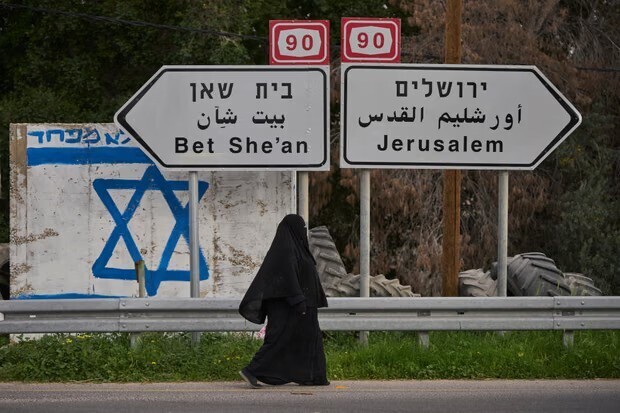
The move comes after Israel announced new plans to expand settlements in the occupied Palestinian territories, including making it easier for Jewish Israelis to buy land directly and increasing Israeli control over areas administered by the Palestinian Authority.
The measures, approved by Israel's security cabinet on Sunday, do not require further approval and are not expected to be implemented anytime soon. A White House official said on Monday that stability in the West Bank would ensure Israel's security and align with the US administration's goals for peace in the region.
The West Bank, occupied by Israel since 1967, is a key part of a future Palestinian state. More than 500,000 Israeli settlers live in illegal settlements and outposts in the area, while about three million Palestinians live there. Accordingly, the settlements are considered illegal under international law.
Recent decisions by Israel’s security cabinet, led by Prime Minister Benjamin Netanyahu, include the repeal of an old law from the time of Jordanian control of the West Bank. The law kept land registration secret, but it will now be made public, eliminating the need for permits from the Civil Administration. The changes will also make it easier for Jews to buy land.
In addition, building permits in the city of al-Khalil, the largest city in the West Bank, will be transferred from the PA to Israel. Israel will also increase its control over two important religious sites in the southern West Bank, Rachel’s Tomb near Bethlehem and the Cave of the Patriarchs in al-Khalil. This is while Israel’s Finance Minister Smotrich described the measures as a step to “deepen the roots in all parts of the Land of Israel” and “bury the idea of a Palestinian state.” Defense Minister Israel Katz also explained the decisions in a joint statement.
This is while the international community has reacted strongly to the decision. In this regard, UN Secretary-General Antonio Guterres expressed his deep concern and warned that the changes are eroding the “perspective of a two-state solution.” His spokesman called Israel’s actions “destabilizing” and pointed to the recent ruling by the International Court of Justice that Israel’s occupation of Palestinian lands was illegal. The UK also strongly condemned the decision, calling it a “unilateral attempt to change the geography or population of Palestine” that is incompatible with international law. London called on Tel Aviv to immediately reverse the decisions.
Regional countries were not indifferent and responded in a wide-ranging manner. A joint statement was issued by Saudi Arabia, the United Arab Emirates, Jordan, Qatar, Indonesia, Pakistan, Egypt, and Turkey, which “strongly” condemned Israel’s illegal decisions to exercise sovereignty over the West Bank.
The Palestinian Authority in Ramallah described the measures as “an attempt to deepen the annexation of the occupied West Bank.” The condemnations come as Netanyahu is set to meet Trump in the United States on Wednesday, a meeting that could have a bearing on the future of bilateral relations.
The events highlight the ongoing challenges to the Middle East peace process. Many observers believe that the expansion of settlements not only threatens the two-state solution but could also escalate regional tensions. Given the opposition of the United States, Israel’s main ally, diplomatic pressure on the Zionist regime could be much greater.
However, implementing such plans could exacerbate instability and further diminish the prospects for achieving a lasting peace. In this context, the task of the international community is to slow down the deepening crisis through coordinated action.
