

Feat of Iranian Pilots in the Third Imposed War
TEHRAN (Defapress) - While many analyses in recent years have focused on the technological superiority and advanced radar and defense systems of the United States in the region, the release of a new report on the aerial operations of the first day of the Third Imposed War presents a different picture of the battlefield; a picture in which the experience, courage, and operational tactics of Iranian pilots have managed to challenge the complex equations of air defense.
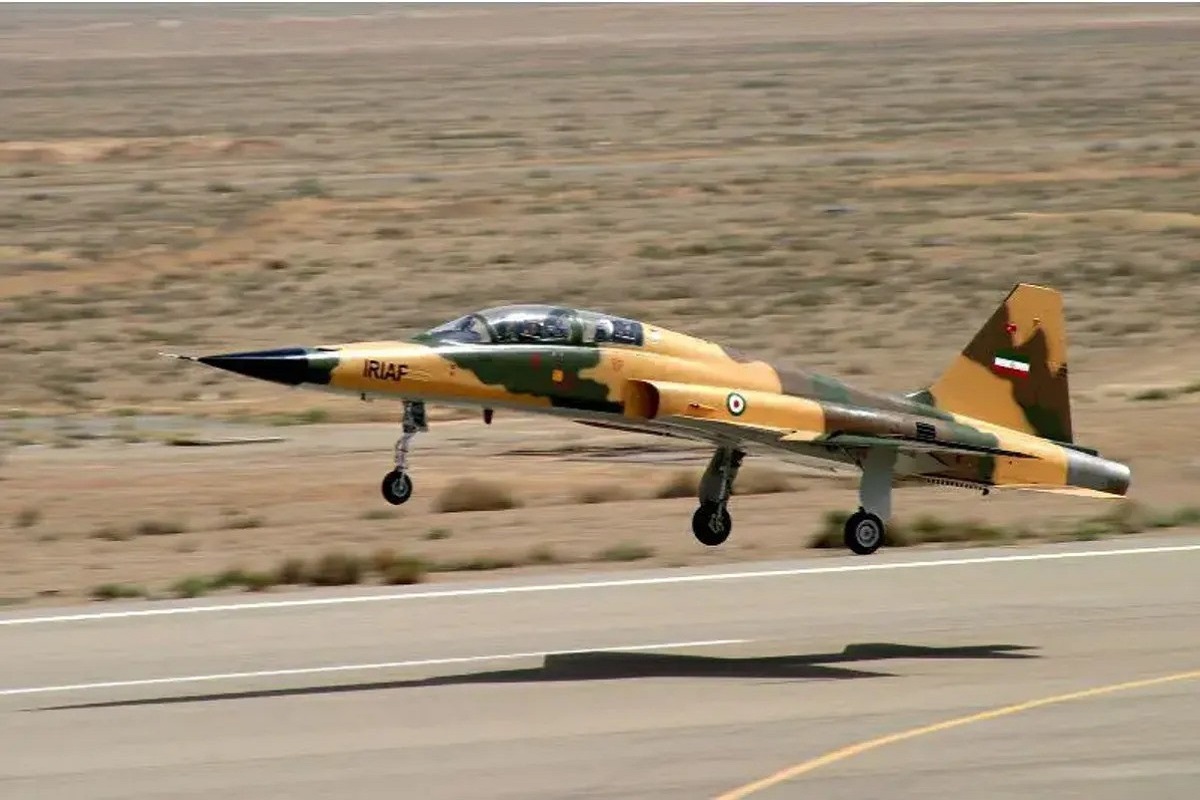
According to a report published by the American media outlet NBC, an Iranian F-5 fighter jet managed to target Camp Boehring, belonging to the U.S. Marine Corps, on the first day of the war and return to its base without being targeted by air defense systems. Although this news has not yet been accompanied by further official details, it has been widely reflected in the media and the military sphere of the region.
Camp Buehring is considered one of the key centers for the deployment of American forces in the region, and any successful penetration into its operational zone holds strategic importance from a military perspective. What has garnered more attention than the attack itself is the method of execution; an operation that appears to have been designed based on very low-altitude flight, surprise, and classic yet effective tactics.
According to published information, it is likely that the Islamic Republic of Iran Air Force (IRIAF) used a combination of F-5, F-4, and Su-24 fighter jets on the first day of operations. It is also said that part of the weaponry used consisted of Russian unguided gravity bombs; munitions that, when used in low-altitude flights, can generate significant destructive power.
The simultaneous presence of different fighter jets in this operation indicates the implementation of a composite pattern in the aerial attacks. The F-5, due to its agility and low-altitude flight capability, the F-4 as a fighter capable of carrying diverse munitions, and the Su-24 as a bomber suitable for deep penetration, could each form part of the operational puzzle of the Iranian Air Force.
One of the most significant pieces of evidence strengthening the narrative of this operation is the discovery of an unexploded FAB bomb at Kuwait's Al Jaber Air Base. Military analysts believe the presence of this bomb could be an indication of an operation conducted at very low altitude, because in such conditions, the timing and angle of bomb release become critically important, and the probability of some munitions failing to detonate also increases.
Reports indicate that Iranian pilots flew at an altitude of less than 100 feet during this operation, an altitude that effectively brings the fighter jet close to ground level and reduces the possibility of detection by many radars. This type of flight is considered one of the most difficult aerial tactics because the slightest error can lead to the jet colliding with ground obstacles or the pilot losing control of the aircraft.
Military experts believe that low-altitude flight, especially in combat conditions while the jet is carrying heavy munitions, requires extraordinary concentration, complete mastery of the aircraft, and precise coordination with environmental conditions. The pilot must simultaneously manage ground conditions, speed, altitude, air defense threats, and the timing of the attack; a feat only made possible by years of training and operational experience. Within this framework, many analysts attribute the roots of this capability to the experiences inherited from the eight-year Sacred Defense. During the imposed war of the Ba'athist Iraqi regime against Iran, Iranian pilots repeatedly conducted challenging infiltration and bombing missions deep inside enemy territory, and low-altitude flight tactics became one of the most important operational methods of the Air Force.
The transfer of these experiences to subsequent generations of pilots is now recognized as one of the strategic assets of the Islamic Republic of Iran Air Force. Many veteran commanders and pilots became active in training after the war, striving to pass on the operational knowledge gained from actual combat to younger personnel. For this reason, some analysts believe the success of the recent operation is not merely the result of equipment or ad-hoc tactics, but the product of decades of accumulated operational experience.
Published narratives suggest that the majority of Iran's aerial operations on the first day were successful, and the fighter jets managed to return to their bases after completing their missions. This is vitally important for any air force because preserving experienced pilots and the safe return of fighter jets plays a decisive role in the continuation of combat operations.
Analysts believe that what makes this operation stand out is not merely the impact of munitions on a military target, but rather the demonstration of the ability to penetrate and bypass complex air defense networks. In modern warfare, many defense systems focus on detecting targets at medium and high altitudes, and flying at very low altitudes can still serve as a surprising tactic.
At the same time, some military experts emphasize that the success of such missions depends more than anything else on the human factor. Even the most advanced equipment will not be fully effective without well-trained pilots possessing rapid decision-making abilities. Therefore, the performance of Iranian pilots in this operation has been described by some observers as a symbol of the integration of experience, courage, and skill.
The publication of this report has also once again drawn attention to the role of old, yet optimized, Iranian fighter jets. The F-5, despite being decades old since its initial design, remains in the structure of the Iranian Air Force and, through repairs, upgrades, and the use of appropriate tactics, has managed to retain its effectiveness in certain missions.
In conclusion, the narrative of the operation against Camp Buehring shows that on the battlefield, simply possessing advanced technologies is not the ultimate determining factor. Operational experience, knowledge of the combat environment, tactical design, and human skill can still alter the balance. What remains in the minds of analysts from this operation is not merely a fighter jet bypassing air defense systems, but rather the display of a certain indigenous capability in executing complex aerial operations; a capability rooted in years of experience, training, and the transfer of the legacy of the eight-year Sacred Defense to the new generation of Iranian pilots.
