
Unprecedented Incident Between Japanese and Chinese Fighter Jets in the Skies of East Asia
TEHRAN (Defapress) - In recent days, relations between Japan and China have once again been strained by a military incident near Okinawa Island. The Japanese Ministry of Defense announced that a Chinese J-15 fighter jet, taking off from the Liaoning aircraft carrier, locked its radar on Japanese F-15 fighters on two occasions.
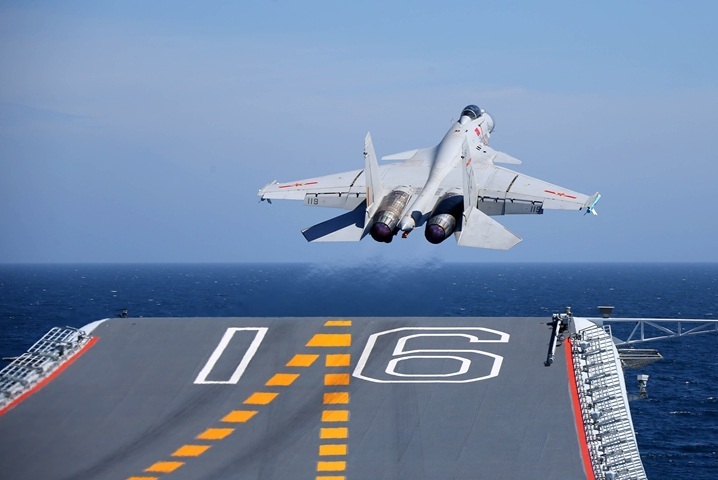
This incident occurred on Saturday afternoon and evening; the first time lasted for three minutes, and the second time for about thirty minutes. Although no violation of Japanese airspace occurred and no damage was reported, this act was considered dangerous and provocative behavior by Tokyo.
Japanese Defense Minister Shinjiro Koizumi called the behavior “extremely regrettable” at a news conference on Sunday, stressing that Japan had lodged a formal protest with Beijing. He added that such an act went beyond the scope of safe flight operations and that China had been asked to take serious measures to prevent it from happening again.
In contrast, the Chinese government and military did not immediately react. Just days earlier, Chinese Foreign Ministry spokesman Lin Jian had said that China’s naval activities were carried out in accordance with international law and should not be overly highlighted.
The incident came at a time when relations between the two countries had been severely strained by comments by Japanese Prime Minister Sanae Takaichi about the possibility of Tokyo’s military intervention if China took action against Taiwan.
Taiwan is a self-governing island that Beijing considers an inalienable part of its territory and views any foreign support for its independence as a threat to its territorial integrity. China's sharp reaction to the Japanese prime minister's remarks has raised the bar for such military confrontations.
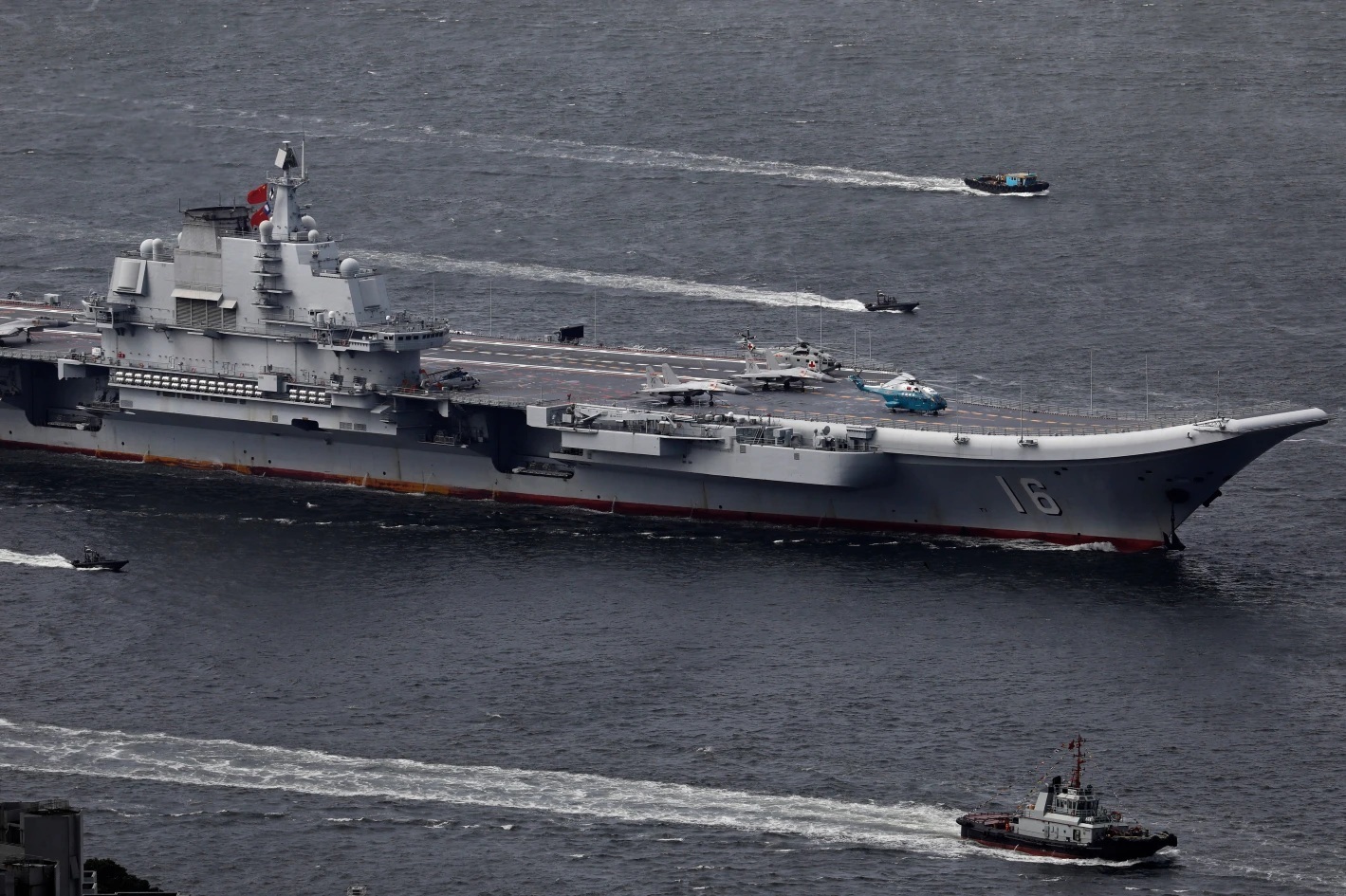
The Liaoning aircraft carrier was conducting flight exercises between the main island of Okinawa and Miyako Island on Saturday. At the same time, Japanese fighter jets took off to counter the possibility of airspace violations and followed the Chinese planes at a safe distance.
According to Kyodo News, Japan's actions were designed not to be considered a direct provocation or threat to China. However, the Chinese fighter's radar lock on the Japanese aircraft has raised the level of tension to an unprecedented level.
Military experts note that the use of radar on fighter jets can be purely for search or as a fire control system before launching missiles. Therefore, a radar lock is usually seen as a sign of readiness for offensive action.
This is the first time that such an incident has been recorded between Japanese and Chinese military aircraft. Earlier in 2013, a Chinese warship locked its radar on a Japanese destroyer, which also drew strong protests from Tokyo.
Meanwhile, in another part of the Pacific, the Philippine Coast Guard reported that Chinese forces fired three flares at a Philippine Fisheries Agency patrol plane in the South China Sea. China interpreted the action as a warning to the plane to leave an area that it considers part of its airspace in disputed waters. The incident shows that China’s military activities have led to increased tensions not only with Japan but also with other countries in the region.
Overall, the recent incident in Okinawa is a symbol of the fragility of Japan-China relations in the current situation. Disagreements over Taiwan, China’s military presence in disputed waters, and provocative actions on both sides have clouded the future prospects of relations. Any carelessness or miscalculation in such situations could lead to a wider crisis in East Asia.
