

Unity of the Iranian Nation Was a Decisive Response to the Enemy's Threats
TEHRAN (Defapress) - Major General Mohammad Pakpour, Commander-in-Chief of the IRGC, spoke this morning (Sunday) at the "Soldiers of the Era of the Reappearance of the Imam al-Mahdi" conference held at Imam Hossein University in honor of Student Day and the martyred students of the university. Paying tribute to the martyrs of the university and the martyred commanders of the 12-day Sacred Defense, he said: According to the enemy's plan, the 12-day hard war was supposed to turn into a hybrid war. However, thanks to the martyrs we have offered over the past two decades in the northwest and southeast, and under the wise leadership of Imam Khamenei, the enemy's plan was practically defeated.
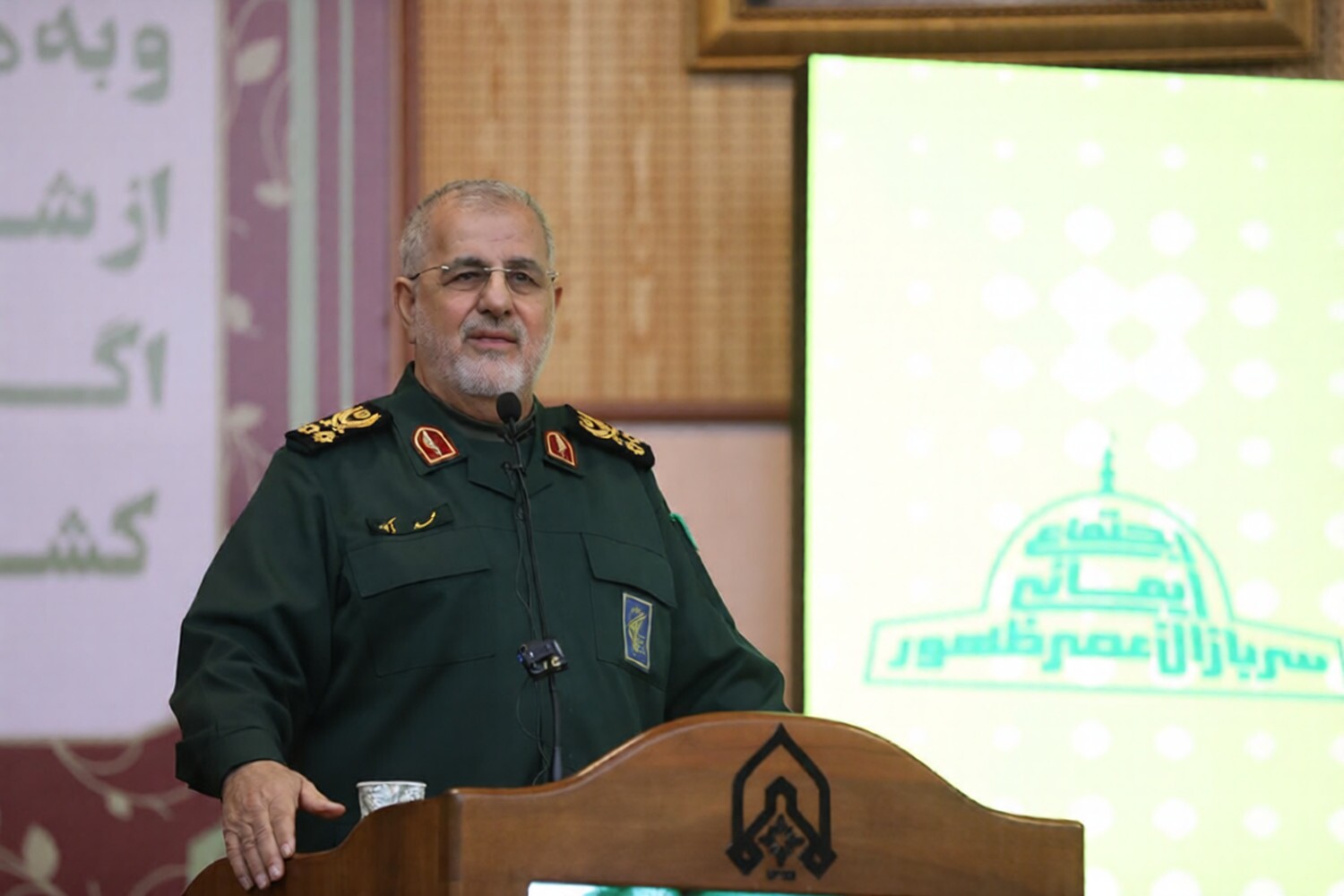
Major General Pakpour added: The enemy’s hybrid war design was such that on the third day of the war, after bombing military centers and martyring commanders, armed elements would simultaneously enter the country from the borders, and domestic enemy elements would endanger and collapse the country by inciting riots.
The Commander-in-Chief of the IRGC continued: On the third day of the war, Netanyahu practically declared, “We have started the work, and the people of Iran must decide.” But the people, through their unity and support for the armed forces, gave him his answer.
He added: The enemy targeted four individuals to cause collapse on the operational front. Had Martyrs Soleimani, Rashid, Bagheri, and Hajizadeh not been martyred, they would certainly have been on the front lines of missile and defense operations. The enemy thought that their martyrdom would lead to defensive collapse.
Major General Pakpour recalled: The Supreme Commander of the Armed Forces immediately, within a few hours, appointed successors for the martyred commanders and ordered them to carry out their duties. Thus, operations began under the supervision of these commanders. In reality, the void created was immediately filled through the leadership’s prudence, and each person assumed responsibility for managing the war within their scope of duties.
Full Readiness of the IRGC Aerospace Force
The Commander-in-Chief of the IRGC noted: Before assuming my new position, I was in contact with General Mosavi, the new commander of the IRGC Aerospace Force, because as the commander of the IRGC Ground Forces, I needed coordination with him. General Mosavi was fully prepared for operations.
He added: Two hours after I was appointed Commander-in-Chief of the IRGC, we began heavy retaliatory operations. On the first day of operations, the Zionist regime imagined our response would involve fewer than 10 missiles, as they believed Iran’s command structure had collapsed. However, on the evening of the first day, waves of drones and missiles were launched, and in the following days, we confronted the enemy more heavily and precisely.
Iran’s Resolve to Respond Firmly to U.S. Actions
Major General Pakpour emphasized: On the day before the last day of the war, the U.S. attacked Natanz and Fordow. Before we retaliated by striking the American base, many countries mediated to dissuade us from this action. But we said we would fire as many missiles at the U.S. base as the number of bombs dropped on Iran, and we did so.
The Commander-in-Chief of the IRGC continued: Al-Udeid Air Base, the most important U.S. air base in the region, was hit with 14 missiles. A few hours later, they announced that if we stopped, they would also stop. In this way, the enemy’s plans were disrupted, and the objectives and planning of the U.S. and the Zionist regime were not realized.
He identified four elements as the causes of this victory: divine grace, the decree and wisdom of the leadership in managing the war and the country, the unity of the people, and the steadfastness of the armed forces. He said: Launching missiles under such conditions was very difficult, but there was never a time when the Zionist regime bombed without immediately receiving a heavier response. Ultimately, the pressure on the regime from the residents of the occupied territories due to our missile attacks became very heavy.
Major General Pakpour stated: Our comrades at missile bases prepared and launched missiles and launchers under harsh conditions; conditions that rarely arise and have seldom been seen in past battlefields. In the future, more dimensions of these acts of bravery will be publicized.
The Commander-in-Chief of the IRGC recalled: During the war, at one of the bases, I saw a brother whose foot had been severed at the ankle. Instead of going to the hospital, he had bandaged his foot and, due to his expertise, remained at the base to ensure the missile launches were not left incomplete.
He further emphasized: In this war, weaknesses and strengths have been analyzed, but several points must be considered. This was a war of technology, and on our side, this technology was combined with the faith of our forces.
Iran’s Confrontation with World-Class Technology
Major General Pakpour noted: Our adversary was not merely the Zionist regime; the Zionist regime was the front line carrying out the attacks, while the U.S., Europeans, NATO, and others were engaged with us in subsequent layers. In reality, during the 12-day war, we fought against the world’s latest technology.
The Commander-in-Chief of the IRGC described artificial intelligence as a fundamental issue for both us and the adversary, adding: Our scientific centers, especially Imam Hossein University, with its extensive facilities, specialized workshops and laboratories, and diverse research institutes in the fields of tools, equipment, weaponry, and technical and tactical matters, must certainly help address the needs in this domain.
He stated: Our research organization has coordinated with scientific and academic centers and field commanders, and work has begun on this basis. We have not wasted a single day, even during this ceasefire, to increase our deterrence and defensive power.
Major General Pakpour, noting the growing cooperation between universities, scientific centers, and the IRGC in technical and tactical layers, said: For example, attention to air defense and stealth technology are areas where interaction between scientific and academic centers can enhance operational effectiveness.
In conclusion, the Commander-in-Chief of the IRGC emphasized: As a soldier of this system and on behalf of the IRGC, I tell the beloved people of Iran and the honorable families of the martyrs: As long as we live, until the last drop of our blood, we will stand firm for our country and continue the path of our martyrs.
