
Rebuilding the Face of the “Paper Tiger” with Artistic Propaganda
TEHRAN (Defapress) - NATO’s global legitimacy and credibility have faced serious challenges in recent years. This military alliance, once considered a symbol of Western power and cohesion, is now increasingly seen as a “paper tiger” whose practical ability and real deterrence against serious rivals have been questioned. The secret meetings with Hollywood and European screenwriters, directors, and producers, revealed by the Guardian newspaper, are a clear sign of this deep crisis. Instead of relying on military or diplomatic achievements, NATO is now reaching out to the artistic community to rebuild its image.
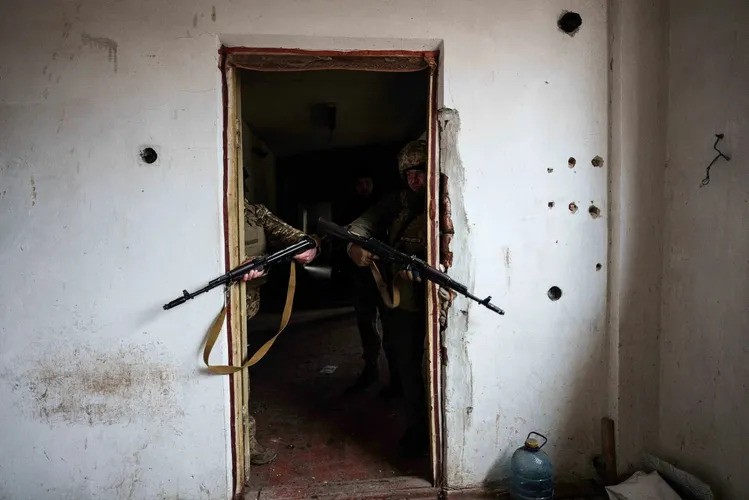
NATO in decline
Since the beginning of Russia’s military operation in Ukraine, NATO and the European Union project as a whole have entered a phase of decline. What was supposed to be a show of united Western power and Russia’s isolation quickly turned into an attrition conflict that has imposed high economic costs on Europe, undermined internal unity, and exposed deep divisions within the alliance.
Not only has NATO failed to establish a decisive advantage, but it has also further highlighted Europe’s dependence on American support. This situation has severely damaged NATO’s global credibility. Many countries, especially in the Global South, see NATO as an aggressive and ineffective alliance that is more concerned with managing self-made crises than providing real security.
Continuing this decline, NATO and the West’s harsh and unilateral stances against Iran’s nuclear program have further exposed the structural weakness of this alliance in West Asia. These pressures have not only failed to force Iran to back down, but, on the contrary, have helped to strengthen the resistance front and further isolate the West.
Successive failures in managing international cases, from Ukraine to West Asian issues, show that NATO has lost its effective diplomatic and deterrent tools. The greater these failures, the more intense the attempt to control the public narrative becomes.
Resorting to artistic propaganda
In such circumstances, NATO’s series of meetings with film and television personalities in Los Angeles, Brussels, Paris, and soon London (the Writers’ Guild of England) should be seen as a clear attempt at cultural engineering and propaganda. According to the Guardian, these meetings are held in secret so that the identities of the participants remain hidden and NATO can convey its message without taking direct responsibility.
NATO officials, including James Appathurai (Assistant Secretary General for Hybrid, Cyber and New Technologies), are directly involved in these meetings. Reports suggest that these meetings have led to three separate and developing projects. NATO’s official message is simple but to the point: “Cooperation, compromise and fostering friendships and alliances are the way forward.” Even if this message were simply included in a future story, it would be enough for NATO.
However, many of those invited have called the approach “cruel” and “pure propaganda.” Alan O’Gorman, the author of the film “The Winner,” called it “ineffective,” noting that many artists have connections to countries that have been damaged by NATO wars. Faisal Qureshi has also warned that delving into the world of classified information risks misleading entertainment professionals, who may accept a dictated narrative.
The coherence of these NATO initiatives with reports such as the Center for European Reform (CER) report is noteworthy. The report clearly emphasizes the need to engage with influential cultural figures to gain public support for defense spending and present a “more favorable narrative.” Previous meetings with the writers of series such as “Friends” and “Law & Order” are also a link in this strategic chain.
Today, instead of solving security crises, NATO is forced to invest in soft propaganda and influence in the entertainment industry. This move is not a sign of strength, but a tacit admission of a loss of global prestige and credibility. When a military-political alliance resorts to scriptwriters to promote its basic messages, it shows that its hardware and diplomatic tools are no longer sufficient.
These efforts may reinforce some narratives in cultural products in the short term, but in the long term, they are unlikely to reverse the structural decline of NATO and the EU, which began with the Ukraine war and was exacerbated by subsequent failures. Art, especially when it becomes a tool of state propaganda, loses its credibility, and today’s intelligent audiences easily recognize this manipulation.
