
Iran's Geographical Location Is More Important Than Its Nuclear Issue
TEHRAN (Defapress) - On Friday morning, May 8, three American ships were attacked by Iranian armed forces in the Strait of Hormuz. The United States responded by cowardly targeting limited positions. Radio France's La Matinale program was hosted by Djilali Benchabane, an expert on geopolitical issues, to examine the dimensions of this crisis.
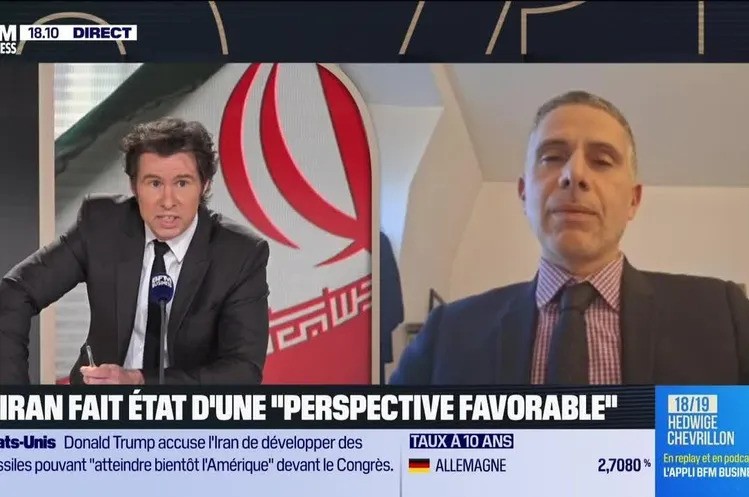
Djilali Benchabane, a geopolitical and strategic affairs analyst, believes that despite the exchange of fire between Iran and the United States in the Persian Gulf, neither side is willing to escalate the war, and what is currently happening is more of a kind of "testing the other side" in the middle of negotiations.
At the beginning of the interview, Benchabane was asked whether, with the recent missile and drone attacks and the activation of the UAE’s defense systems, it is still possible to talk about the continuation of the ceasefire. He emphasized in response: “Everything depends on our definition of a ceasefire. On the one hand, there is a semantic and political debate, and on the other hand, there is the reality on the ground, and it must be examined.”
He described the current situation as contradictory and somewhat ridiculous, saying: “Each side accuses the other of violating the ceasefire, but at the same time, everyone is trying not to cross the line into full-scale war. No one really wants to enter the next phase.”
According to this analyst, Iran and the United States are testing each other’s tolerance and response, while negotiations are still ongoing. He believes that this back and forth between tension and calm will be part of the political bargaining process.
In another part of the interview, the host of the program referred to Saudi Arabia’s recent intervention, where Riyadh had asked Donald Trump not to implement the so-called "Project Freedom".
This plan was supposed to take control of the Strait of Hormuz from Iran and force Tehran to retreat through military pressure.
Benchabane explained that Saudi Arabia is most concerned about the economic consequences of the ongoing crisis. He stated: "The Saudi economy is in a very sensitive stage of transition. The longer the war lasts, the more at risk its economic projects will be."
According to him, Riyadh hopes to become the main engine of economic growth in the Persian Gulf countries, but continued military and economic instability threatens this prospect.
He emphasized: "For Saudi Arabia, the continuation of this situation is not tolerable. There is no suitable military solution, and everyone is forced to reach a political solution very quickly."
Continuing the conversation, the analyst pointed to Iran’s new position in regional equations and said: “Iran’s regional war has shown that this country, as a country of 90 million with significant military power, is a decisive player in the region.”
He believes that after these conflicts, regional negotiations and balances will no longer be the same.
Benchabane said: “For Iran, the main issue is to consolidate its dominance over the Strait of Hormuz. Iran has realized that its geographical location has become even more important than the nuclear issue.”
He added that in the current situation, the nuclear issue has been largely overshadowed by the strategic importance of the Strait of Hormuz.
According to this expert, Iran does not intend to retreat and wants to show that it still can resist and even increase pressure.
In the final part of the conversation, he described the implementation of the Strait of Hormuz control program as “Iran’s economic weapon.” A phrase that some American officials had previously used.
Benchabane emphasized: This is not just an economic tool; it is a lever of pressure that allows Iran to consolidate its position in the new world order.
He explained that today's world is being rearranged more than ever around the axis of "economic confrontation"; from the war in Ukraine to Donald Trump's tariff war are examples of this confrontation.
According to Benchabane, Iran has now introduced a new form of power and pressure into global equations by using control of sea routes.
