
Speedboats: Iran's Trump Card in the Asymmetric War with the US
TEHRAN (Defapress) - Mohammad Zarchini - The Persian Gulf and the Strait of Hormuz are two important waterways in the West Asian region that play a decisive role in the world's energy transportation route. This region is under the control of the armed forces of the Islamic Republic of Iran, and in particular, the IRGC Navy.
With the start of the 40-day war imposed by the US and the Zionist regime against Iran, the Islamic Revolutionary Guard Corps Navy quickly blocked the important waterway of the Strait of Hormuz, which has caused a sharp increase in oil prices in the world.
The Telegraph newspaper, referring to Iran’s extraordinary dominance over the Strait of Hormuz, says: Control of the Strait of Hormuz is an offensive and effective weapon that Iran is currently using to cripple the Western economy; the newspaper adds: Iran has proven that by controlling energy prices, it can bring America to its knees without crossing the nuclear red line.
The question that arises in this context is, with what force did the Islamic Revolutionary Guard Corps manage to close the Strait of Hormuz? Military analysts believe that since the United States has a wealth of naval military equipment and is also considered a superpower in the field of naval warfare, it is not possible to confront this superpower with homogeneous tools such as warships, and must be limited by using heterogeneous tools of war.
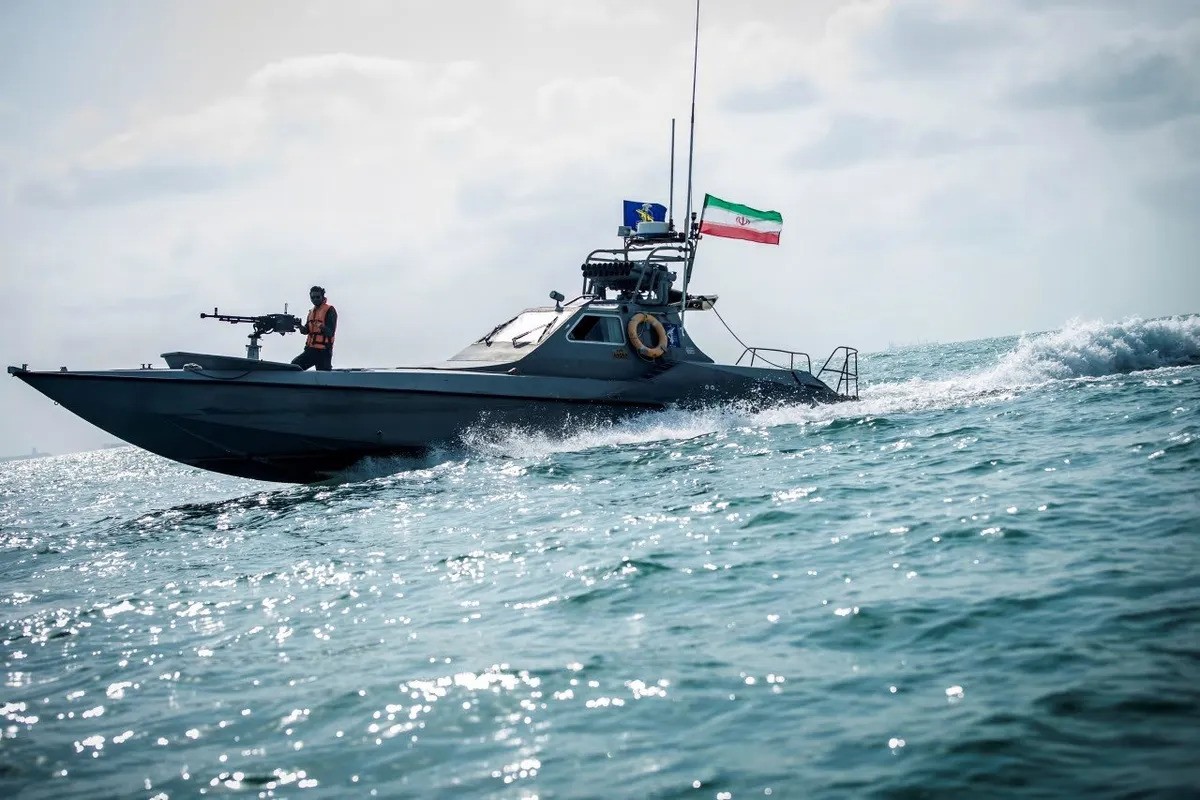
One of the tools that the Islamic Revolutionary Guard Corps Navy uses to confront the United States is fast boats with speeds between 80 and 110 knots. These boats, with their high speed and being equipped with various types of weapons, especially cruise missiles, can inflict heavy blows on the American enemy; as they have already proven this well, and since March 29 of last year, we have witnessed the closure of the Strait of Hormuz; which has caused the price of oil to fluctuate between $112 and $115 per barrel (as of the time of writing this report).
The fast boats of the Islamic Revolutionary Guard Corps Navy have passed their test in numerous military exercises held by this force and have passed difficult tests. For example, one of these tests was the attack on the USS John Nimitz aircraft carrier model in 2015, in one of the series of exercises of the Great Prophet (PBUH). This exercise and its model of holding also surprised the world's media; Iran had predicted about 10 years ago that one day a naval conflict with the United States might reach a stage where it might be necessary to close the Strait of Hormuz for a while.
Another question that is raised for the audience is what mechanism the Islamic Revolutionary Guard Corps Navy uses to confront American forces? It can be answered that fast boats are like a beehive, and the bees come out of this hive and attack one or more vessels in a concentrated manner, and a concentrated attack on a vessel leads to serious damage or even sinking; After this stage, firing a batch of cruise missiles may make it difficult for American heavy vessels, and this strategy has caused the enemies to be very cautious about entering the Strait of Hormuz.
As we know, following the outbreak of the third imposed war, Iran has banned the entry of military vessels into the Strait of Hormuz, and this strategy of the IRGC Navy can make it difficult for any vessel in the Strait of Hormuz.
In the tactic of "asymmetric war", fast boats may be able to evade the ambush by American radars and missiles due to their small cross-section, which is why the blows from these boats are interpreted as bee stings, since bee stings can be painful and even deadly.
The Islamic Revolutionary Guard Corps protects the Strait of Hormuz well by having thousands of fast boats and advanced cruise missiles; This is in fact the same capability that Donald Trump insists on denying and is trying to insinuate in the media by publishing a series of tweets that he has destroyed the Iranian Navy; but he must answer the question: if your claim is true, then why don't American warships and warships come to the Strait of Hormuz and open it? This is while Trump's words and tweets (about the Strait of Hormuz) have become a subject for ridicule by American comedians.
