

Iranian Army's Upper Hand by Firing the Martyr Dana Strategic Drones
TEHRAN (Defapress) - Today, it is no secret to anyone that the Islamic Republic of Iran ranks among the world's leading drone powers, a position achieved not through importing weapons but through innovation, utilization of indigenous capabilities, field operational experience, and, to some extent, reverse engineering. The turning point of this capability can be traced to the downing of the American "RQ-170" spy drone on Iranian soil, where the armed forces, by decoding the flying wing's technology, created a family of stealth drones, including the "Saeqeh" and "Shahed 171," capable of penetrating deep into enemy lines without being detected.
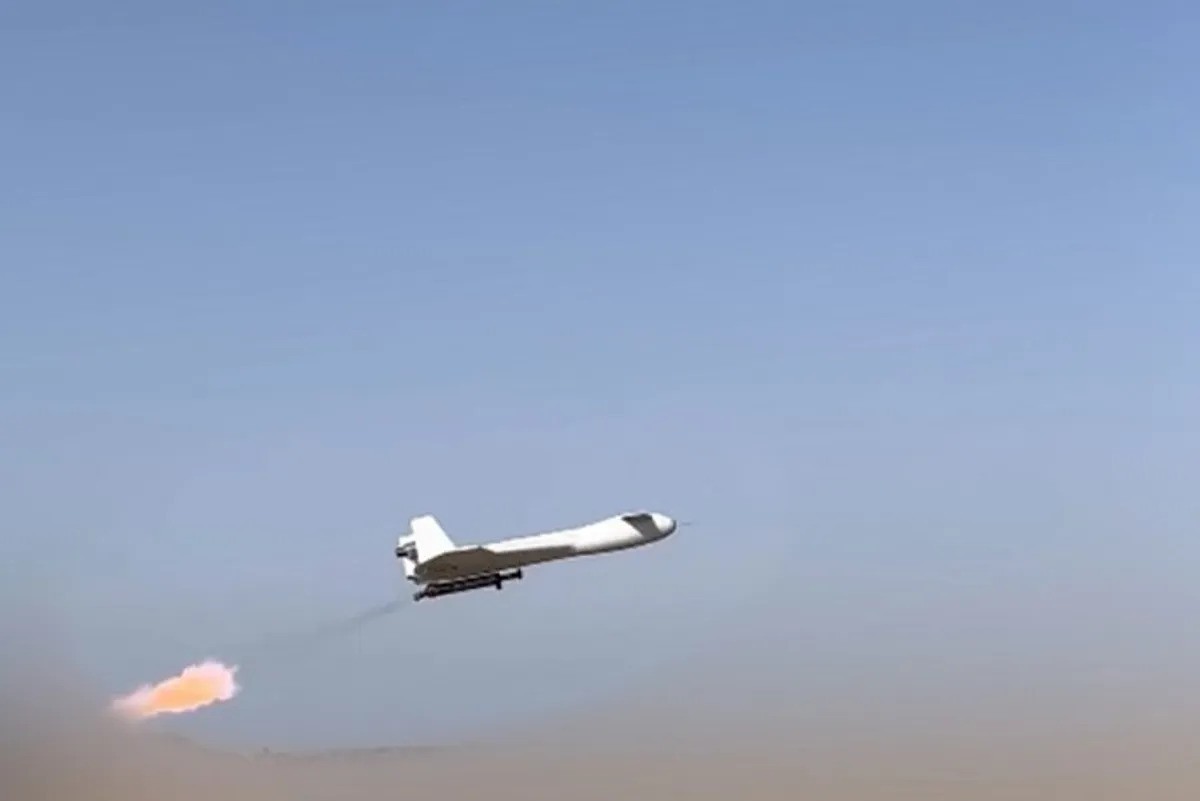
Iran's drone power is not limited to stealth capabilities, but its main strength lies in the unparalleled diversity of its unmanned aerial arsenal. In this arena, the Islamic Republic of Iran's Army today operates numerous reconnaissance, combat, loitering, and strike drones such as the "Dana" and "Arash," with operational ranges of 1,400 to 2,000 kilometers, capable of patrolling for hours over the battlefield and, by locking onto moving maritime targets, targeting advanced destroyers or forcing them to retreat.
At higher levels, combat drones such as the "Karrar," equipped with a jet engine and air-to-air missiles, effectively serve as unmanned interceptor aircraft, extending the country's air defense umbrella beyond its borders. What has enhanced Iran's drone capability is the use of artificial intelligence, electronic warfare equipment, and an intelligent doctrine.
In recent battles against the American-Zionist enemy, we witnessed hundreds of drones flying, dividing targets among themselves without ground operator intervention, and attacking from multiple directions. This tactic represents a strategic nightmare for the advanced fleets of the Islamic Republic of Iran's enemies, where multi-million dollar defense systems must contend with swarms of low-cost but precise drones, thereby disrupting the cost-benefit equation to the enemy. The emergence of this power can now be observed beyond exercises and in real operations, where reconnaissance drones of Iran's armed forces fly over aircraft carriers without any hesitation and transmit clear images of their decks. This is a clear message to extra-regional enemies that the watchful eyes of Iran's security defenders monitor all movements in transboundary and international waters.
Undoubtedly, what has been unveiled so far of Iran's drone capability is only part of its operational arsenal, and future possible battles will reveal much greater surprises. In its latest operation to counter maritime mischief, the Islamic Republic of Iran's Navy, by employing "Ghadir" cruise missiles and advanced "Shahid Dana" attack drones, forced aggressive American destroyers to leave the strategic region of the Sea of Oman and head toward the Indian Ocean. This is the first confirmed operational use of the "Dana" drone against extra-regional units; a drone that, despite its outward resemblance to a foreign model, is equipped with fully indigenous and upgraded technology, and has now revealed a new chapter in Iran's drone power.
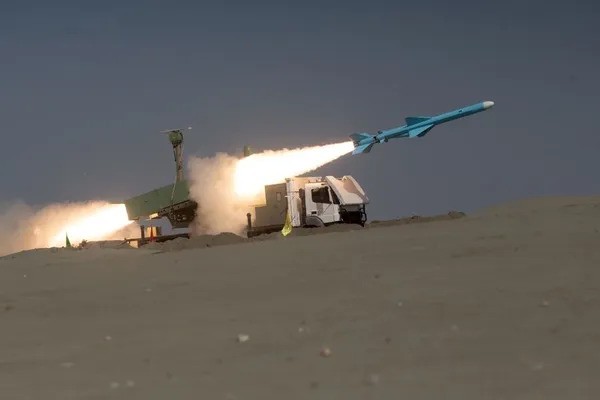
In recent days, maritime tensions in transboundary waters have once again become an arena for showcasing Iran's deterrent power. In this regard, on Friday (June 5, 2024), the Islamic Republic of Iran's Army issued a statement announcing a successful combined operation by NEDAJA in the Sea of Oman; an operation during which, according to the Army's statement, American combat vessels that were harassing and seizing commercial ships and tankers were met with a decisive response from Iranian drone and missile units and were forced to flee the battlefield.
Although the use of the "Ghadir" missile has precedent, what made this mission unique was the deployment of new "Shahid Dana" attack drones, which participated in a direct operational engagement for the first time. According to the official statement of the Islamic Republic of Iran's Army, this operation was carried out as part of the ongoing process of countering maritime mischief and harassment in the Gulf of Oman region. During this confrontation, the Navy units, after fully monitoring the American destroyers, first issued warning shots of "Ghadir" shore-to-sea missiles; simultaneously with this warning launch, a squadron of new "Shahid Dana" attack drones took to the air and, by locking onto targets, conveyed a clear message of Iran's precision-strike capability to the destroyers' crews. The result of this combined display of power was the immediate retreat of the aggressive American destroyers and their departure from the area. The Army named the two vessels USS Mason and USS Truxtun, both of which are Arleigh Burke-class destroyers equipped with advanced missile defense systems.
This forced exit from the Gulf of Oman towards the open waters of the Indian Ocean demonstrated that the power equations in this vital waterway are fully monitored and controlled by the armed forces of the Islamic Republic of Iran. A strategic and noteworthy point in this episode is the identity of the drone employed. The "Shahid Dana" drone was unveiled in 2022 during the Islamic Republic of Iran's Army parade, and now, four years later, it has emerged as a trump card on the real battlefield. This four-year gap demonstrates the smart approach of Iran's armed forces in conducting precise operational tests and upgrading systems before entering combat, and conveys the message to the enemy that what is unveiled today has long been institutionalized in operational arsenals, and future generations will bring even greater surprises.
One interesting point at the time of this drone's unveiling in 2022 was the outward similarity of its fuselage and wing configuration to the "Harop" drone manufactured by the Zionist regime. There was speculation that reverse engineering of this product occurred after the crash of a Harop drone inside Iranian territory during the Nagorno-Karabakh conflict in 2020. At that time, the Harop drone, which was in the possession of the Republic of Azerbaijan's army, crashed inside Iran and fell into the hands of our country's armed forces. However, military experts emphasize that the "Shahid Dana" is not merely a copy, but a technological leap beyond the foreign original.
Given its drone power, Iran has certainly fully indigenized the avionics systems (tactical landing system), operational range, engine power, guidance platform, and warhead of the "Dana," equipping it with far more advanced technologies than the original version; moreover, the use of this upgraded drone in a maritime engagement, specifically against American destroyers, demonstrates the high level of readiness and precision-strike capability of the Islamic Republic of Iran's armed forces. Consequently, the operation that forced American destroyers to retreat was more than a tactical engagement; it was a strategic maneuver based on the doctrine of "active deterrence."
The combination of warning shots from the "Ghadir" missile and "Dana" attack drones proved that the Navy is now equipped with multiple, intelligent layers of weaponry that can impose its will on any enemy at sea without entering a full-scale conflict. This battle showed that the Islamic Republic of Iran possesses surprising and advanced options when facing maritime adventurism, and the gap between "unveiling" and "final engagement" will be very short. Undoubtedly, what will be unveiled in future possible battles will be beyond the imagination of the enemies.
