

Beijing's Undisputed Dominance in the Rare Earth Minerals Market
TEHRAN (Defapress) - In recent weeks, Russian President Vladimir Putin held an operational meeting with permanent members of the Security Council dedicated to the development of the metals and rare earth minerals industry. Putin emphasized that the development of this sector is vital for strengthening the country's technological sovereignty and defense capability. Security Council Secretary Sergei Shoigu noted during the meeting that, although Russia has 28 million tons of explored reserves across 18 deposits, it is currently extracting less than 2% of its mineral resources industrially.
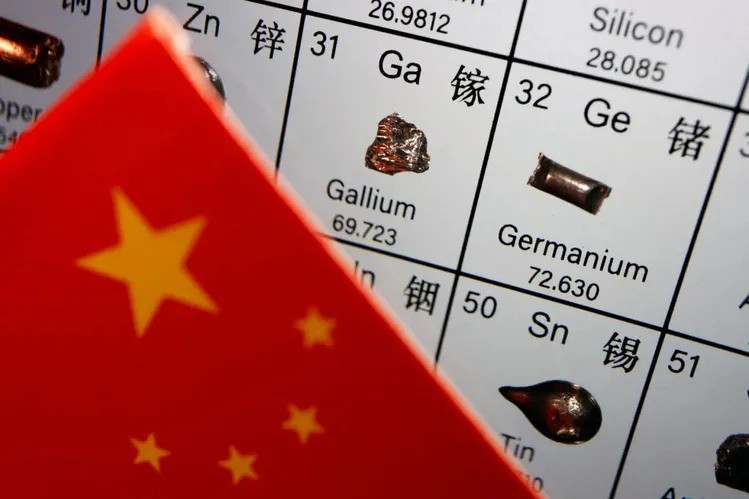
This meeting, held at the highest level in Russia, was a direct acknowledgment of the severity of the problem and the necessity for urgent action in the domestic extraction and processing industry of critical minerals. In recent years, global competition in this field has reached an unprecedented level. Critical minerals and rare earth elements have become the pillars of the secure economy and technological sovereignty of major powers. Silicon, germanium, gallium, neodymium, praseodymium, dysprosium, tantalum, and cobalt play vital roles in the production of semiconductors, chips, hard disk magnets, processors, servers, smartphones, and sensors. A shortage of these materials could disrupt global supply chains and slow the construction of data centers and telecommunications nodes.
Today, China is the world's largest supplier of critical minerals, controlling 91% of the supply of high-purity rare earth elements. On the other hand, the U.S. government, in partnership with the private sector, supports over $30 billion in projects to secure the supply chain for these materials. Brussels, recognizing this strategic dependency, has launched extensive investment to build internal capacity and form alliances. Among the key initiatives in this field is "Pax Silica," launched by the United States in 2025 to strengthen supply chains for silicon, critical minerals, and semiconductors.
In 2026, Washington announced the establishment of a $250 million "Pax Silica" global investment fund. Another U.S. initiative is the international "Critical Minerals Ministerial Meeting" format, launched by the Donald Trump administration in 2026, involving consultation and partnership with major global producers. At the conclusion of the first round of this meeting, the parties signed framework agreements and sectoral memoranda of understanding, announced government financing for strategic projects, and established an "Assembly for Geostrategic Engagement."
The U.S. is developing domestic extraction of rare earth elements through "Critical Metals USA" and is also actively acquiring stakes in major national and foreign companies. In early 2026, the U.S. President announced the launch of "Project Vault" (a project to create a government stockpile of strategic minerals). In turn, the Pentagon's Transportation Support Agency is seeking to create a $1 billion critical mineral reserve. The U.S. Geological Survey published a final list of 60 critical minerals in 2025, developed an economic model to assess the risk of trade disruptions, analyzing over 400 industries and 1,200 scenarios, and created an interactive critical minerals atlas tracking over 90 minerals across 180 countries.
The European Union, in early 2025, identified 47 strategic projects worth €22.5 billion under the Critical Raw Materials Act, covering lithium, nickel, cobalt, graphite, and other raw material types. This act sets clear targets for 2030: at least 10% of strategic raw materials must be extracted within the EU, at least 40% processed, at least 25% supplied from recycling, and the share of a single supplier country must not exceed 65% for any strategic material.
EU demand for rare earth metals is expected to increase sixfold by 2030 and sevenfold by 2050, and for lithium, twelvefold and twenty-onefold, respectively. In late 2025, the "RESourceEU Action" plan was launched with a budget of up to €3 billion, funded during 2026 by existing programs and European Investment Bank loans. Projects receiving strategic status undergo expedited permitting processes. Special attention is paid to "gallium," vital for semiconductors and LEDs. The "Metals and Energy" project in Greece, with a budget of approximately €90 million from the European Investment Bank, aims to create the first gallium production in the EU as a by-product of bauxite processing – a direct response to import dependency on China.
Germany's "Rock Tech Lithium" project is set to become Europe's first commercial producer of lithium hydroxide, and the Swedish "LKAB Per Geijer" project is developing Europe's largest rare earth metals mine, although these projects face delays due to environmental regulations and indigenous rights protections. Furthermore, the EU is actively building partnerships with Canada and Vietnam and participates in the G7-led Critical Minerals Production Alliance, where a work program for creating a critical minerals market based on common standards, with a roadmap for traceability and minimum benchmarks, was approved in mid-2025.
However, implementation faces obstacles. Europe lags in building deep processing capacity for rare earth oxides into metals and magnets, while some projects are stalled by the "Green Deal" or indigenous agendas. EU attention to e-waste recycling is increasing, which, for IT companies, means stricter regulations for disposing of servers and electronic equipment.
China's policy is fundamentally different from the European model. While the EU tries to build new supply chains from scratch amid geopolitical risks, China, thanks to its vertically integrated extraction and processing system, has already achieved and maintains dominance in this field. The strategic basis is the "Five-Year Plan (2026-2030)," in which rare earth metals are termed "China's competitive advantage zone" requiring further strengthening. Main directions include strengthening exploration and stockpiling of strategic minerals for national security, addressing weak links in high-tech supply chains, and reducing dependence on foreign technologies.
China controls about 70% of global rare earth extraction and produces 94% of the sintered neodymium magnets needed for hard drives and servers. During 2021-2024, the U.S. imported 71% of its rare earth compounds and metals from China. China gained its advantage largely because Western companies exited the capital-intensive extraction and processing business in the last decade of the 20th century, while China, conversely, purposefully built up its capacity, providing a complete cycle from mine to finished products. The state giant "China Minmetals" has launched its 2026 science and technology project program, including deep mining (continuous non-explosive mining, drilling to 1800 meters), processing (high-performance flotation, lithium and lithium-isotope extraction), and the use of AI and quantum computing for materials modeling.
China also uses its resources as a geopolitical tool. The new "Mineral Resources" law, effective in 2024, has provided a legal basis for state reserves. Additionally, export permits are now required in China for gallium, germanium, and other heavy metals. In 2025, export rules for minerals were tightened, and now permits are needed not only for raw materials but also for Chinese products containing critical elements, and the list of these elements has expanded.
The advantage of China's policy lies in its powerful engineering-industrial cluster, managed by technocrats capable of executing megaprojects in a short time, disregarding environmental barriers and legal claims. Experts note that even if the U.S. or Australia start extracting 100% of their needed critical minerals, as long as domestic processing plants are not built – which would take at least 5-7 years – they will still need to have them processed into metals and magnets in China. China is an irreplaceable node in the global IT supply chain; every device, from smartphone to data center, contains Chinese magnets or fluorite components.
China can unilaterally influence global chip and server production, an influence comparable to OPEC's leverage in the hydrocarbon market. At the same time, China remains dependent on imports for some critical minerals and pursues a balanced policy to secure external supply and modernize its industry to achieve full technological sovereignty, particularly in electronics and communications.
In Russia, the term "critical minerals" is not officially used, and no corresponding list exists in public documents. The strategic raw materials system operates with the concepts of "strategically important minerals" or "rare types of raw materials." According to a Russian Federation government resolution from September 2025, all important minerals are divided into three groups. Group I includes reserves meeting economic needs until 2035, such as copper, nickel, cobalt, platinum group metals, tin, and some rare metals. Group II includes zinc, antimony, gold, silver, diamonds, and high-purity quartz raw materials. Group III includes rare imported types of raw materials like uranium, manganese, chromium, titanium, bauxite, molybdenum, etc.
The strategy for developing the mineral resource base until 2050, updated in 2024, confirms the existence of significant reserves of almost all types of rare minerals in Russia, but also points to the lack of necessary extraction capacities, efficient technologies, high processing costs, and unfavorable geographical location of deposits. External challenges include increased global competition for control of raw material resources, the struggle for sales markets, price volatility, and rising costs.
A 2023 Russian government report specifies that in Russia's consumption structure, there are 17 types of strategically important rare minerals for which Moscow has a critical import dependency. Russia has one of the world's largest rare earth metal resource bases, yet its share of global extraction does not exceed 2%. Numerous problems threaten Russia's extraction and processing: the only mining company extracting and beneficiating rare earth metal ore is the "Lovozersky" mining and processing complex, whose concentrate is supplied to the Solikamsk Magnesium Plant to extract tantalum, niobium, titanium, and a group concentrate of other critical elements. Balanced reserves of rare earth elements as of January 1, 2023, amounted to 28.7 million tons across 18 deposits, but all are complex, with rare earth metals as a by-product.
Under the federal project "Geology: Revival of a Legend," a geological study program for the Far East and Siberia for 2025-2030 has been drafted, and it is planned to reduce import dependence on rare earth elements from the current 75% to 48%. For other critical minerals, the goal is set at zero dependence. The main executor is the state corporation "Rosatom," which presented an extensive roadmap for developing the rare earth industry at the "REDMET-2026" international congress. Rosatom's flagship project is the rare earth complex based on the Solikamsk Magnesium Plant; its launch is planned for 2028 with a capacity of 2.5 thousand tons per year, expected to cover up to 95% of the Russian market's needs for rare earth elements.
Current sectoral support measures in Moscow include subsidies to compensate for lost income. The compensable amount can reach up to 35% of raw material prices, but averages about 15%, equivalent to a discount granted by rare earth suppliers to buyers to maintain competitiveness. The total budget for these purposes under the federal project "Development of the Rare and Rare Earth Metals Industry" is planned at 1.07 billion rubles for 2026 and 3.85 billion rubles for the period up to 2028. Another potential measure is imposing import duties on rare earth metals to support domestic producers; legislators are currently considering such duties. The Ministry of Industry and Trade is also developing a system for extracting rare earth metals from electronic waste; the estimated total annual extractable volume of rare earth elements is 1.2 thousand tons.
In contrast to the grand plans of the US and China, Russia's gap in supplying critical minerals for the IT industry is noticeably widening. This lag manifests both in the development of domestic resources and capital-intensive technologies and in losing positions in technological cooperation and global supply chains. This situation is particularly unfortunate given the rich experience of the Soviet and Russian geological school and the existence of vast natural reserves.
Today, China is the winner of the critical minerals race. Beijing, by investing in indigenous processing technologies two decades ago, secured its position as a pioneering country in the information age. China uses export controls as an effective tool for political and economic pressure, but simultaneously seeks a balance of interests, not breaking established sales channels and linking them with international technological cooperation and AI development.
The European Union is trying to catch up with the US and China through massive investments in its own resources, but bureaucratic obstacles and stringent environmental regulations hinder Brussels's progress. Nevertheless, Europe is making systematic efforts to capture profitable supply chains worldwide, especially within the framework of the G7 Critical Minerals Production Alliance.
The US is aggressively pursuing initiatives and seizing positions where China has not yet penetrated, even while Washington is forced to import a significant portion of its critical minerals from China. The U.S. Department of Commerce has officially acknowledged that imports of processed critical minerals threaten national security. In response, numerous government programs have been launched, the critical minerals list has been updated, and negotiations with global producers have been activated through initiatives like "Pax Silica" and the "Critical Minerals Ministerial" meeting. The US government has turned to forming alliances, concluding preferential agreements, and using tariffs and sanctions as leverage.
Consequently, despite Russia's recent steps to activate domestic production and international cooperation, the gap between Russia and leading global countries continues to widen, and systematic, decisive actions are necessary to overcome critical import dependency. As the Russian President noted at his recent meeting on the extraction and processing of rare and rare earth metals, this issue is Russia's strategic foundation for the future, a priority direction that will determine Moscow's global competitiveness, economic development speed, and the quality of life of Russian citizens. In the light of multipolar competition, Russia must maintain not only technological but also raw material independence in this key sector of the digital economy.
