

End of the Era of Multilateralism in Central Asia
TEHRAN (Defapress) - Since the dissolution of the Soviet Union in 1991, the leaders of the Central Asian countries have always feared that neighboring great powers, each pursuing their own interests in the region, would exacerbate their vulnerabilities. The primary focus of these countries' concerns was Moscow, but three and a half decades later, it must be admitted that identifying Russia as a threat in the societies of Kyrgyzstan, Tajikistan, Turkmenistan, and Uzbekistan is not very effective. Although this narrative remains alive in unofficial circles, it is not prominent elsewhere except in Kazakhstan, which shares a long land border with Russia.
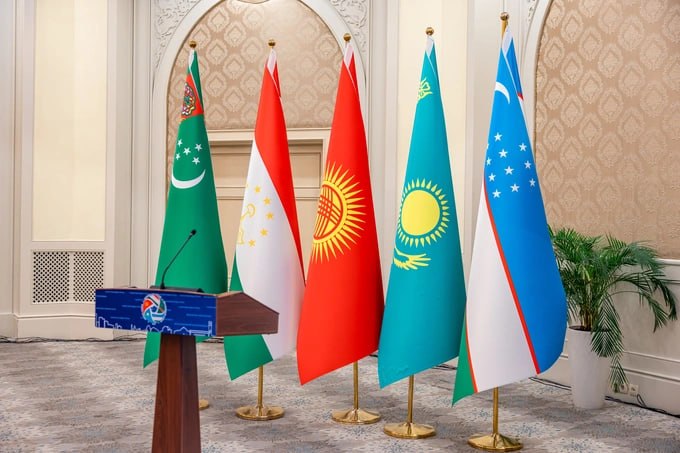
Although the Central Asian leaders were not pleased with the Soviet collapse, Russia did not find a special place in their new national identities either. In the early 1990s, officials in the region repeatedly spoke of their desire to break away from the Soviet legacy, which was entirely natural for newly independent states seeking national identity and independent entry onto the international stage. Liberation from Moscow's overbearing guardianship, mistrust of Russia's steps, and pragmatic geopolitical and geo-economic calculations led them toward a policy defined separately from Moscow and independent of Russia's strategic interests.
It should be noted that the foreign policy models in the Central Asian region are known by various names: Turkmenistan's "positive neutrality," Tajikistan's "open door policy," Uzbekistan's "multi-vector foreign policy," and so on. But in practice, they all amount to the same thing and do not necessarily guarantee genuine diversification of foreign relations. If we analyze each of these countries from an international and regional perspective, Russia, and from the 2000s onward, China, remain their vital partners, and the importance of these two countries for the long-term development and stability of Central Asia is increasing day by day.
Central Asia is currently far from the main focus of the world's major conflicts, but the attention it receives from various powers has increased. The growing irrationality in international relations could accelerate scenarios of "forced conflict generation" by exploiting internal grounds for tension in the region's countries. "Managed conflicts" are a distinct feature of today's hybrid wars. A recent and clear example of this policy was the use of "field" technologies by the United States and the Zionist regime to destabilize Iran's internal situation. Nevertheless, the foreign policy of Central Asian countries still follows the same pattern of the post-Soviet era: reactive maneuvering and situational, tactical responses.
Aside from temporary crises, multi-vectorism is a natural state for young countries that benefit from the rivalries of great powers. This paradigm has been comfortable for Central Asian countries and still appears to be so; it is a tool for situational and often successful exploitation of disagreements among major actors. However, what is questionable is the durability and sustainability of this approach in the long term.
After the start of the Russia-Ukraine war, representatives of Central Asian countries either abstained or were absent from votes on anti-Russian resolutions in the UN General Assembly. The behavior of Central Asian diplomats was more of a tactical and cautious reaction than an indication of a strategic position. One interesting example of this policy manifested itself at the OSCE foreign ministers' meeting in Łódź, when the Ukrainian foreign minister delivered a completely anti-Russian speech, the Turkmen representative left the hall and returned after the speech ended. With this action, he intended to distance himself from the atmosphere of conflict.
It is also interesting that despite Iran's neighborliness with the Central Asian region, none of the regional countries were able to provide an independent assessment of developments related to Iran in the years 2025-2026.
However, structural problems in Central Asian countries will resurface one day, and a disaster like Kazakhstan's 2022 events may repeat itself, where only the assistance of the Collective Security Treaty Organization (CSTO) prevented that country from descending into civil war. Kazakhstan was embroiled in an internal crisis during those days and also had to determine its position regarding the Russia-Ukraine war. The events of 2022 destroyed Kazakhstan's image as a country with a successful economy and an efficient political system. Astana's subsequent rhetoric towards Moscow and international developments is directly linked to that reputational damage. The occurrence of a similar situation in any of the region's countries could be exploited by Russia's adversaries to draw Moscow into a new theater of conflict.
The multi-vector paradigm is more of a tactic than a strategic paradigm, one that helps benefit from the disagreements among major actors. Countries like Turkey are also considered successful examples of this policy, but the important point is that this same tactic once worked in Ukraine as well, yet ultimately it not only backfired but also endangered Ukraine's existence.
In 2001, Kassym-Jomart Tokayev, former Prime Minister of Kazakhstan, had warned: "Due to its special position, Central Asia finds itself at the center of international rivalries that will determine the direction of global politics in the coming decade. This makes Kazakhstan very vulnerable diplomatically. In all likelihood, under the current geopolitical conditions, Kazakhstan will eventually be asked to finally determine its foreign policy priorities and strategic allies." This prediction was far ahead of its time and has now become relevant for all countries in the region.
The web of dependencies that Kazakhstan had established with the US and the West until the 2000s apparently remains vital for this country. This situation is intertwined with difficult internal processes, the state of the elite, and Kazakhstan's socio-economic development model. Kazakhstan's economy is based on participation in Western markets, and abandoning this seems impossible, but limiting its irreplaceable cooperation with Russia, as well as curbing China's growing influence, is even more impossible than cutting ties with the West.
The risk of losing international trust, the outbreak of acute conflicts, pressure from various centers of power, and diplomatic crises are all among the consequences that current international turbulence only exacerbates. Russia treats the foreign policy practices of its partners in Central Asia with understanding and tolerance; Moscow, both in the short term and the long term, has no interest in any of these countries becoming targets of Western sanctions or, worse, targets of hybrid warfare on Russia's southern borders. But the reality is that the era of multi-vectorism is rapidly coming to an end.
As the polar realignment of the world and the formation of a new international hierarchy are accelerating, the countries of the Central Asian region will soon be forced to more clearly articulate and implement their foreign policy priorities and align themselves with one of the growing global poles, which will in turn draw smaller countries into their sphere of influence. As we move forward, the realities of the evolving international system will narrow the diplomatic field of maneuver for all political leaders of the world, including those of Central Asia.
