

Future of the Region Is Tied to the Stability of Afghanistan
TEHRAN (Defapress) - Iran’s Foreign Minister, Seyed Abbas Araghchi, at the "Reviewing Developments in Afghanistan" meeting, which began today (Sunday) in Tehran with the presence of neighboring and regional countries with the aim of dialogue and exchange of views regarding developments in Afghanistan, pointed out that no extra-regional prescription can solve regional problems and crises, stating: Based on experience, neighbors can be the most natural and trustworthy solution. Accordingly, the Islamic Republic of Iran has always emphasized the centrality of neighbors in any initiative related to Afghanistan.
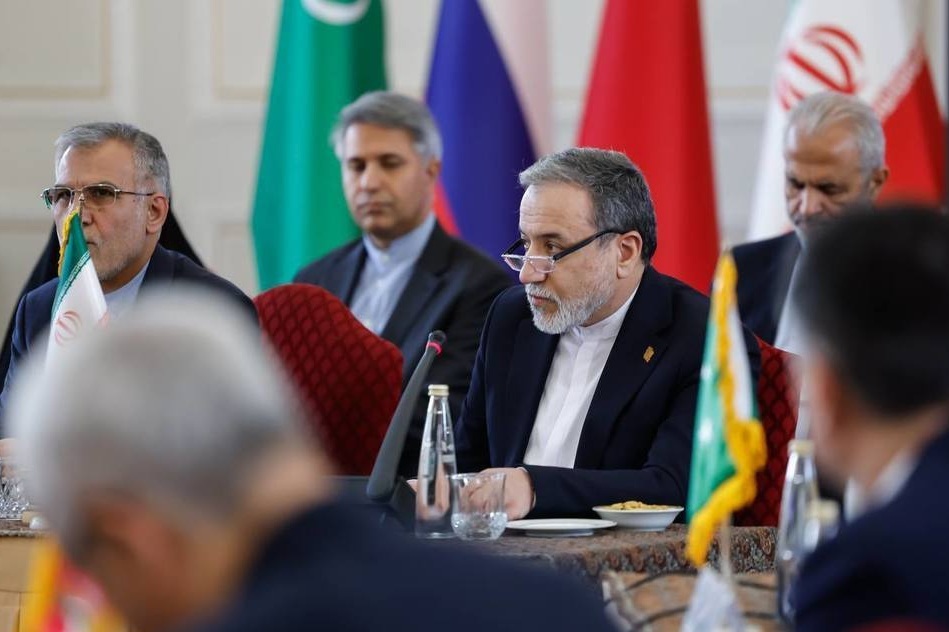
Special representatives of Afghanistan's neighboring countries gathered this morning (Sunday, December 14th), hosted by Iran's Ministry of Foreign Affairs, to discuss and review the most important and latest developments related to Afghanistan and the region. In this meeting, the representative of the Prime Minister of Pakistan, the representatives of the Presidents of Russia and Uzbekistan, and the representatives of the Foreign Ministries of China, Tajikistan, and Turkmenistan are present. Iran's Foreign Minister, Seyed Abbas Araghchi, at the beginning of this meeting, expressed Tehran's key views on Afghanistan and developments in South Asia.
The full text of the Foreign Minister's speech follows:
Excellencies, Honorable Special Representatives for Afghanistan Affairs, Distinguished Guests, Ladies and Gentlemen.
At the outset, I sincerely thank you for your presence in this meeting. It is an honor to be present today among you, representatives of countries that are not only neighbors of Afghanistan but are also considered partners in the destiny of the region. Your participation in this meeting is clear evidence of our shared will to advance peace, stability, and prosperity in the region. Afghanistan possesses a land and honorable people with unparalleled capacities; throughout history, it has played the role of a bridge between surrounding regions and holds immense potential in economic, human, transit, and natural spheres.
Afghanistan's geoeconomic position places it at the center of connectivity networks of Central Asia, West Asia, and South Asia. Hence, the stability and development of Afghanistan are not only a humanitarian necessity but a strategic imperative for the entire region.
The experience of the past few decades has clearly shown that security, development, and prosperity in Afghanistan are directly tied to the interests of all neighboring countries. Therefore, it is no exaggeration to say, like the Persian-speaking Pakistani poet Iqbal Lahori, that the shared future of our region is linked with the future of Afghanistan.
This meeting is held with the aim of consultation and dialogue among regional countries regarding one of the most important issues in the region, and for the first time at this level. Attention to the importance of convergence and improving the overall regional conditions in facing existing challenges will naturally be a focus for the countries participating in this meeting. Establishing stability and security in the region, striving towards integrating Afghanistan into regional political and economic processes, attention to commitment and collective responsibility, and ultimately building trust in relations between different countries based on state behavior are among the topics that can be constructive in shaping a general consensus in the region.
Iran, as a longstanding neighbor of Afghanistan and a close partner to its people, has always emphasized the necessity of Afghanistan's comprehensive integration into the region.
We adhere to the principle that regional developments and challenges can only be managed and resolved through constructive dialogue, active participation of all countries, full observance of the principles of mutual respect, and utilizing indigenous mechanisms and sustainable cooperation among regional countries.
Within this framework, strengthening regional convergence not only helps enhance collective security and stability but also provides a platform where any external interference or influence can be controlled and kept outside the will of regional countries.
The developments of recent years in the region have shown that external approaches and imposed prescriptions lead neither to stability nor to sustainable development. The experience of military intervention and the two-decade-long presence of NATO in Afghanistan is before us.
Excessive focus on security-oriented solutions, ignoring Afghanistan's social and cultural fabric, disregarding the role of regional actors and neighbors, making Afghanistan's political and economic structures dependent and corrupt, and ultimately the hasty withdrawal in 2021 were signs of a failure and defeat.
The important lesson of this experience is clear: no extra-regional prescription can solve regional problems and crises, and imported prescriptions and extra-regional decision-making do not lead to stability in any country. In contrast, region-centered solutions possess greater capability and capacity for achieving sustainable development and security.
In this regard, and based on this experience, neighbors can be the most natural and trustworthy solution. Accordingly, the Islamic Republic of Iran has always emphasized the centrality of neighbors in any initiative related to Afghanistan and believes that neighboring countries, which have deep historical, cultural, human, and economic ties with Afghanistan, have a fundamental role in facilitating cooperation processes. Therefore, today more than ever, our region needs a coordinated and sustainable framework of cooperation regarding Afghanistan; a framework that distances itself from short-term competition and relies on the convergence of collective interests and common security. On this path, we emphasize dialogue, mutual respect, and practical cooperation, and we believe that the future of our region depends on the cohesion of collective wisdom and a responsible outlook. Regional cooperation can be the driving engine for stability and prosperity in Afghanistan.
The regional transit and energy network not only aids the growth and development of this country but also paves the way for regional convergence. Strengthening road and rail connections, facilitating trade, border cooperation, and developing transit corridors can turn Afghanistan into a vital link connecting Central Asia, West Asia, and South Asia.
Iran is ready to expand its cooperation with all of Afghanistan's neighboring countries. We have accumulated significant experience in the fields of transportation, trade, consular services, and energy, and we believe that through convergence and coordination, we can create a sustainable framework for regional cooperation regarding Afghanistan.
This cooperation will be beneficial not only for Afghanistan but for the entire region. Of course, it must be noted that at the center of all these efforts are the people of Afghanistan, people who deserve a secure future. The countries present in this meeting have a moral, humanitarian, and regional responsibility more than any other party to help these people and can play an effective role in a coordinated path with the authorities of this country.
Your Excellencies, establishing regular dialogue mechanisms among Afghanistan's neighboring countries is a strategic necessity. These meetings not only prevent misunderstandings but also provide the possibility of coordinating policies and programs in economic, border, and human areas, strengthening mutual understanding and closeness of views among regional countries, and creating a suitable platform for reducing tensions and enhancing constructive cooperation among neighbors. Such an atmosphere not only provides the possibility for synergy and coordination in various fields but also helps create a cohesive and sustainable regional approach in managing common challenges and crises.
From this perspective, strengthening interaction and convergence among regional countries as a key factor in achieving sustainable peace and long-term stability is of particular importance and can provide the grounds for strategic coordination and effective utilization of shared capacities. Our region is on the threshold of important economic developments, from the expansion of corridors to the formation of new energy and trade hubs. We are today at a point that could be the beginning of a new stage in regional cooperation.
A future in which Afghanistan, as an active country connected to the region, achieves stability and sustainable development, and all countries benefit from this stability. However, realizing this role requires the joint effort of regional countries. Improving conditions in Afghanistan can turn it into a connecting link between Central Asia and South Asia and between West Asia and the Asia Pacific, providing a platform for energy transit and trade.
I thank the efforts of the organizers of this meeting, and I hope that our dialogues today can pave the way for more practical steps, more effective synergy, and create more hope for the future of Afghanistan and the region.
Thank you for your attention.
On December 11, the Spokesperson of the Ministry of Foreign Affairs, Esmail Baghaei, while announcing the news of holding this meeting, described it as the product of consultations held at various levels with neighboring countries and other regional parties, expressing hope that this initiative can play an effective role in strengthening convergence and reducing tensions.
Referring to the continuous consultations of the Islamic Republic of Iran with neighboring countries, including with Pakistan and Afghanistan, to strengthen peace and stability in the region, he said: The Islamic Republic of Iran attaches fundamental importance to security and stability in our country's neighboring environment, and accordingly, it spares no effort to reduce tensions between regional countries and strengthen understanding among them.
