
Why Is Turkey Seeking to Develop Missile Capabilities?
TEHRAN (Defapress) - Ballistic missiles are one of the deterrent levers of any country's armed forces, and the importance of this valuable lever becomes clearly evident during wartime. For example, during the military aggression of the American-Zionist axis against the Islamic Republic of Iran, which could be renewed at any moment, even now, the presence of ballistic missiles in the armed forces of the Islamic Republic of Iran poses a serious challenge to the American-Zionist enemy.
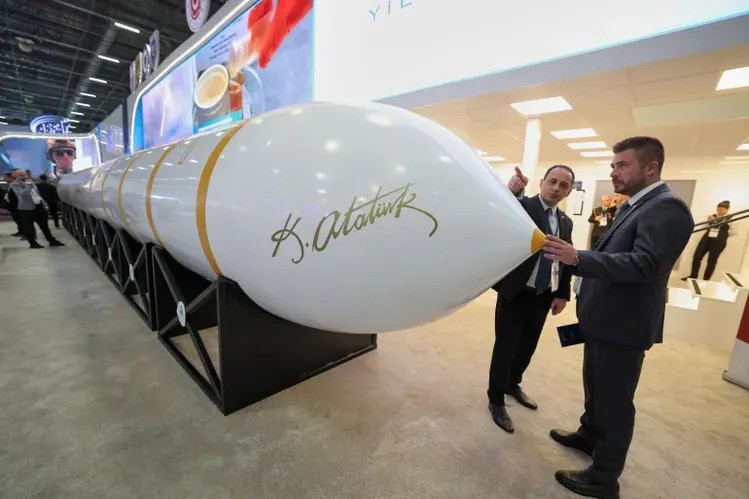
Turkey, which sees itself as the next target of the Zionist regime, is also seeking to develop its own short-range, medium-range, and intercontinental ballistic missile program, missiles that could be used to confront Israel.
In this regard, Hakan Fidan, Turkey's Minister of Foreign Affairs, pointing out that the Zionist regime has destabilized the region, states: "Israel cannot live without an enemy; so after Iran, it is looking for another enemy, and in this context, Turkey is likely to be Israel's next enemy."
Naftali Bennett, who is considered a prominent figure among Zionists, recently claimed that Turkey will become the "next Iran" (the next enemy).
Given the above interpretations, the Turkish armed forces, which consider the scenario of conflict with Israel as realistic, are seeking to strengthen their missile arsenals so that, in the event of a possible confrontation with Israel, they can have a suitable alternative to the air force of the zionist regime.
In this context, the Turkish armed forces recently unveiled a powerful intercontinental missile with a very high speed, which can reach speeds equivalent to Mach 9 to 25. This missile has a range of 6,000 kilometers and was recently displayed at Turkey's military achievements exhibition.
The website "Turkey Today" stated in this regard: "Turkey's Ministry of National Defense Research and Development Center unveiled 'Yıldırımhan' as the country's first intercontinental ballistic missile at the SAHA 2026 exhibition in Istanbul. According to the technical information published at this exhibition, 'Yıldırımhan' has a range of 6,000 kilometers, a speed between Mach 9 and 25, four liquid-fueled rocket motors, and nitrogen tetroxide propellant."
The website adds: "This missile has been developed as a project by the National Defense Ministry's R&D Center and was introduced to the public for the first time. The official brochure of this project states that this system is distinguished from similar examples by utilizing liquid fuel and the ability to carry a 3,000-kilogram explosive payload."
Al Jazeera network, commenting on the Turkish armed forces' latest achievement, states: "In line with its efforts for self-sufficiency and to gain a position as a key defensive player in West Asia and among NATO allies, Turkey has unveiled a prototype of an intercontinental ballistic missile. Also, this intercontinental ballistic missile, named Yıldırımhan, developed by the Ministry of National Defense's Research and Development Center, was recently unveiled at the SAHA 2026 Defense and Aerospace Exhibition at the Istanbul Expo Center."
It adds: "This missile has a range of 6,000 kilometers (approximately 3,278 miles) and can powerfully strike distant targets."
According to the findings of the Federation of American Scientists, any country possessing a ballistic missile with a range exceeding 5,500 kilometers has, in effect, achieved the technology to build an intercontinental ballistic missile. This applies to Turkey as well by the Federation of American Scientists' definition, and the country has joined the club of ICBM-manufacturing states (a select few countries in the world: the United States, China, North Korea, Russia, and Iran).
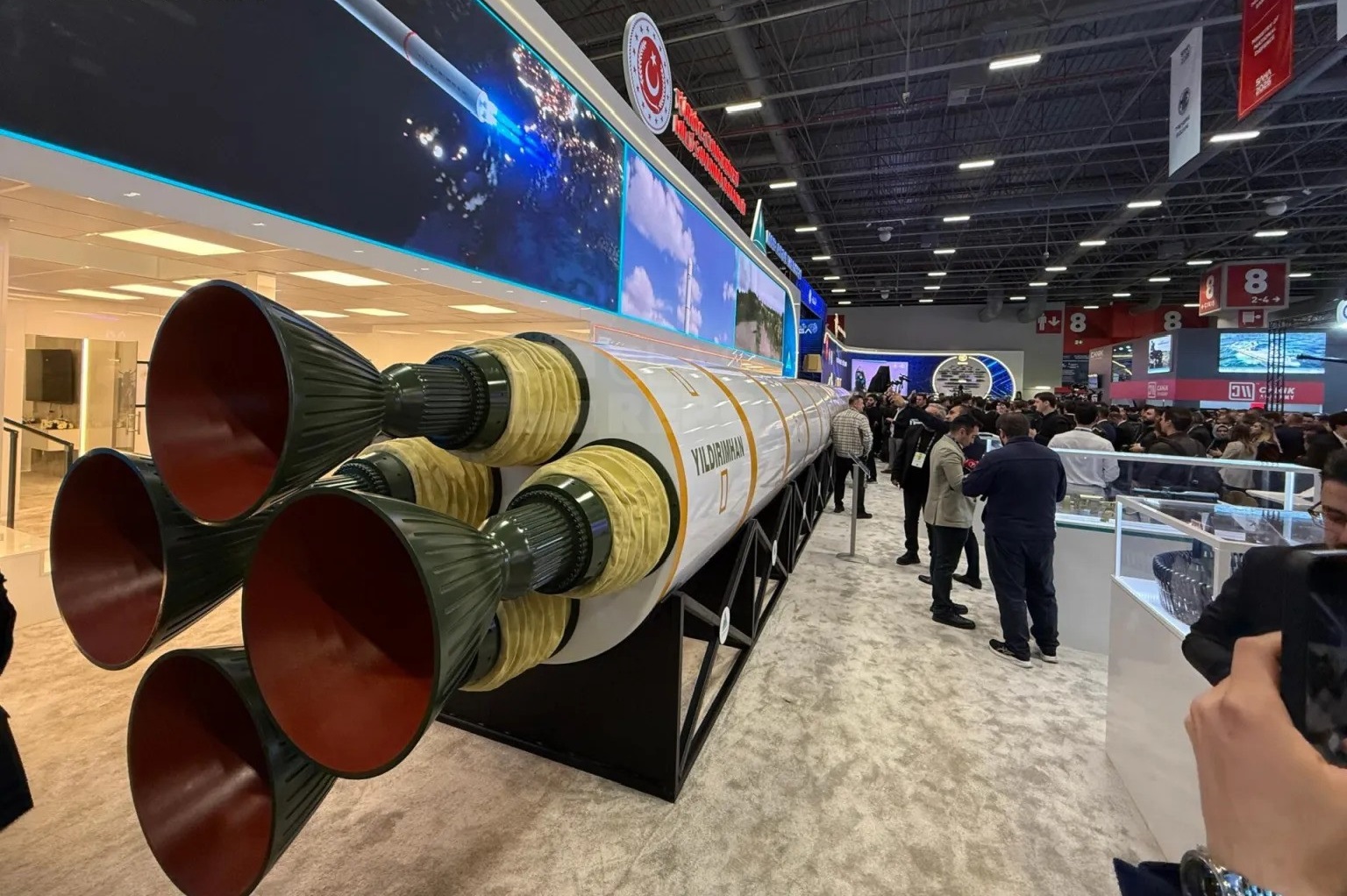
Priyanka Shankar, a military affairs analyst, said about the "Yıldırımhan" intercontinental missile: "Media and field investigations indicate that the average speed of this missile is about Mach 25. To assess its speed, that would be approximately 25 times the speed of sound (each Mach is equivalent to 1,225 kilometers per hour)."
Reports from media sources indicate that Turkey, to strengthen its defensive power, has begun working on building drones and cost-effective missiles instead of focusing excessively on fighter jets. Yaşar Güler, Turkey's Minister of National Defense, said in his speech at the exhibition in Istanbul on Tuesday: "In this era, where economic cost has become an asymmetrical weapon, Turkey offers not only weapons systems but also sustainable security technology and economy to its allies."
Turkey, learning from Iran's regional war, is seeking to increase its military power through various means, one of which will be strengthening the components of asymmetric warfare, including ballistic missiles. According to a report in the Hürriyet newspaper, quoting Turkish National Defense Minister General Yaşar Güler: "Recent conflicts, such as Russia's war against Ukraine and the war of the US and Israel against Iran, have impacted the global security scenario."
Güler adds: "These conflicts and wars have provided very important data for the security doctrine and, at the same time, have increased our responsibilities."
Meanwhile, Özgür Ünlühisarcıklı from the German Marshall Fund stated: "Instability in the region and the direct and indirect security challenges Turkey faces as a result are the main reasons for the increase in its military capabilities."
Countries in the region, assuming Israel's destabilizing actions, are seeking to enhance their capabilities. In this context, we see that Turkey, which more than ever has been seeking to strengthen its air force, has also placed strengthening its asymmetric capability on its agenda in recent years. This is because the country, following Iran's lead, has realized that building and expanding an industry of missiles and drones costing tens of thousands of dollars is certainly more economical than overhauling and loading aircraft costing tens of millions of dollars.
