
Baghdad's Imam of Friday Prayer Revelation about the Secret Israeli Base in Iraq
TEHRAN (Defapress) - Ayatollah Sayyed Yassin Mousavi, the Baghdad Friday Prayer Imam and a prominent professor at the Najaf Ashraf Seminary, said in his Friday prayer sermons: The current developments and events in the region cannot be considered a series of scattered and separate incidents, but rather these events are part of a political-security project led by the United States, the Zionist regime, and England to rearrange the region based on their own interests.
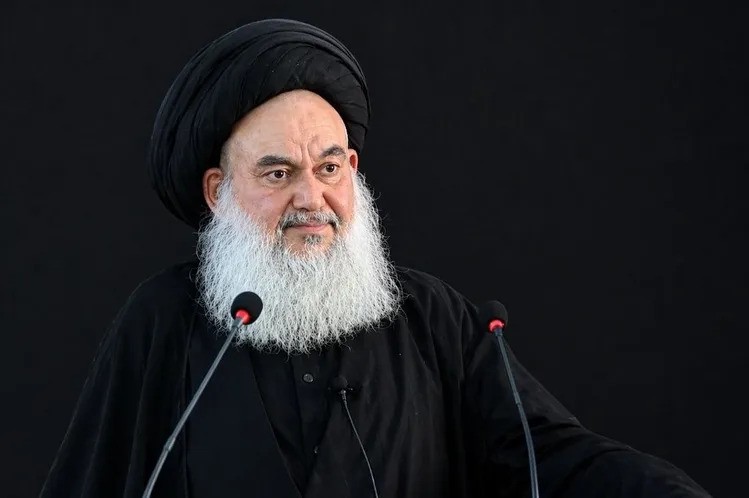
Referring to some recent claims about the existence of the Zionist regime's military base in the Najaf desert during the war against the Islamic Republic of Iran, Ayatollah Mousavi stated: This issue is not new, and there has been confusion in the media space between some regions and bases. The Iraqi government was aware of the existence of this base and the restrictions that American forces had imposed on approaching it.
The Friday Prayer Imam in Baghdad stated: Turning this issue into a subject of satire and ridicule on social networks distorts the facts and distances public opinion from understanding the nature of the real threats.
Referring to the political and security developments in the region, he noted: From Iraq to the Persian Gulf countries, Bahrain, Kuwait, and the UAE, a series of coordinated movements are underway, all of which are being pursued within the framework of a single political approach to consolidate American dominance and redesign regional alliances.
In another part of his speech, Ayatollah Mousavi addressed the process of forming the new Iraqi government and said: The mechanism for forming this government was influenced by direct American pressure and interference. What is being proposed under the guise of “neutrality” may become a cover to weaken the national will of Iraq and link the country to foreign projects, rather than strengthening its political independence.
He also criticized the pressure and targeted actions against scholars, lawyers, religious authorities, and social figures in Bahrain, referring to the situation, describing it as a “great disaster” that requires a clearer media and legal stance. The Friday Prayer Imam in Baghdad also criticized the media’s silence on the suffering and problems of the Bahraini people.
Ayatollah Mousavi points out some incidents related to Shiite citizens in some Arab countries on the Persian Gulf and emphasized: These actions should be analyzed within the broader framework of the ongoing conflicts and disputes in the region.
Regarding international developments, he also stated: The US government has sought new means of pressure after failing in military and economic options against the Islamic Republic of Iran. China's recent stance against joining the policies that create tension against Iran has presented new challenges to Washington.
The Friday Prayer Imam in Baghdad, stating that the Islamic Republic of Iran has never posed a threat to the nations of the region since the victory of the Islamic Revolution, emphasized that the Islamic Republic has always supported the Palestinian cause and that the policies of global powers have paved the way for the formation of regional divisions and crises.
In another part of his sermons, he criticized the continuing service problems in Iraq, including the electricity crisis, weak infrastructure, unemployment, and corruption, and asked: After more than two decades of political changes in Iraq, why are development projects still facing stagnation and failure?
Ayatollah Mousavi noted: Iraq has great historical and civilizational potential and can play a pivotal role in the region. He called for the formation of a powerful government, with independent decision-making and a capable army to protect Iraq's national sovereignty, away from foreign interference.
In conclusion, he called on the Iraqi nation to preserve its national and civilizational identity and emphasized: "The future of Iraq must be built on independence, national sovereignty, and the strengthening of government institutions and the country's capabilities."
