

Popular Mobilization Forces: Official Weapon in the Iraqi Government Structure
TEHRAN (Defapress) - In recent years, the subject of "weapons handover" in Iraq has become one of the most important and sensitive political, security, and social topics in the country. Following the fall of the Ba'ath regime, the American military occupation, the spread of terrorist movements, the emergence of ISIS, and the formation of new security structures, Iraq has faced a complex reality regarding weapons, a reality in which not all armed forces can be defined under a single heading.
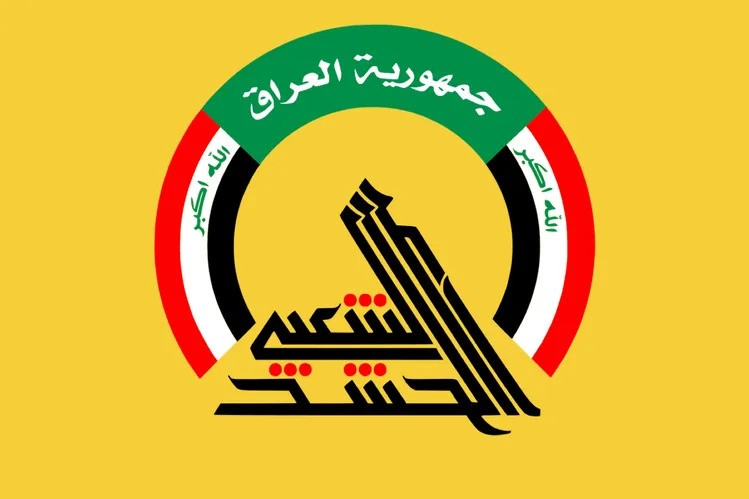
In today's Iraq, several types of weapons and armed forces can be distinguished. First, there are the weapons of official and legal forces such as the army, the federal police, the Counter-Terrorism Service, and the Popular Mobilization Forces, which operate within the framework of the country's security structure and are subordinate to the Commander-in-Chief of the Iraqi Armed Forces. This type of weaponry, from a legal perspective, is considered part of the defensive and security capability of the Iraqi state.
Second, there is the weapon of Resistance, weapons that Resistance factions define as being in line with confronting occupation, terrorism, and external threats. In the discourse of Resistance supporters, this weaponry is presented not for internal conflicts or political rivalries, but for the defense of Iraq, its sanctuaries, its people, and for confronting ISIS, the United States, and the Zionist regime. Of course, this very issue is a point of political disagreement in Iraq, with some factions believing that even these weapons should be defined and organized strictly within the framework of the state.
Third, there are the weapons of armed groups outside the state and unregulated weapons, or so-called "loose weapons", weapons that have no clear legal structure, no accountable command, and are not employed within the framework of the public interest. This type of weaponry can be used in tribal clashes, political score-settling, criminal acts, assassinations, social insecurity, or to exert pressure on the government and the people. Many clerics, political currents, and Iraqi institutions consider the handover and collection of this type of weaponry a necessity for Iraq's internal security.
Fourth, there are the weapons of forces such as the Peshmerga in the Kurdistan Region of Iraq. Legally and politically, the Peshmerga are considered a military force affiliated with the Kurdistan Region and hold a different status from unofficial armed groups. However, at the same time, their relationship with the security structure of the central Iraqi government has always been one of the important and sometimes contentious issues between Baghdad and Erbil. The Peshmerga is neither defined directly within the command structure of the federal armed forces like Popular Mobilization Forces, nor can it be placed in the category of unregulated armed groups; rather, it is a regional force with a specific position in Iraq's security equation.
Therefore, discussing "weapons handover" in Iraq without distinguishing between these levels can lead to conceptual confusion. A weapon used under government command against terrorism is not the same as a weapon used outside the law and against social security. Likewise, the weaponry of PMF as an official Iraqi force differs legally and operationally from the weaponry of groups operating outside the state structure.
The complex situation regarding weapons in Iraq led Defapress News Agency to open a dossier titled "PMF and Beyond," examining in each part the weaponry of various armed groups and forces in Iraq. In the first part, the weaponry of PMF was examined, the full text of which is reported as follows:
What is PMF?
The "Popular Mobilization Forces" of Iraq is one of the most important military and security forces in the country, formed in 2014 following the massive ISIS incursion into Iraqi cities. When ISIS occupied large parts of Iraq, including Mosul, and the threat of this terrorist group reached close to Baghdad and Iraq's holy cities, Ayatollah Sayyid Ali al-Sistani, the supreme religious authority of Iraq's Shiites, issued his famous "Jihad Kifa'i" (sufficient jihad) fatwa.
This fatwa marked the starting point of a massive popular mobilization against ISIS. Thousands of Iraqis from various religious, ethnic, and social groups took to the field to defend the country, its sanctuaries, and its citizens. As a result of this popular mobilization, a military structure named Popular Mobilization Forces was formed, which gradually became organized and, alongside the army, federal police, Counter-Terrorism Service, and other Iraqi security units, played a role in the battle against ISIS.
Initially, PMF was an emergency response to the ISIS threat, but over time it became one of the main pillars of Iraq's security. This force played a significant role in major battles such as the liberation of Amerli, Jurf al-Sakhar, Tikrit, Fallujah, Baiji, Mosul, and Iraq's border areas, and alongside other Iraqi forces, it was able to shatter a considerable portion of ISIS's military capability.
Structure of PMF
PMF consists of dozens of different brigades and units. These units include a range of popular volunteer forces, Resistance groups, tribal forces, forces affiliated with various regions of Iraq, and even some Sunni, Christian, Yezidi, and Turkmen units that were organized under the PMF framework during the war with ISIS.
According to its official structure, PMF has a board, a command, a headquarters, brigades, and operational units, and operates within the framework of the Iraqi armed forces. The presidency of the PMF board is held by Falih al-Fayyadh. During the years of war with ISIS, Abu Mahdi al-Muhandis was known as the deputy head of PMF and one of its main field commanders, a figure who was martyred in January 2020 alongside Commander "Major General Qasem Soleimani" in a US terrorist attack near Baghdad airport.
After the martyrdom of Abu Mahdi al-Muhandis, the command structure of PMF underwent changes, and Abdulaziz al-Mohammadawi, known as Abu Fadak, was introduced as the head of the PMF headquarters. However, the official presidency of the PMF board remains with Falih al-Fayyadh.
Administratively and legally, PMF is considered an official force within the structure of the Iraqi state and operates under the supervision of the Commander-in-Chief of the country's armed forces, i.e., the Prime Minister of Iraq. Although in public discourse it is sometimes mentioned in connection with the Ministry of Defense, its more precise position is within the structure of the armed forces and the office of the Commander-in-Chief, meaning it is an official and legal institution that, alongside the army and other Iraqi security forces, constitutes part of the country's defense system.
How and on whose orders was PMF formed?
The formation of PMF must be understood as linked to three main factors: first, the immediate threat of ISIS; second, the Jihad Kifa'i fatwa of the supreme religious authority in Najaf; and third, the Iraqi government's need for popular mobilization to prevent the fall of cities and to defend Baghdad and the holy shrines.
Following Ayatollah Sistani's fatwa, the Iraqi government provided the groundwork for organizing volunteer forces. Various Resistance groups and popular forces also entered the field, and PMF emerged as a large popular volunteer force. Therefore, PMF was not the product of a purely partisan decision, nor was it an armed group outside the state; rather, it arose in the context of a national crisis, backed by the religious authority's fatwa and the official need of the Iraqi government.
In subsequent years, the Iraqi parliament, by passing a law concerning PMF, recognized this force as part of the country's official armed forces. This action moved PMF from being an emergency popular mobilization force into a phase of legal and legislative consolidation.
Legal and Official Status of PMF
The legal status of Popular Mobilization Forces is one of the most important differences between it and armed groups outside the state. According to Iraqi law, PMF is considered part of the country's armed forces and is subordinate to the Commander-in-Chief of the Armed Forces. This means that PMF is legally an official state institution, and its mission must be defined within the framework of Iraq's national security.
Accordingly, the weaponry of PMF is also legally not the weapon of a rogue armed group; rather, it is the weapon of a force embedded in Iraq's official structure, whose mission is to defend the country, combat terrorism, and participate in maintaining national security. This status separates PMF from loose weapons, tribal weapons, criminal groups, and factions that possess arms outside government control.
Of course, this same official status also creates responsibilities for PMF, including accountability to the government, compliance with the law, coordination with the Commander-in-Chief of the Armed Forces, and refraining from involvement in internal conflicts. In other words, PMF's official status means that its weapons must serve the government, the nation, and Iraq's security, not political rivalries or internal disputes.
Role and Achievements of PMF in Iraq
Popular Mobilization Forces’ role in Iraq is most recognized through its war against ISIS. When ISIS occupied vast areas of Iraq in 2014, the Iraqi army faced a serious crisis, and many cities were on the verge of falling. In such circumstances, the presence of PMF forces shifted the field balance in favor of the Iraqi government.
PMF participated in numerous operations against ISIS and, on some fronts, played a decisive role in preventing the advance of terrorists. Liberating strategic areas, cutting ISIS supply lines, defending holy cities, helping restore security to liberated areas, and being present on Iraq's borders were among the missions in which PMF played a role.
One of PMF's most important achievements was transforming the ISIS threat from an existential danger to Iraq into a more limited and manageable threat. Alongside the army, federal police, and Counter-Terrorism Service, this force was instrumental in securing Iraq's victory over ISIS and, in the public memory of many Iraqis, is recognized as a force that entered the field during one of the most difficult periods of Iraq's contemporary history.
PMF's Weaponry: Official or Political Issue?
The discussion of PMF’s weaponry has always been a focal point of disagreement in Iraq. On one hand, PMF's supporters emphasize that these are official and legal weapons used within the framework of defending Iraq and combating terrorism. On the other hand, some internal and external political factions attempt to place PMF alongside armed groups outside the state and extend the weapons handover debate to include it.
But the main difference is that PMF, unlike unofficial armed groups, has legal status. This force's weaponry was used on the battlefields against terrorism during the war with ISIS and played a significant role in preserving Iraq's security. From the perspective of PMF supporters, these weapons were not used to threaten the Iraqi people, but to defend them against ISIS, occupiers, and external threats.
For this reason, the debate over PMF's weapons handover is fundamentally different from the collection of unregulated weapons. A loose weapon is one used outside the law, without official command, and for personal, tribal, criminal, or terrorist purposes; but PMF's weapons, as part of Iraq's official forces, must be defined within the framework of the state and national security.
The Role of Iran, Major General Soleimani, and PMF
One important dimension in examining PMF is the role of the Islamic Republic of Iran, and particularly the martyr Major General Qasem Soleimani, in supporting Iraq during the ISIS onslaught. When ISIS was rapidly advancing in Iraq and many areas of the country were threatened with collapse, Iran was among the first countries to respond to the Iraqi government's request to confront ISIS.
Martyr Major General Qasem Soleimani, then-commander of the IRGC Quds Force, played a significant role in advising, organizing, transferring experience, and supporting Iraqi forces on the battlefield against ISIS. His presence alongside Iraqi commanders, including PMF commanders, became a symbol of Iran-Iraq cooperation in the fight against terrorism.
Major General Qasem Soleimani and Abu Mahdi al-Muhandis were two pivotal figures on the battlefield against ISIS, closely connected to the Resistance forces and PMF. The simultaneous martyrdom of these two commanders in the US attack was a turning point, not only for the Axis of Resistance but also for a large portion of Iraqi forces, in how they viewed the US military presence in Iraq.
From the perspective of PMF supporters, Iran's support for Iraq during the war with ISIS was support within the framework of defending the Iraqi state and nation, support that came during the hardest days when cities were falling and Baghdad and the holy shrines were threatened. For this reason, the connection between Iran and PMF, in Resistance discourse, is defined not as interference in Iraq, but as cooperation against the common threat of ISIS and Takfiri terrorism.
The United States and the Persistent Demand for PMF's Weapons Handover
Since consolidating its role in Iraq, PMF has consistently faced pressures and proposals from the United States aimed at restricting, fully integrating, or disarming it. Washington considers PMF one of the main obstacles to its full influence in Iraq and has repeatedly asked various Iraqi governments to restrict or This demand is made even though PMF, under Iraqi law, is part of the country's official forces, and its weapons are defined within the structure of the state and the Commander-in-Chief of the Armed Forces. PMF supporters believe that America is trying, by raising the issue of "weapons monopoly," to blur the distinction between the official weapons of the Resistance and unregulated weapons, thereby paving the way to weaken one of Iraq's most important deterrent tools.
From the perspective of this current, PMF's weapons have, over the past years, been used primarily to combat ISIS, terrorism, defend borders, protect cities, and stand against occupiers. Therefore, placing them alongside illegal weapons constitutes a distortion of Iraq's security reality.
Why is PMF Different from Other Armed Groups?
PMF cannot be considered merely an armed group in Iraq. This force was formed under conditions of security collapse caused by the ISIS offensive, backed by the religious authority's fatwa and the Iraqi government's need. It was then transformed, through legislative ratification, into part of the country's official forces and now operates under the Commander-in-Chief of the Iraqi Armed Forces.
PMF's difference from armed groups outside the state can be observed in three main areas: first, its origin, which arose from the Jihad Kifa'i fatwa and the necessity of national defense; second, its legal status, which is recognized in Iraqi law; and third, its operational function, which was defined as confronting ISIS and defending national security.
Accordingly, any discussion of weapons handover in Iraq, if it is to be precise, fair, and realistic, must distinguish between the official weaponry of PMF, the weaponry of the resistance, the Peshmerga's weapons, and the unregulated weapons of groups outside the state. Blurring these concepts does not help resolve Iraq's security problem; rather, it can weaken forces that played a significant role in preserving the country's territorial integrity and security during its most difficult periods.
PMF is Not a Homogeneous Entity
At the conclusion of this part of the report, it must be emphasized that Hashd al-Sha'abi is not a uniform and homogeneous organization; rather, it is a collection of numerous groups, brigades, and factions, each with its own origins, political views, and independent organizational structures. Although all these groups operate under the title "Hashd al-Sha'abi" and within its legal framework, the diversity in their political and strategic stances is an undeniable reality.
Factions such as Saraya al-Salam, Asa'ib Ahl al-Haq, Kata'ib Sayyid al-Shuhada, the Harakat al-Nujaba, and other groups within this structure each have their own organizational identity and specific political approaches, which play a role in Iraq's political and security arena. This intra-structural diversity reflects the complexity of PMF, and a precise understanding of the Iraqi scene will not be possible without recognizing the independent nature of these groups.
Accordingly, with the aim of a more precise examination of these factions, in the next part of this dossier, we will turn to examining "Saraya al-Salam", a group that, as the military wing of the Sadrist movement, operates under the direct command of Muqtada al-Sadr and holds a special position in Iraq's political and field equations. A notable point regarding this group is its specific stance on the issue of "weapons monopoly," as Saraya al-Salam has previously issued calls for weapons handover and has shown alignment with government policies in this regard.
In the next installment, we will examine the structure, type of interaction, and relationship of this group with the PMF framework.
