
Eroding America's Backyard in the Battle for Strategic Passages
TEHRAN (Defapress) - Sabtin Al-Jabouri, Senior Expert on Political and International Affairs: The decades-long American embargo against Cuba cannot be understood merely as a temporary political dispute or an ideological confrontation; rather, this policy is essentially a preemptive geopolitical maneuver to prevent the emergence of a successful governance model in a region that Washington considers its own backyard.
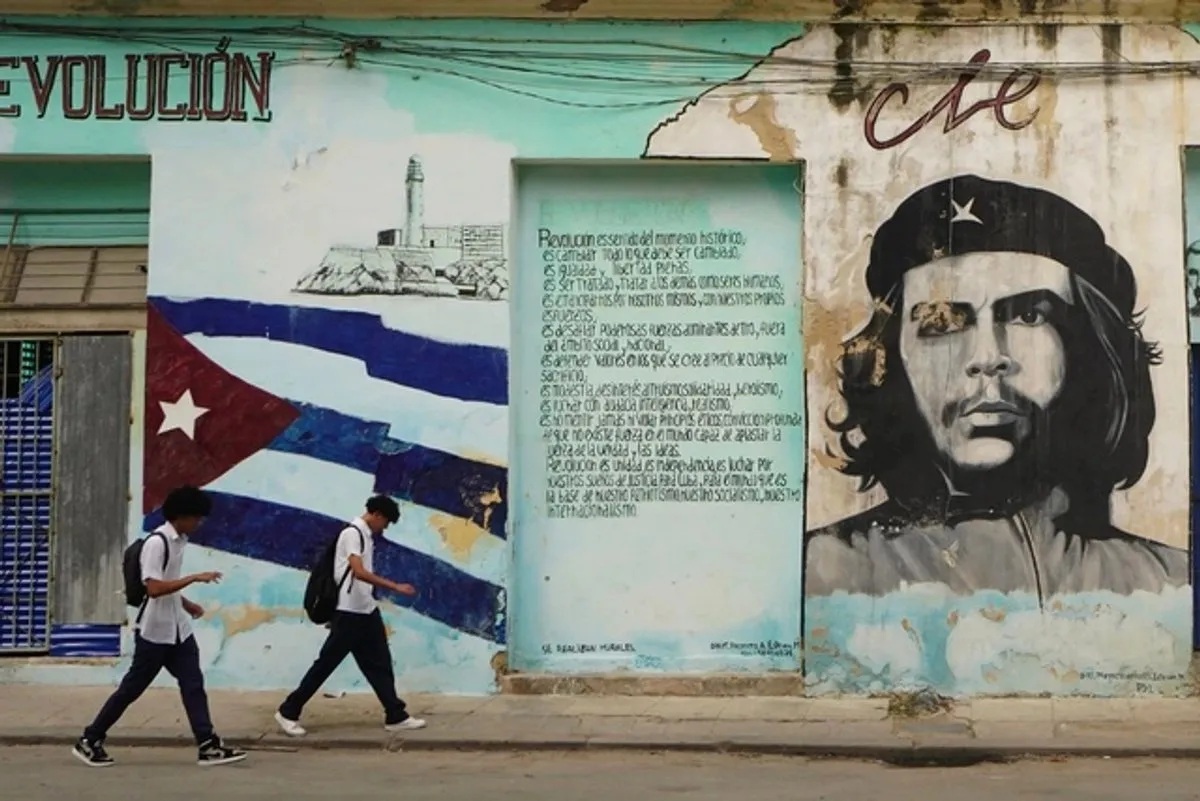
The continuous pressure on Havana is fundamentally an attempt to contain the 'strategic lung' of currents opposed to the American-led order. This current could pave the way for emerging powers seeking to end US unilateralism in the international system to breathe and maneuver.
Global energy security depends on a chain of interconnected routes. If the Strait of Hormuz is the energy lifeline from the heart of West Asia, then the Caribbean sea passages also play a decisive role in the US economy and energy security.
These two maritime routes have effectively become a 'natural bottleneck.' Independent sovereignty over these passages, or the presence of actors aligned with the anti-hegemonic axis against the US, could create a form of 'mutual deterrence' against Washington.
Strategic planners are well aware that any military pressure in the Persian Gulf could potentially be met with geopolitical maneuvers in the Caribbean. This is the multi-front equation that wears down US naval power and forces Washington to dedicate a significant portion of its capabilities to protecting its own coasts and near-abroad sphere of influence, rather than maintaining a vast presence in distant waters.
The US insistence on continuing the Cuban embargo stems, above all, from the island's geopolitical position, an island that effectively acts as the 'lid on the Gulf of Mexico.'
The main goal of the embargo is to prevent a strategic linkage between Havana and powers such as Russia, China, and Iran, countries that challenge the US-dominated order. From Washington's perspective, the transfer of advanced defense technologies to Cuba could directly threaten vital American interests.
Cuba's continued resistance to immense pressure and sanctions has called into question the effectiveness of 'sanctions' as a mechanism for imposing US will. This has led independence movements in Latin America and even West Asia to view Cuba's experience as a model for resisting the Western-centric order.
Geopolitical indicators suggest that future confrontations will not necessarily take classic, direct forms; rather, they will increasingly shift toward a war of attrition through 'geoeconomics.'
The strategic linkage between the Strait of Hormuz and the Caribbean passages effectively creates a transregional front. Accordingly, any threat to the sovereignty of West Asian countries could manifest as increased strategic pressure through naval maneuvers, joint exercises, or shows of force near the US sphere of influence in the Caribbean.
The Yucatán Channel and the Windward Passage can be considered vulnerable points in the US strategic shield. In the event of a major conflict, the activation of this front could impose severe economic and security costs on Washington, costs that would be unbearable even within the United States.
The growing use of drones, smart systems, and AI-based technologies at sea is gradually eroding the traditional advantage of massive naval fleets. This trend allows smaller actors or their allies to exercise more effective control and surveillance over sensitive maritime passages at a lower cost.
The Cuban embargo can be seen as an indirect admission of the island's geopolitical potential to alter regional and international equations. It appears that the 'future war,' following the tensions in Hormuz, will be decided not in deserts but at a vital maritime bottleneck, where massive, costly carriers will lose their past effectiveness against networks of deterrence, modern technologies, and transregional coalitions.
In such a scenario, any actor that dominates passages like the Windward Passage and the Yucatán Channel can negotiate with Washington from a position of strength, just as control over the Strait of Hormuz has become one of the most crucial components of geopolitical power in West Asia in recent years."
