

Post-War Iran and the New Situation in the Region
TEHRAN (Defapress) - The West Asian region has hardly seen any stability in the past two decades. From the Iraq war and the developments in Syria to the Yemen crisis, the Gaza war, the Persian Gulf tensions, and direct conflicts between Iran and Israel, they have all been part of a larger trend, a trend that has eroded the old order of the region and paved the way for the formation of a new balance.
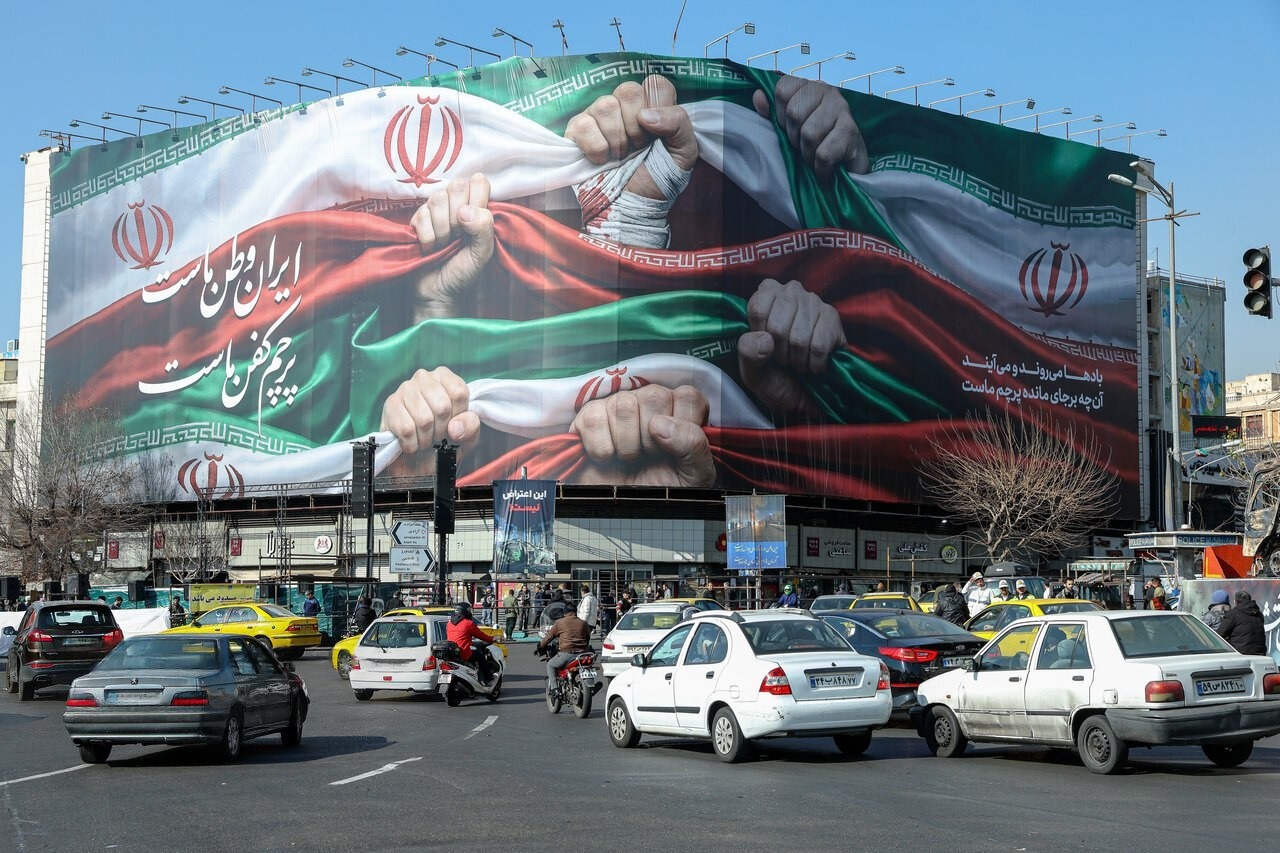
In the meantime, Iran was one of the most important players that was not only affected by these developments, but also gradually became one of the determining factors in regional equations. If in the past decades, Iran was mainly known as a country defending itself against external pressures, today its position has changed and has reached a level where many developments in the region cannot be analyzed without considering Tehran's role.
This is the issue that is referred to as the "new position of Iran"; A situation that is the result of a combination of field developments, increased deterrence, changes in the behavior of regional actors, and the formation of a kind of rearrangement in the security order of West Asia. One of the most important signs of this change is Iran’s gradual transition from a purely defensive position to a position of active regional influence. In previous years, many foreign actors tried to place Iran within the framework of a containment policy, but developments in the field of the region, especially recent conflicts, showed that it is practically impossible to remove or ignore Iran from the regional security equations.
On the other hand, recent wars and tensions showed that the traditional pattern of power in the region has also changed. In the past, many countries in the region defined their security solely in relation to foreign powers, but now the role of local actors and regional axes has increased. This has allowed Iran to strengthen its position in the new regional order. In this context, the concept of deterrence has also acquired a new meaning, as Iran’s deterrence is no longer based solely on territorial defense, but is tied to a network of regional capabilities, strategic capacities, and political and security influence. This has led Iran to move away from a merely reactive position in many regional developments and become an actor with greater decisive power.
Military and security issues are also another dimension of Iran’s “new position,” the country’s increasing geopolitical importance in global equations. Today’s world is moving away from a unipolar order and toward a kind of multipolarization. Great power competition, the energy crisis, the war in Ukraine, tensions in trade routes, and the increasing importance of regional corridors have led to Iran’s geographical and strategic position receiving more attention than ever before.
Iran is now at the intersection of several important geopolitical routes; from the Persian Gulf and the Gulf of Oman to Central Asia, the Caucasus, and East-West transit routes. This issue has created a new capacity to play a regional and even trans-regional role. In fact, Iran’s new position is not only the product of military developments, but also of larger changes in the global power structure. However, this new position is not simply an opportunity; it also creates new responsibilities and challenges. A country that gains a higher regional position must inevitably improve its governance, crisis management, and internal cohesion capabilities. For this reason, the link between domestic and regional politics has become more important than ever.
Of course, the issue of national unity and economic reconstruction also becomes part of Iran’s regional power. A country that suffers from economic erosion or social divisions from within, even if it has high military power, will not have a sustainable regional power in the long term. Therefore, “Iran’s new position” is not defined only by hard power, but also depends on the degree of internal stability, social cohesion, and governance efficiency.
Recent developments have also shown that regional wars have entered a new phase. Today's conflicts are not limited to classic battles but are a combination of military warfare, cyber warfare, psychological operations, media warfare, and economic pressure. This has made the concept of power in the region more complex, and countries are forced to use different tools simultaneously to maintain their position. Therefore, Iran has tried to play a more active role in the political narrative and management of public opinion in the region, in addition to maintaining deterrence power. This issue has become especially important after recent wars and crises. In fact, part of Iran's "new position" is due to the country's ability to influence public opinion in the region and become one of the main players in the political narratives of West Asia.
In addition, regional developments have also changed the way some neighboring countries view Iran. Recent trends show that many regional players, even if they disagree with Tehran, can no longer ignore Iran's role. This has led to the formation of a new kind of realism in regional interactions, a realism that is based on accepting Iran's geopolitical weight in the West Asian equations.
At the same time, increasing tensions between global powers have also affected Iran's position. The competition between the United States, China, and Russia, the energy crisis, and new geopolitical developments have made regional countries more important in global equations. Iran has also become part of this larger competition due to its geographical location, energy capacity, and regional role. However, maintaining and consolidating this new position requires successfully overcoming several fundamental challenges. The first challenge is the issue of the economy and internal reconstruction. Regional power without sustainable economic support will erode in the long term. The second challenge is maintaining social cohesion and preventing internal erosion. The experience of many regional powers has shown that internal divisions can be the most important factor weakening the external position of countries.
The third challenge is related to the intelligent management of tensions. As Iran’s regional position increases, the sensitivity and pressure from rival actors will also increase. For this reason, Iran’s foreign policy in the new era requires a combination of deterrence, diplomatic flexibility, and careful crisis management, which is why the reference by Ayatollah Seyyed Mojtaba Hosseini Khamenei, the Supreme Leader of the Islamic Revolution, to the need for “intelligent and revolutionary attention to Iran’s new position in the region and the world” has an important meaning. This phrase shows that from the current perspective, the country has entered a stage that requires redefining political, economic, and even domestic governance behavior in line with the new level of regional power and responsibility.
Therefore, today’s Iran is no longer simply a country in resistance, but an actor that must be able to consolidate and manage its new position. This issue both creates new opportunities for the country and increases the level of expectations from governance. The main question now is not whether Iran is influential in regional equations; it is whether the country can transform this new position into a sustainable and stable power. The answer to this question will depend largely on Iran's ability to combine regional power with domestic stability, economic reconstruction, and intelligent management of future developments.
